

When you’re planning an indoor renovation, your attention naturally goes to the rooms being changed. But here’s something that may not be on your renovation checklist at all: your yard.
Why? Even when the finished project is entirely inside the house, contractors still need ways to reach the work area, move materials, store supplies, remove debris, and carry out daily work. That turns lawns, planting beds, and other outdoor areas into temporary extensions of the jobsite.
That means indoor renovations can damage soil, trees, drainage, and garden beds. Some disruption may be unavoidable, but a little planning beforehand can keep temporary construction activity from becoming lasting landscape damage.
Here are six ways to protect your outdoor areas before your indoor project begins.
Table of Contents
- Limit Heavy Traffic Across the Yard
- Plan Storage and Staging Zones
- Protect Mature Trees and Their Roots
- Shield Garden Beds and Shrubs
- Watch for Changes in Drainage
- Assess Damage Before You Repair
Also see:
1. Limit Heavy Traffic Across the Yard
One of the simplest ways a renovation can affect landscaping is through repeated foot and equipment traffic.
Workers and construction equipment may follow the same routes to and from the house throughout a project. Over time, that weight can compress soil that normally supports plants without carrying such heavy loads.
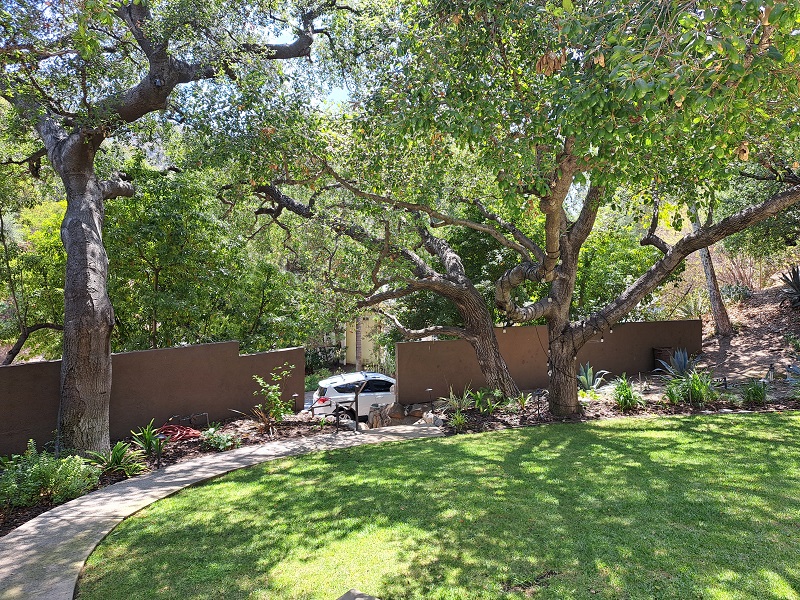
Home with street side entrance and sidewalk to house. Lawn should be roped off along the sidewalk.
Healthy soil contains pore spaces that allow water and air to move through the ground. Construction-related compression can change those conditions. The U.S. Environmental Protection Agency notes that construction can compact soil and recommends practices such as aeration to improve water infiltration. Its guidance on maintaining healthy soil and landscaping provides useful context for protecting outdoor areas during property improvements.
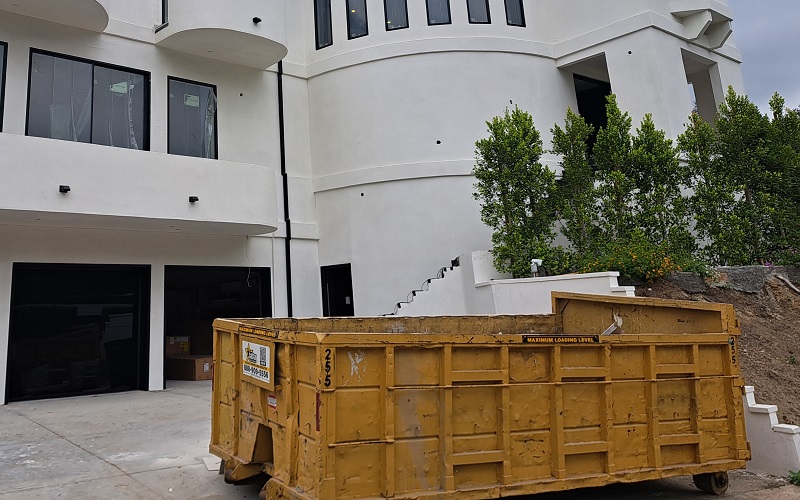
Home undergoing whole house renovation that directs contractor traffic through the garage, away from newly planted bushes approaching the front door.
Homeowners can reduce unnecessary damage by discussing contractor access before work begins and establishing clear routes for people, equipment, and materials.
2. Plan Storage and Staging Zones
An indoor renovation can also require surprisingly large amounts of outdoor space.
Building materials, tools, pallets, demolition debris, and other supplies need somewhere to go. Without a designated staging area, those materials may gradually spread into lawns or garden areas simply because those spaces are convenient.
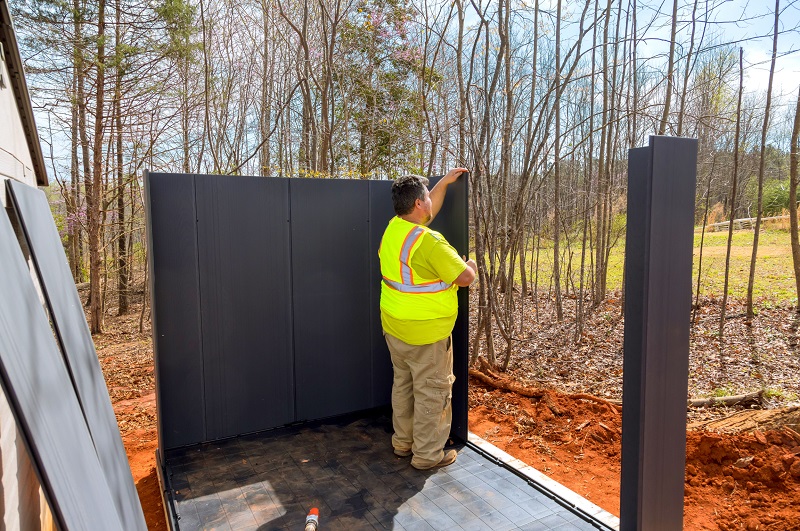
Construction worker assembling a temporary storage shed in the back yard for a large renovation project
Work with the contractor to identify where deliveries will arrive, where materials will be stored, and where debris will be collected. Existing hardscaped areas may work for some projects, while others may require temporary use of the yard.
For homeowners already thinking about unexpected costs during a home renovation, landscape repair is another potential expense worth keeping in mind.
The goal isn’t necessarily to keep the entire yard untouched. It’s to decide in advance which areas can handle construction activity and which should be protected.
3. Protect Mature Trees and Their Roots
A mature tree can be nowhere near the room being renovated and still be affected by construction.
That’s because a tree’s roots can extend well beyond the visible trunk and canopy. Repeated traffic, excavation, or changes to the surrounding soil can affect the conditions those roots depend on for air and water—even when nothing touches the tree itself.
Before construction begins, identify established trees and discuss them with the contractor. Temporary fencing or clearly marked boundaries can make protected areas easier for crews to recognize throughout the project.
This is particularly important for mature trees that provide shade, character, or other benefits that would take years to replace.
4. Shield Garden Beds and Shrubs
Garden beds and shrubs can be affected even when they aren’t being removed.
Workers may need to pass through planted areas, while hoses, cords, ladders, and other temporary equipment can interfere with plants or make them easy to damage accidentally.
Before work begins, identify the plants and planting areas worth preserving and establish clear boundaries around them.
Smaller container plants may be easy to relocate temporarily. Established shrubs and garden beds may benefit from visible barriers that discourage traffic.
Once construction is complete, evaluate plants individually rather than automatically replacing anything that looks stressed. Some may recover with ordinary seasonal care, while visibly damaged or declining mature plants may warrant professional evaluation.
5. Watch for Changes in Drainage
Construction doesn’t have to damage a plant directly to affect the landscape. It can also change where water goes.
Utility trenching, compacted access routes, walkways, patios, grading work, or altered downspouts can redirect rainfall toward parts of the yard that previously stayed relatively dry. Even an indoor renovation can create drainage issues if construction changes the ground or outdoor features around the house.
Some problems may not become apparent until after a substantial rainfall. Excavated areas can settle as they are refilled, while compacted soil may absorb water differently from surrounding ground.
After a major project, pay attention to the yard during periods of rain. New puddling, standing water, or unusual runoff can reveal problems before you spend money restoring the landscape.
Address drainage issues first. Otherwise, new landscaping may simply inherit the same problem.
6. Assess Damage Before You Repair
Getting your yard back to normal involves more than cosmetic repairs.
Once the renovation is finished, the quickest way to make the yard look normal again may seem to be replacing damaged grass and refreshing planting beds. But cosmetic repairs don’t necessarily address what’s happening underneath.
Walk the property after contractors have removed their equipment. Compare heavily traveled areas with portions of the yard that remained outside the work zone. Look for places where water collects, where the ground feels unusually firm, or where construction activity extended into the edges of garden beds and areas surrounding established trees.
If compacted soil is part of the problem, understanding ways to address soil compaction after construction can help explain why recovery may require more than spreading seed or adding mulch.
The appropriate response depends on where the damage occurred and what grows nearby. Assessing the condition of the yard first allows the restoration work to address the actual problem rather than simply covering it up.
Next Steps
Include the yard in your renovation plans.
Renovation planning naturally centers on the house. But when the work is being done indoors, the route to that finished interior may run directly through the surrounding landscape.
That’s why the yard deserves a place in the renovation conversation—even when the yard isn’t part of the renovation.
Before work begins, walk the property with your contractor. Identify access routes, staging areas, mature trees, planting beds, and any other landscape features worth protecting. Then, after the crews leave, take another walk and see what changed.
You don’t have to shield every inch. You just need to know which parts of the yard you’re willing to sacrifice temporarily, and which ones warrant the strongest protection.
Recommended Renovations Articles
- 5 Remodeling Mistakes That Can Decrease Your Home’s Value
- How One Innovative Firm is Transforming Home Renovations With AI
- Renovating to Sell? 4 Popular Features Buyers Will Love
- 6 Unique Home Features That Will Boost Resale Value
- From Vision to Reality: Turning Ideas into Beautiful Living Spaces
- Tips & Trends for a Stellar Home Upgrade You’ll Love
- 7 Tips on How to Make Your Home Up-to-Date & On-Trend
- Related Topics: Renovations | Home Safety | Pre-Sale Renovations | Home Selling
| Purgula is reader-supported. When you click on links to other sites from our website, we may earn affiliate commissions, at no cost to you. If you find our content to be helpful, this is an easy way for you to support our mission. Thanks! Learn more. |