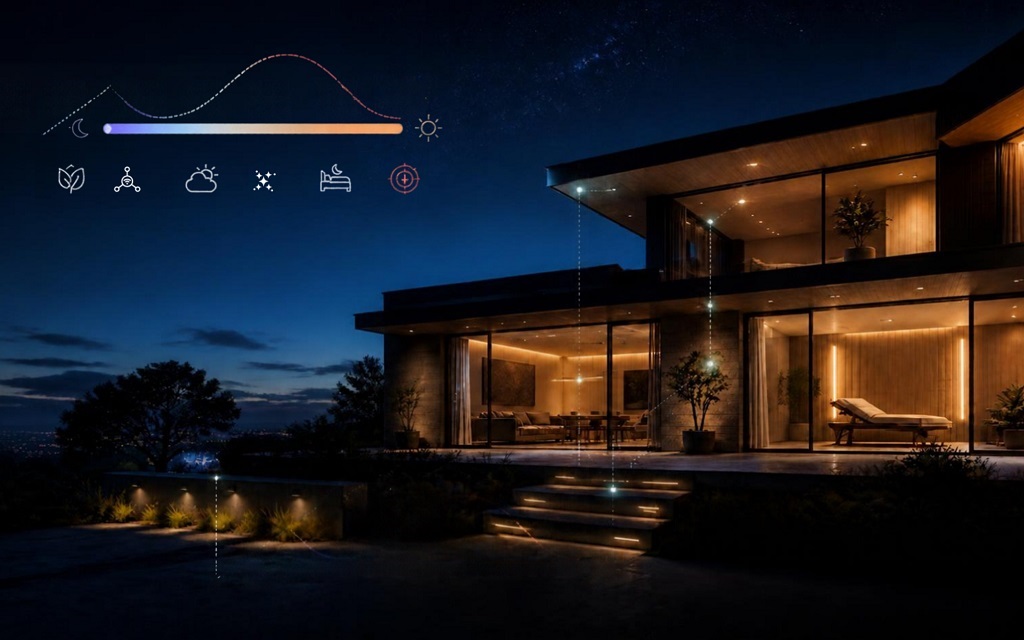
During a recent CEU session on the Language of Lighting, we thought it would be appropriate to explore the future of residential lighting. The presentation brought us back to an unexpected conversation we had at HD Expo 2026—one that expanded our understanding of how lighting might enhance everyday health and wellness.
Paul Adams, CEO of Capitol Lighting and Chairman of Florida Lighting Investment Partners, shared a vision with Purgula in which supporting human health, mood, and recovery becomes a primary objective of lighting design—not simply a possible benefit of beautiful fixtures. We left intrigued and optimistic. The conversation sparked our interest in lighting’s broader wellness potential, particularly red light therapy, known in scientific research as photobiomodulation (PBM). This therapeutic approach most commonly uses red or near-infrared (NIR) wavelengths.
There is good reason to take lighting’s wellness potential seriously. Light helps regulate daily rhythms, sleep, and wakefulness. Some therapeutic applications of red and near-infrared light have also progressed into professional clinical recommendations. These are different biological pathways, but both demonstrate that light’s role extends beyond visibility and aesthetics.
However, established biological effects do not make every “full-spectrum” bulb or red-light fixture a therapeutic device. The application, exposure conditions, and supporting evidence all matter.
Though we are most intrigued by the wellness potential of residential lighting, the innovations worth following extend beyond healing applications. Hence, this article also explores smarter controls, responsible outdoor lighting, experimental approaches to efficiency, and fixtures designed for easier maintenance. Together, these developments invite a broader question:
How will tomorrow’s lighting better serve both the people living in a home and their surrounding community?
Table of Contents
- Red Light Therapy: A Wellness Frontier
- Wellness Includes Protecting Darkness
- The Next Wave of LED: Circadian-Informed Design
- Smarter Controls, Less Brand Lock-In
- Incandescent Research: A Different Path
- The Lighting Frontier: Repairability
- What We Think Matters Most
Also see:
Red Light Therapy: A Wellness Frontier
Red light therapy is one of the most intriguing developments within the broader lighting-and-wellness conversation.
Known scientifically as photobiomodulation, or PBM, it delivers precise doses of red or near-infrared light under defined treatment conditions. Researchers investigate how absorbed light influences cellular signaling, mitochondrial activity, inflammation, and tissue repair. The effects depend on the treatment parameters and biological target.
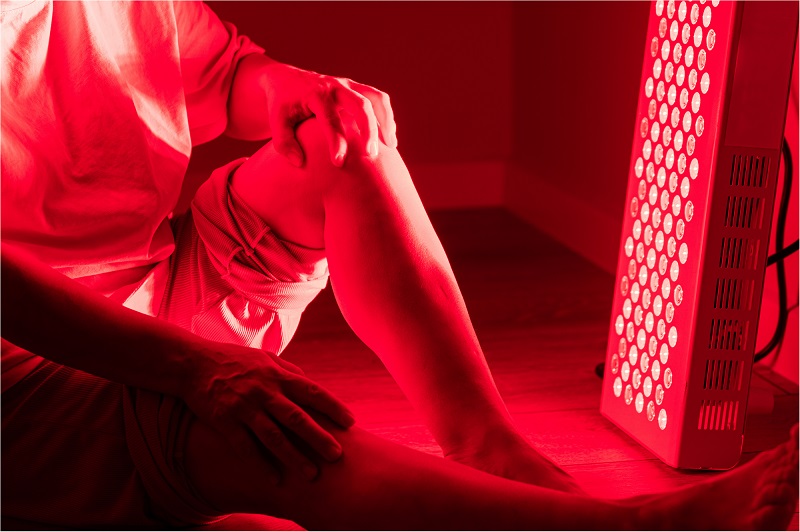
Researchers are actively exploring these possibilities. University at Buffalo researcher Praveen Arany has advocated wider use of PBM and studied its potential in healing and regeneration. Some applications already have clinical recognition. MASCC/ISOO guidelines recommend specified PBM protocols to prevent oral mucositis—painful inflammation and sores in the mouth—in certain cancer-treatment settings.
Other applications have varying levels of support. A 2025 umbrella review examined 15 meta-analyses encompassing 204 randomized trials and more than 9,000 participants. It found moderate-certainty evidence for selected outcomes, including pain reduction in burning mouth syndrome, disability improvement in knee osteoarthritis, and increased hair density in androgenetic alopecia. Most other outcomes had low or very low certainty of evidence.
That combination—demonstrated benefits for some applications and unanswered questions for others—supports informed optimism rather than blanket endorsement or dismissal.
The Residential Opportunity
Adams told Purgula at HD Expo that Better Designed Lighting (BDL, a sister company of Capitol Lighting) is developing proprietary full-spectrum lighting technology intended to support circadian rhythms and pursue additional therapeutic and wellness applications in hospitality and residential environments.
The prospect is compelling: could purpose-designed systems make validated wellness applications more convenient within hotels and homes?
At the time of our conversation, the full technology roadmap was still forthcoming. Whether BDL’s approach includes PBM, and which benefits it is intended to deliver, can be evaluated as the company releases technical details and supporting evidence.
More broadly, a bathroom fixture containing red or near-infrared LEDs is not automatically equivalent to a treatment device. A wavelength alone does not establish that an appropriate dose reaches the intended tissue or that a claimed benefit has been demonstrated.
Homeowners evaluating a therapeutic-lighting claim should ask what outcome has been studied, whether the evidence applies to the actual device, and what exposure conditions and safety instructions are required.
Natural light offers a useful reminder that different wavelengths can produce different biological effects. Vitamin D synthesis in skin, for instance, involves UVB radiation—not red light therapy. It should not be inferred from a lamp’s “full-spectrum” label, and ultraviolet exposure carries its own health risks.
We believe therapeutic lighting is an area worth following. Its future value will depend on translating research into appropriately designed, validated applications—not simply adding a wellness label to ordinary illumination.
Wellness Includes Protecting Darkness
A wellness-oriented lighting future should not be understood only as adding useful light. It should also involve reducing light that serves no meaningful purpose.
That is where responsible outdoor lighting becomes a natural companion to the indoor wellness discussion.

Beautiful view of night sky without any traces of light pollution
DarkSky International and the Illuminating Engineering Society identify five principles for responsible outdoor lighting: useful, targeted, low-level, controlled, and warm-colored.
For homeowners, those principles translate into five practical questions:
- Useful: Does this light serve a clear purpose?
- Targeted: Is it shielded and aimed at the intended area?
- Low-level: Is it kept only as bright as the task requires?
- Controlled: Can it dim or turn off when no longer needed?
- Warm-colored: Does it minimize unnecessary shorter-wavelength emissions?

Infographic of the 5 Dark Sky Principles
The goal is not to leave outdoor spaces unusable. It is to provide appropriate illumination without sending unnecessary light into the sky, neighboring windows, or surrounding habitat.
Timers, motion sensors, and separate control zones can help distinguish lighting needed for circulation from decorative illumination that can be switched off. Rather than impose a universal 10 p.m. curfew, homeowners should establish schedules appropriate to actual use and check applicable local requirements.
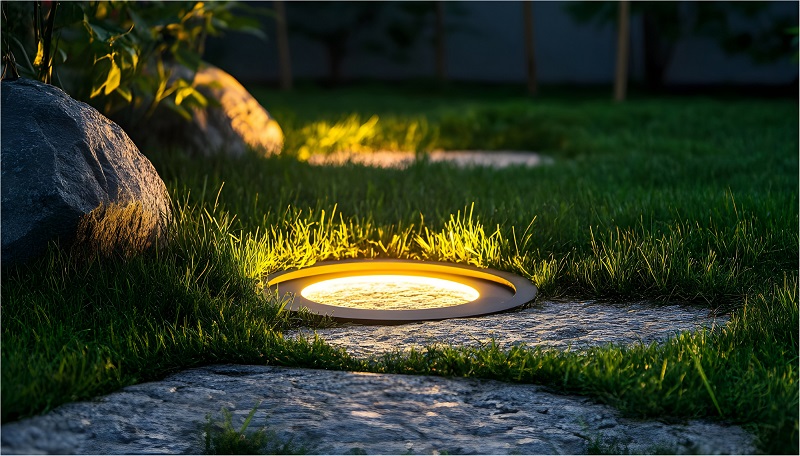
Purposeful landscape lighting following Dark Sky Principles
On a larger scale, these same individual design choices are also influencing how new communities are planned. The Granary in Milton, Delaware, which we explored earlier this year, offers one example. Published reporting describes plans to incorporate Dark Sky principles through downward-facing fixtures, motion-detecting lights, and limits on light output—an effort to preserve the property’s night-sky visibility as the community develops.
For buyers looking for a home in a new community, this is an opportunity to evaluate lighting beyond the boundaries of an individual lot. Ask whether the developer’s standards address streetlights, shared amenities, landscaping, and residential exteriors—and whether those standards will be maintained through architectural guidelines or community covenants.

We would treat responsible lighting as a meaningful design consideration, not simply a marketing amenity. A homeowner can improve lighting on their own property, but a community-wide approach can address sources of unnecessary illumination that individual residents do not control.
The Next Wave of LED: Circadian-Informed Design
The next chapter of residential lighting is not simply about making LEDs more efficient. It is also about using light more thoughtfully across the day.

Rendering of a morning bedroom scene with ample natural daylight
Circadian rhythms are the body’s approximately 24-hour patterns, including the regulation of sleep and wakefulness. Light reaching the eyes is an important signal to this internal timing system. Its effects depend on when exposure occurs, how much light reaches the eyes, and its spectral composition—not simply whether a bulb looks warm or cool.
A 2022 expert-consensus paper published in PLOS Biology recommends greater biologically relevant light exposure during the day, substantially lower exposure in the hours before bedtime, and darkness during sleep. These recommendations concern exposure measured at the eye, rather than brightness on a kitchen counter or a bulb’s Kelvin rating alone.
For homeowners, this encourages a more deliberate approach: make useful daytime light available, then allow the home’s lighting to become less intense as the household winds down. Warm-looking light can contribute to an evening atmosphere, but appearance alone does not establish a circadian benefit.
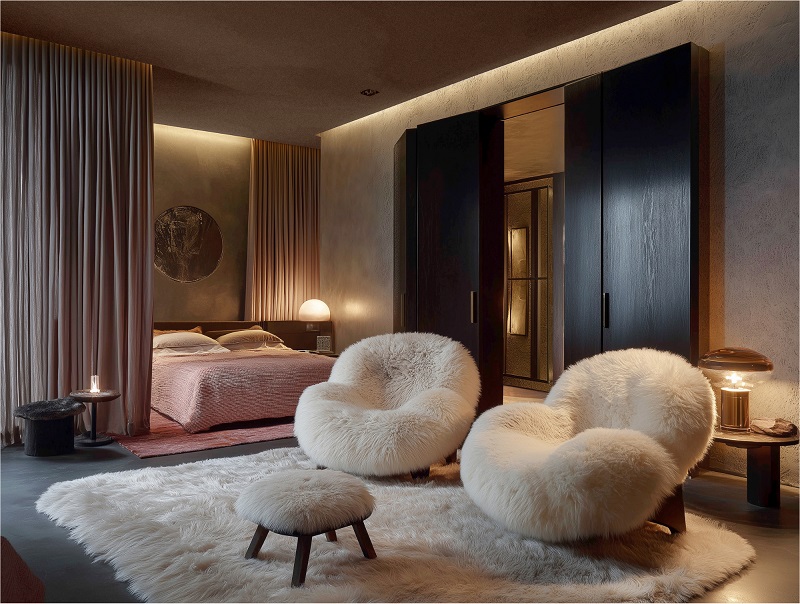
Rendering of a comfortable bedroom with warm, soft lighting
Tunable LEDs and programmable controls offer tools for implementing that approach. The opportunity is not a universal “healthy” setting, but lighting that can be adjusted to the household’s activities and schedules.
One tool already emerging in this space is the adaptive environmental sensor—hardware that measures changing natural light in real time and adjusts a fixture’s spectral output accordingly, rather than relying on a fixed timer.
Circadian considerations are also entering formal design frameworks. The WELL Building Standard’s L03 circadian-lighting feature provides an institutional example of evaluating biologically relevant exposure, rather than relying solely on conventional visual-lighting specifications.

Nighttime bedroom scene with warm, soft lighting
Our takeaway: ask what a wellness-lighting system actually measures and controls. A scheduled transition from cool white to warm amber may be convenient, but it should not automatically be treated as proof of improved sleep or health.
Better Light Still Needs to Work Well
Wellness claims should not distract from the quality of everyday illumination. Before investing in advanced spectral features, examine how the system behaves in ordinary use:
- Does it dim smoothly?
- Are the lamps, drivers, and controls compatible?
- Does its output remain stable at the settings you use most?
U.S. Department of Energy (DOE) guidance explains that LED flicker depends in part on driver design and interaction with dimming controls, making system compatibility an important consideration.
Our view is that promising biological features should complement good lighting fundamentals—not excuse glare, awkward controls, or disappointing performance.
Smarter Controls, Less Brand Lock-In
If lighting is to respond more thoughtfully to daily life, its controls need to be understandable and adaptable.
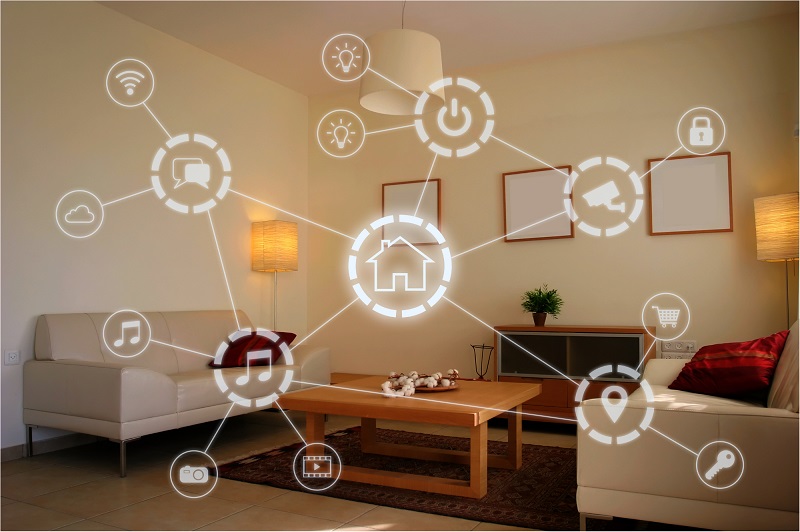
Schedules, sensors, and adjustable scenes offer opportunities to coordinate illumination with occupancy, available daylight, and household routines. We see the most useful automation as the kind that supports those routines without making basic operation unnecessarily complicated.
Interoperability is another important development.
Matter, developed through the Connectivity Standards Alliance, supports compatible lighting devices, allowing them to connect to multiple smart-home ecosystems simultaneously through its multi-admin capability. This gives homeowners greater flexibility when choosing or expanding a system.
However, a shared standard does not make every proprietary feature identical across platforms. Some existing devices require bridges, and homeowners still need to verify support for the controls and capabilities they intend to use.
For a wellness-oriented system, ask more than whether it connects to your phone:
- Can its settings be adjusted easily?
- Does it allow manual override?
- Are its schedules appropriate for the household?
- Which advanced functions remain available outside the manufacturer’s own app?
- Which functions will remain available if the Internet connection fails, the manufacturer stops supporting its app, or the household changes smart-home platforms?
Our view:
Smarter lighting should increase useful control, not replace straightforward operation with another layer of dependence.
Incandescent Research: A Different Path
Interest in lighting’s future also invites a fresh look at older technologies.
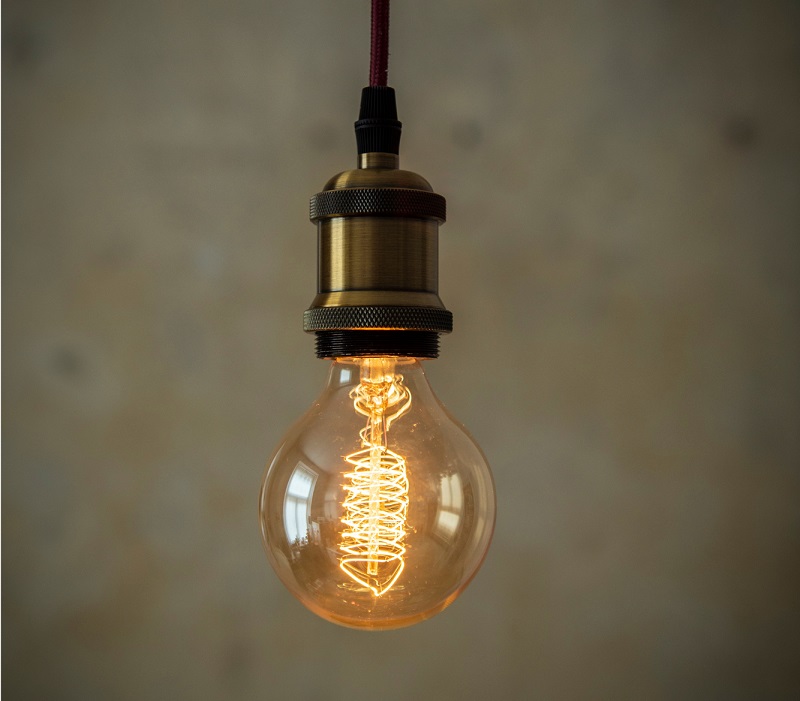
One research direction explores whether an incandescent filament’s visible light can be preserved while recycling the energy usually lost as heat.
In research published in 2016, investigators demonstrated nanophotonic structures surrounding a tungsten emitter. These structures allowed visible light to pass while reflecting infrared radiation back toward the emitter for reuse. The experiment produced more visible light for the same input power.
The work offers an intriguing example of improving a familiar technology by controlling its emitted spectrum. However, the cited demonstration is a research milestone rather than evidence of an established commercial return to high-efficiency incandescent lighting.
We would watch for practical developments in efficiency, durability, and availability. Any proposed wellness advantages would need their own supporting evidence, as well.
The Lighting Frontier: Repairability
A lighting system’s future value also depends on what happens when something fails.
Integrated LED luminaires offer architectural flexibility, but their long-term performance depends on more than the LED chips. Drivers, electrical connections, optical components, and LED assemblies all contribute to the complete system. DOE-supported reliability research notes that driver failures and optical degradation can occur before LED lumen depreciation becomes the limiting factor.
When a failed component cannot be replaced, an otherwise usable fixture may require complete replacement. That makes serviceability an important purchasing criterion—not merely a maintenance concern to address years later.
European ecodesign rules provide a useful precedent. They address replacement of light sources and independent control gear within fixtures, with specified exceptions and requirements for information about whether replacement can be performed by end users or qualified professionals. These rules are not a universal U.S. right to repair every fixture, but they demonstrate that replaceability is receiving regulatory attention.
Before investing in integrated fixtures, ask:
- Can the driver be accessed and replaced independently?
- Does the manufacturer supply replacement light engines?
- How long will replacement parts remain available after discontinuation?
- Are compatibility information and repair instructions available?
- What do replacement parts cost, and does the warranty cover labor?
Our position is straightforward: a premium fixture should be evaluated not only for how it looks when installed, but also for whether it can remain useful when a component eventually needs attention. Note: Any subsequent repairs should follow the manufacturer’s instructions and be performed by a qualified professional.
What We Think Matters Most
Our conversation at HD Expo did not settle the science or reveal every detail of the technologies ahead. It did persuade us that lighting’s wellness potential deserves closer attention.
We remain optimistic. Established circadian research, application-specific PBM evidence, and responsible outdoor-lighting principles offer different—but complementary—ways to expand upon the fundamental layers of residential illumination.
The challenge is to keep those distinctions intact as promising ideas become products.
For homeowners, we would judge innovation by practical questions: What benefit is being claimed? What evidence supports it? Does the system smoothly accommodate the household’s daily routines and automated scenes? Can unnecessary light be reduced? And can the equipment be maintained over time?
The future worth following is not simply a fixture that is brighter, smarter, or more beautiful and feature-rich. It is lighting that is thoughtfully designed around the people who live with it—and clear about what it can actually deliver.

Related Lighting Articles
- Hospitality Trends Transforming Today’s Homes
- 4 Easy Home Improvements That Only Take a Day
- 10 Practical Home Upgrades for Vibrant Aging in Place
- How to Add Character to Your Home with Outdoor Lighting
- Is Uplighting or Downlighting Better for Your Property?
- How to Deal With Glare on a Waterfront Property
- Related Topics: Lighting | Wellness | Curb Appeal | Indoor-Outdoor Living
| Purgula is reader-supported. When you click on links to other sites from our website, we may earn affiliate commissions, at no cost to you. If you find our content to be helpful, this is an easy way for you to support our mission. Thanks! Learn more. |