
Aging brings new, unexpected challenges, and—for most homeowners—one of the most surprising is discovering that a home that faithfully supported their lifestyle for decades has quietly become a hazard.
This goal is commonly known as “aging in place”—and it reflects the preference of the overwhelming majority of older Americans. According to AARP:
nearly 90% of adults over 65 want to remain in their own homes as they age.
Yet the gap between that desire and reality is significant:
fewer than 10% of U.S. homes are equipped with the basic features that support safe, independent aging.
Thoughtful, targeted home upgrades are the most direct way to close that gap—and in most cases, they don’t require a full renovation to make a meaningful difference.
The upgrades below address the most common—and most correctable—household hazards for aging in place, with practical modifications to maintain a safe, vibrant, and independent lifestyle.
10 Upgrades to Make Your Home Safer for Aging in Place
- Level and Secure Floors to Prevent Falls
- Illuminate Staircases for Safe Navigation
- Eliminate Moisture Issues That Harm Health
- Transform Bathrooms into Safer, More Accessible Spaces
- Enhance Lighting to Reduce Falls and Eye Strain
- Install Grab Bars and Handrails Where Support Is Needed Most
- Replace Hard-to-Use Hardware with Arthritis-Friendly Alternatives
- Optimize the Bedroom for Safe, Independent Sleep and Mobility
- Secure Exterior Entries and Walkways Against Outdoor Falls
- Reorganize and Retrofit the Kitchen for Safer Daily Use
Also see:
- The Forever Home Myth: Why Adaptability is More Important than Endless Love
- Aging In Place Renovations that Add Value to Your Home
- 13 Innovative Examples of Assistive Technology for the Home
- More Recommended Home Safety & Home Wellness Articles
- Related Topics: Bathroom | Home Safety | Home Wellness | Aging in Place
1. Level and Secure Floors to Prevent Falls
Flooring problems tend to hide in plain sight. A loose rug edge, a slick stone entry, a raised threshold, or a transition strip that sits too high can easily catch a toe.
According to the CDC, one in four adults aged 65 and older fall every year. A single misstep may lead to severe pain, or worse, an injury requiring a long recovery.
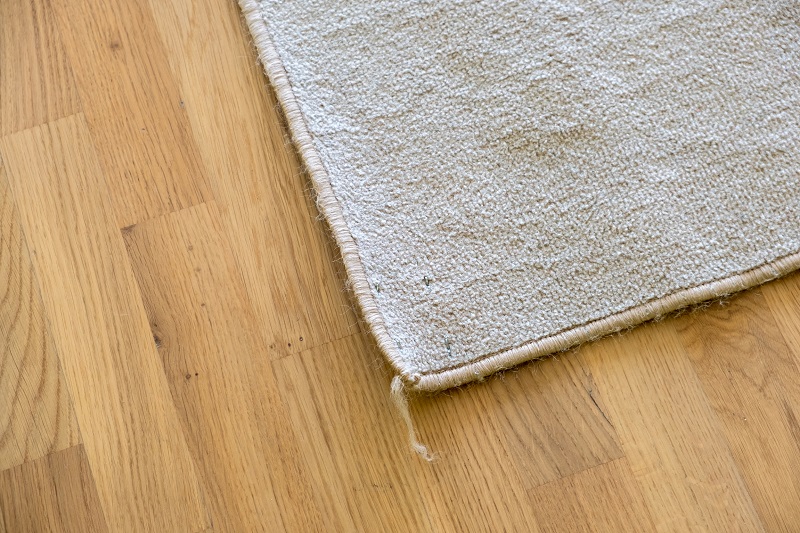
A common household trip hazard: a curled up floor rug
Take a look at the routes you walk through every day, from the kitchen to primary suites. Replace curled rugs, level abrupt transitions, improve traction underfoot, and secure any surface that wobbles. The likelihood of tripping and falling will greatly decrease.
2. Illuminate Staircases for Safe Navigation
It’s common for homes to have a single overhead fixture above the staircase. While the light may have once been effective, now, it creates shadows and makes tread depth difficult to judge.
A safe staircase has even light that extends the length of the run. Contrasting tread edges sharpens visibility. You can also integrate lights under the handrails to ensure you see each stair clearly.
3. Eliminate Moisture Issues That Harm Health
Some household hazards don’t come from falls. If your home is causing health issues, like chronic coughing or frequent headaches, indoor air pollutants and biological contaminants could be potential causes.
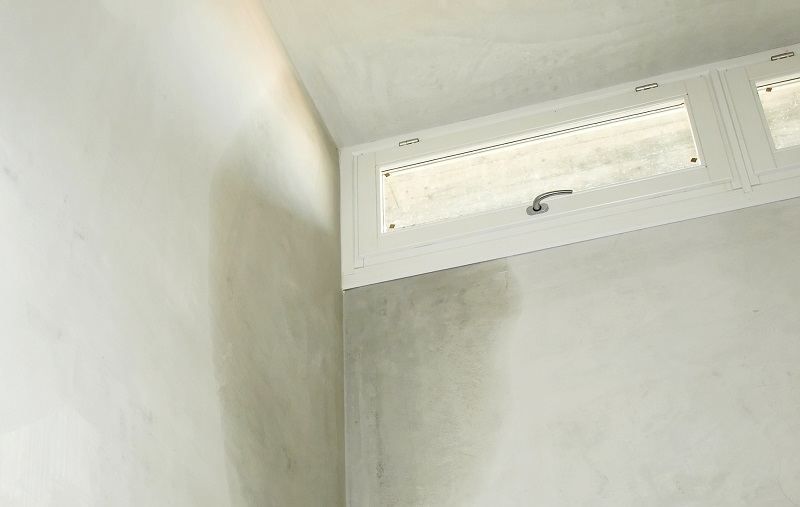
Moisture in corner of basement
A damp basement, an enclosed lower level, or a moisture-damaged stair enclosure may aggravate health problems over time. Freshening the air won’t fix the problem; a renovation conducted by a professional is the best course of action.
Professionals will remove water-damaged materials and eliminate the source of moisture. Then, they’ll install upgraded ventilation, so you won’t have to deal with this issue again. You’ll be breathing in fresh air and feeling better in no time.
4. Transform Bathrooms into Safer, More Accessible Spaces
Bathrooms combine hard surfaces, water, and quick transfers from standing to sitting. Perhaps you slipped a couple of times in your younger years, but, as you age, your chances of falling will only increase.
There are several impractical factors that could cause you to fall. The towel rack could be just out of reach. The clearance around the toilet might be narrow. The shower could have a high lip that’s difficult to step over.
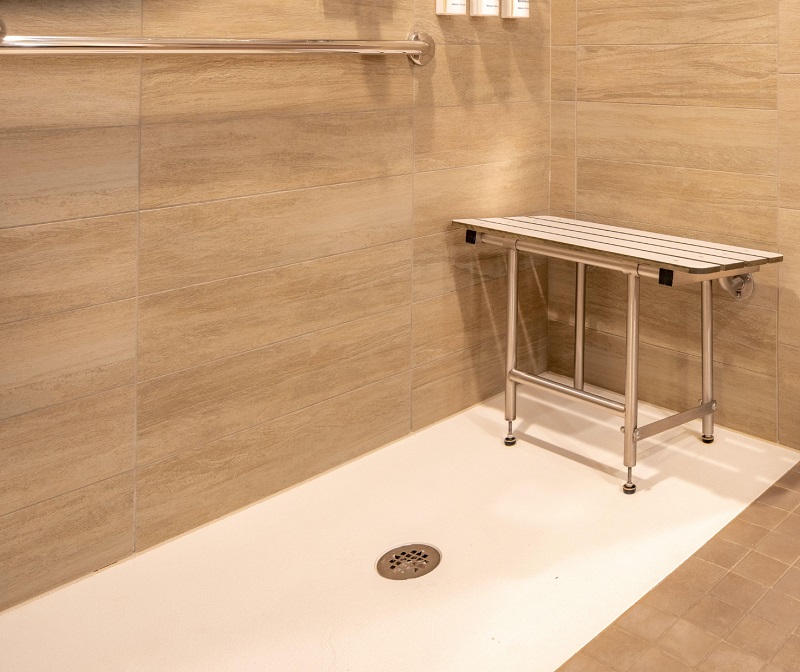
Curbless shower with large grab bar
Go through your everyday routine, and take note of which tasks are tough to complete. Perhaps you need to reposition the towel rack, add a grab bar, or install a curbless shower. The goal is to eliminate as many hazards as possible.
Also see:
5. Enhance Lighting to Reduce Falls and Eye Strain
Lighting is one of the most underestimated safety factors in an aging home. As vision changes with age, the eyes require significantly more light to see clearly—and adjust more slowly when moving between bright and dim spaces. A home that feels adequately lit at age 40 may feel noticeably dim and shadow-filled at 70.
The most dangerous moment is often the simplest one:
getting up in the middle of the night to use the bathroom.
A dark hallway, an unlit threshold, or an unexpected step in low light is all it takes. Motion-activated night lights along the path from bedroom to bathroom are one of the highest-impact, lowest-cost upgrades available—and they require no behavioral change from the resident.

Convenient rocker style light switch outside of dining room
Beyond nighttime safety, consider upgrading to brighter bulbs throughout the home, particularly in kitchens, reading areas, and stairwells. Rocker-style or illuminated light switches are easier to locate and operate in the dark. Under-cabinet lighting in the kitchen eliminates shadows on work surfaces. The goal is a home where every routine path and task area is consistently and evenly lit—not dependent on a single overhead fixture that casts as many shadows as it eliminates.
6. Install Grab Bars and Handrails Where Support Is Needed Most
Few upgrades offer a better return on investment for aging-in-place safety than strategically placed grab bars and handrails—yet they remain one of the most underutilized. Many homeowners associate grab bars exclusively with bathrooms, but the need for stable support points extends throughout the home.

Handrails on short steps are essential for safety, too
Staircases should have secure handrails on both sides, not just one. Exterior steps, often overlooked entirely, are among the most common sites for serious falls.
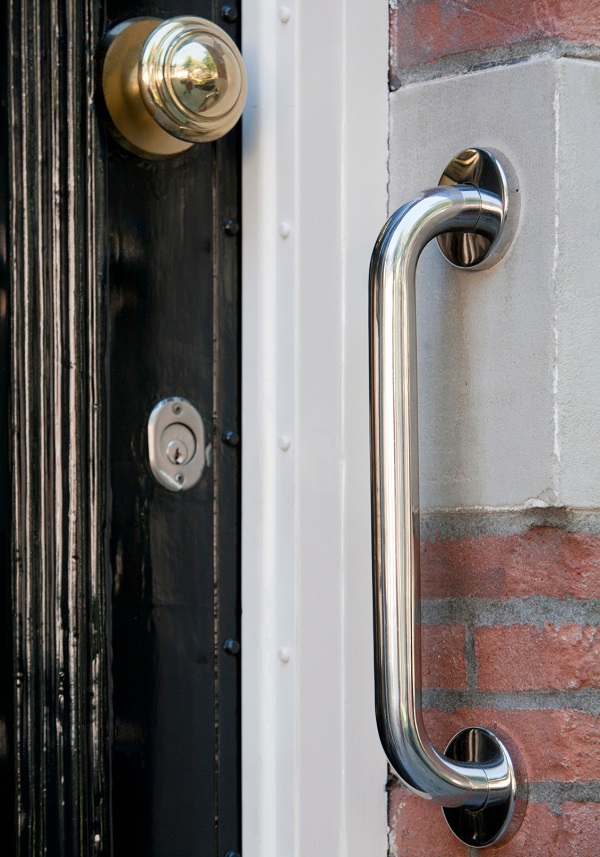
A safety grab bar at the front door
A handrail at the front entry, along garage steps, or beside a side door can be the difference between a confident transition and a dangerous one. Inside the home, a grab bar beside the bed can assist with nighttime transfers, and a vertical bar near the front door provides support while putting on shoes—a surprisingly unstable activity.

Safety grab bar installed in bathroom
In the bathroom, grab bars should be positioned at the toilet, inside the shower or tub, and at the shower entry. It is worth noting that towel bars are not a substitute—they are not designed to bear body weight and can pull away from the wall under load. Properly anchored grab bars installed into wall studs are the standard, and a wide range of attractive, non-institutional designs are now available that complement modern bathroom aesthetics.
7. Replace Hard-to-Use Hardware with Arthritis-Friendly Alternatives
The small, daily frictions of a home—turning a doorknob, operating a faucet, flipping a light switch—are easy to overlook until they become genuinely difficult. For adults with reduced grip strength, arthritis, or limited hand mobility, these minor interactions can become frustrating barriers to independence, repeated dozens of times a day.
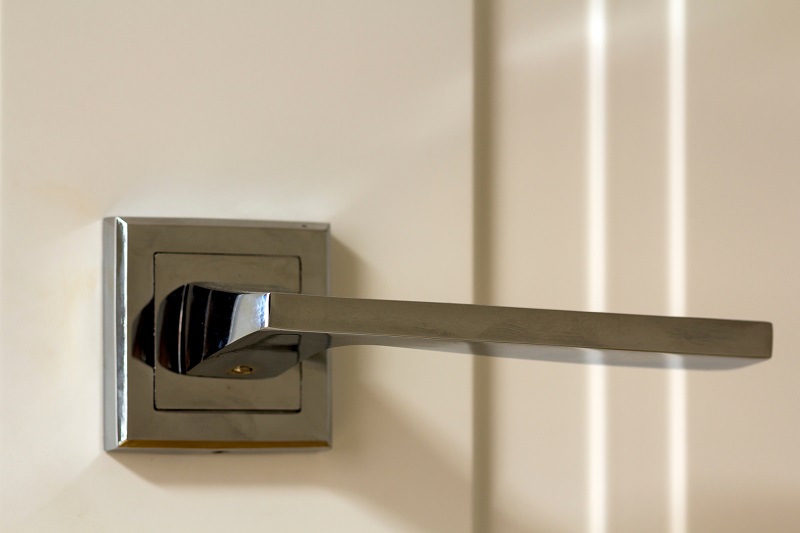
Modern stainless steel lever door handle on wooden door
Replacing round doorknobs with lever-style handles is one of the simplest and most affordable upgrades in this category. Lever handles require a pushing motion rather than a gripping and twisting one, which is far easier for arthritic hands. Similarly, replacing traditional two-handle faucets with a single-lever model—or a touchless sensor faucet—reduces the effort required for one of the most frequent daily tasks. Rocker-style light switches replace the standard toggle switch and are easier to operate with a palm or elbow when hands are full or stiff.
In the kitchen, D-ring or bar-style cabinet pulls replace recessed or small knob hardware and are dramatically easier to grasp. These changes are largely cosmetic in nature—they don’t require structural work—but their cumulative effect on daily comfort and independence is significant.
8. Optimize the Bedroom for Safe, Independent Sleep and Mobility
The bedroom is where many aging-in-place falls originate, yet it receives far less safety attention than bathrooms or staircases. The reason is straightforward:
most bedroom falls happen at night or upon waking, when alertness is low, lighting is minimal, and the body is stiff from rest.
Bed height is a frequently overlooked factor. A bed that sits too low requires significant effort and balance to rise from, while one that sits too high makes it difficult to sit down safely. The ideal height allows the feet to rest flat on the floor when seated at the edge, with the hips and knees at roughly a 90-degree angle. Adjustable bed frames, or simple bed risers and lower-profile foundations, can correct either problem without replacing the mattress.

Senior man stretching safely from bed
Clear, unobstructed pathways from the bed to the door and bathroom are essential—particularly at night. Loose rugs, power cords, and furniture positioned too close to the bed are common hazards. A bedside lamp or motion-activated light within easy reach eliminates the dangerous habit of navigating a dark room. For added security, a bedside phone, personal emergency response device, or smart speaker that can call for help provides meaningful peace of mind—both for the resident and for family members.
Also see:
9. Secure Exterior Entries and Walkways Against Outdoor Falls
A home’s exterior is often the first and last place a resident navigates each day, and one of the most hazardous. Cracked or uneven walkways, exterior steps without handrails, poorly lit entry paths, and slippery porch surfaces are frequent sites of serious falls, yet they tend to receive less attention than interior spaces simply because they are less visible during daily routines.
Start at the street and walk the full path to your front door with fresh eyes. Note any heaved or cracked pavement, areas where drainage pools and may freeze, steps that lack a stable handrail, or surfaces that become slick when wet. A non-slip coating on exterior steps and porches is an inexpensive upgrade with significant safety benefits. Motion-activated lighting along the entry path ensures the route is visible at any hour without requiring the resident to remember to turn lights on.
The garage entry deserves equal attention, as it is often the primary daily entry point. A step-down from the garage to the home interior, an unlighted threshold, or a door that requires significant force to open are all hazards worth addressing. A single well-placed handrail and an automatic light can transform a daily transition from a risk point into a confident, routine one.
Also see:
10. Reorganize and Retrofit the Kitchen for Safer Daily Use
The kitchen demands more physical activity than almost any other room in the home—reaching, bending, lifting, standing—and it does so on hard floors surrounded by hard surfaces. For older adults, the cumulative strain of those movements, combined with the presence of heat, sharp edges, and water, makes the kitchen a space worth thoughtful safety investment.
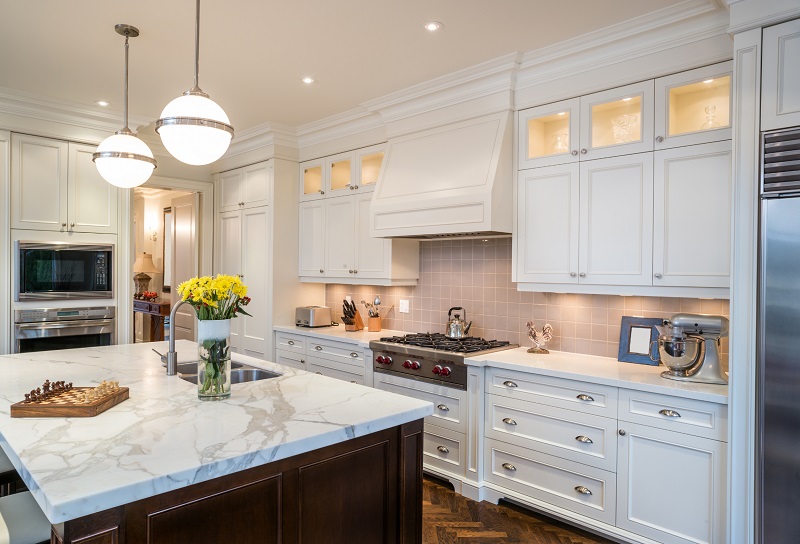
Luxury kitchen with accessible items on counter
The most common hazard is overhead reach. Accessing items stored in upper cabinets often requires stretching, standing on tiptoe, or using a step stool—all of which introduce fall risk. Relocating frequently used items to counter height or lower cabinet shelves eliminates that risk entirely. Pull-out shelves and lazy Susans in lower cabinets make contents accessible without bending or crouching. A sturdy, non-rolling step stool with a handle can be kept nearby for occasional overhead access when needed.
Anti-fatigue mats in front of the sink and stove reduce the strain of prolonged standing, which becomes more significant as joint comfort decreases with age. Under-cabinet lighting illuminates work surfaces clearly and reduces eye strain. Lever-style faucets or touchless sensor models reduce the effort of one of the kitchen’s most frequent tasks. Taken together, these upgrades don’t change the way the kitchen looks—they change the way it feels to use it every day.
Also see:
The best home updates prevent injury or illness. If any of these unsafe household features are present, it’s time to devise a strategy that will increase your home’s safety. You’ll be able to go about your daily habits with confidence when these dangers have been effectively addressed and are no longer a concern.
Additional Home Safety & Home Wellness Articles
- 5 Innovative Ways 55+ Communities Are Reinventing Wellness
- 7 Sensors to Make Your Home Safer & Healthier
- How to Make Baking Memories With Family Living With Dementia
- Need an Aging In Place Specialist? Look for These Certifications!
- Aging In Place Technologies for Today and the Future
- 8 Wellness Design Tips for Your Kitchen & Bath
- Never Thought You’d Live in a Multigenerational Home? Think Again!
- Related Topics: Bathroom | Home Safety | Home Wellness | Aging in Place
| Purgula is reader-supported. When you click on links to other sites from our website, we may earn affiliate commissions, at no cost to you. If you find our content to be helpful, this is an easy way for you to support our mission. Thanks! Learn more. |