
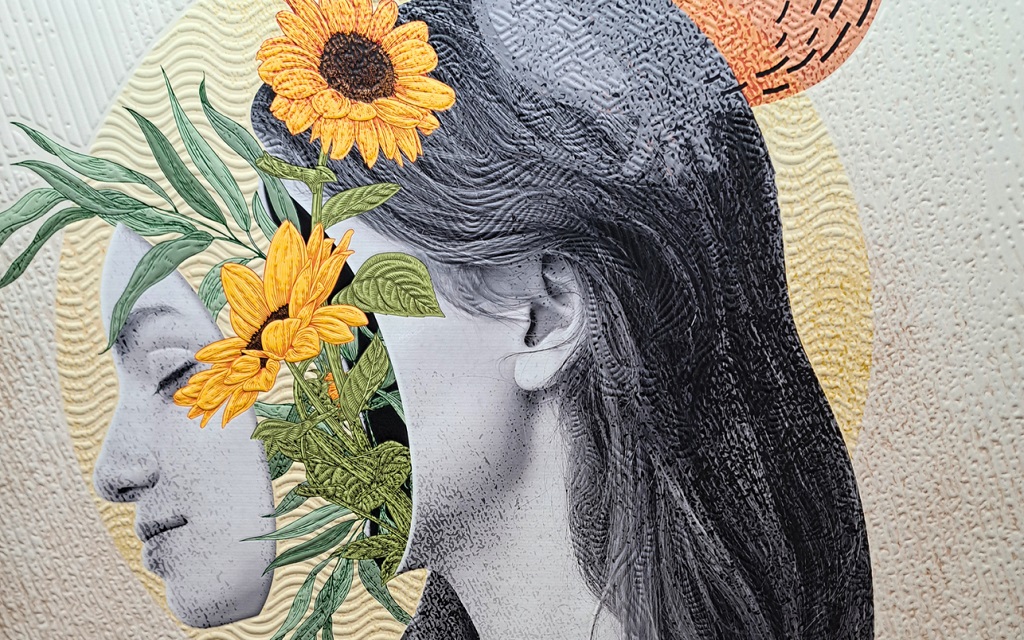
The main image is a vibrant biophilic wall print by Roland DGA, exhibited at HD Expo 2026—where nature and human form merge as a striking visual metaphor for wellness-centered design.
Purgula’s coverage of HD Expo 2026, which explores the latest in luxury design trends and amenities from the inspirational world of hospitality.
The hospitality industry continues to undergo a profound transformation, shifting from a model centered solely on luxury and convenience to one increasingly defined by wellness, balance, and healthy living. Today’s travelers are no longer satisfied with simply checking into a beautiful hotel or dining at an acclaimed restaurant. They are seeking experiences that nourish the body, calm the mind, and foster emotional connection and longevity.
This evolution reflects broader cultural changes in how people define health, success, and quality of life.
Hospitality Design Expo 2026 (HD Expo ’26) was replete with examples of fabrics, casegoods, seating, lighting and wellness amenities that demonstrate a sophisticated understanding toward today’s health-focused travel expectations.
Ultimately, the rise of wellness in hospitality signals a broader redefinition of luxury itself.
Luxurious hospitality is no longer measured solely by extravagance or exclusivity, but by how a space makes guests feel: rested, grounded, energized, and connected. As the industry continues to evolve, wellness is poised to remain at the center of hospitality’s future, shaping the way people travel, dine, and experience wellness away from home.
While the hospitality industry undoubtedly influences residential design trends, travelers accustomed to state-of-the-art home wellness amenities are also pushing hospitality spaces to surpass their elevated expectations.
Table of Contents
- The Latest in Hospitality Wellness
- Hospitality Wellness Trends Coming to the Home
- Home Wellness Trends Influencing Hospitality
- Noteworthy Wellness-Related Exhibitors at HD Expo 2026
- Shoppable Luxury Hotels
- HD Expo Resources
Also see:
- HD Expo 2025: Inspiration for the Home from the World of Luxury Hospitality
- 10 Great Features That Will Make Any Guest House Spectacular
- 5 Stylish Ideas to Make Your House Look New & Feel Like Home
- 7 Tips on How to Make Your Home Up-to-Date & On-Trend
- More Recommended Interior Design Articles
- Related Topics: ADUs | Interior Design | Home Décor | Entertaining at Home
The Latest in Hospitality Wellness
The global wellness economy has grown into a $6.3 trillion industry, with wellness tourism emerging as one of its fastest-growing sectors.
According to Dr. Gautam “Dr. G” Gulati—a featured speaker at this year’s expo—wellness tourism alone is projected to surpass $1.4 trillion by 2027, fueled by travelers who spend approximately 35% more per trip than traditional leisure tourists. Dr. Gulati notes that this growth reflects a major shift in consumer priorities, as travelers increasingly seek experiences that improve not only relaxation, but also long-term physical, mental, and emotional well-being.
Today’s hospitality industry is taking a far more holistic approach to wellness than in previous decades. Wellness is no longer confined to spas and fitness centers; instead, it is being integrated into nearly every aspect of the guest experience, from architecture and culinary programming to sleep design, technology, and sustainability initiatives.
According to Dr. Gulati, hospitality brands are evolving from places where people stay into designed environments to help guests feel healthier, more balanced, and more restored during and after their travels in the invisible, unconscious manner. In recent years, wellness has expanded beyond the spa menu to become a guiding philosophy in hospitality design and operations.
Hotels now incorporate the following wellness amenities into the guest experience:
- Meditation and Mindfulness Spaces
- Circadian Lighting Systems
- Air Purification Technology
- Recovery-focused Fitness Amenities
- Nutrient-Dense Culinary Offerings
Restaurants are increasingly emphasizing:
- Hyper-Local Organic Sourcing & Foraging
- Transparency
- Sustainability
- Functional Nutrition
- Circadian Dining
- Adaptogenic Non-Alcoholic Drink Menus
- Bio-Data Personalization
- Plant-Forward Decadence
- Neuro-Design Environments
- Longevity Gastronomy
- Zero-Waste Craftsmanship
- Neuro-Gastronomy Pairings
Resorts are curating immersive programs centered on:
- Sleep Tourism & Rest Optimization
- Stress Reduction
- Longevity
- Holistic Health
Gulati emphasizes that what was once considered an added luxury has now become an expectation among modern travelers, particularly affluent and health-conscious consumers.
Several factors are driving this transformation. The lingering effects of COVID heightened global awareness surrounding physical and mental health, leading travelers to prioritize restoration, resilience, and self-care when choosing destinations. At the same time, Millennials and Gen Z consumers continue to place greater value on experiences that align with wellness, sustainability, and authenticity. Younger travelers are especially drawn to hospitality brands that integrate wellness into their identity rather than treating it as a standalone amenity.
Technology and social media have further accelerated the wellness movement. Consumers are now more educated about their immune systems, gastro health, nutrition, sleep science, biohacking, fitness recovery, and mental health than ever before, and they increasingly expect hospitality environments to reflect these priorities.
Whether through digital detox retreats, wearable wellness technology, plant-forward dining concepts, personalized health programming, or nature-inspired architecture, wellness has become both a competitive differentiator and a core business strategy. As Gulati explains, the future of hospitality wellness will center on personalization, preventative health, and experiences that create measurable improvements in how guests feel, function, and live.
Within that broader wellness economy, longevity is emerging as its own distinct and rapidly growing category. According to market research firm SNS Insider, the global longevity market alone is projected to reach $67 billion by 2035—reflecting a fundamental cultural shift in how consumers think about health, aging, and the spaces they inhabit. As Condé Nast has observed, “feeling good now trumps looking good,” and healthspan—the quality of our years, not just their quantity—has become just as important as lifespan itself.
Wellness-focused travelers aspire to continue learned best practices to their homes and daily lifestyles on return.
Gulati centers his approach by The Seven Levers of BioHarmony™—a framework designed to align daily habits and living environments with human biology to enhance longevity and healthspan:
- Sleep: Optimizing the bedroom environment for rest.
- Movement: Encouraging physical activity through environment design.
- Nutrition: Focused on metabolic flexibility and personalized eating, including circadian eating windows.
- Mindfulness: Techniques to reduce stress and improve mental well-being.
- Connection: Fostering social bonds and community.
- Purpose: Aligning daily life with personal meaning.
- Environmental Safety: Creating a secure, non-toxic environment (e.g., air/water filtration, non-toxic materials)
Also presenting at HD Expo 2026 was Adriane Berg—longevity travel expert, Emmy Award-winning broadcaster, and United Nations Representative to the International Federation on Ageing—who offered a forward-looking framework for how design is responding to the longevity movement. Berg identified four emerging design categories shaping hospitality and residential spaces:
- Longevity Design: environments engineered to increase lifespan
- Healthspan Design: spaces that maintain health and vitality across the lifespan
- Biohacking Design: environments that slow the normal course of aging
- Age Reversal Design: spaces targeting measurable improvements in biological and cognitive age
Berg described recent aging-related findings by the Edelman Longevity Lab as being at a “Design Tipping Point”:
There is a gradual shift in the definition of aging itself: from something passive and inevitable to something measurable, manageable and increasingly influenced by science and technology. — Edelman Longevity Lab
Hospitality Wellness Trends Coming to the Home
According to themes emerging from HD Expo 2026 and broader 2026 hospitality forecasts, several hotel and resort trends are now moving directly into residential homes—especially in luxury, wellness-focused, and smart-home design. The biggest shift is that homeowners increasingly want their homes to feel like boutique hotels, wellness retreats, and private clubs rather than traditional residential spaces.
Here are several major hospitality-to-home design trends showing up:
- Wellness-First Homes
- “Resimercial” Design
- Hospitality-Level Smart Technology
- Boutique-Hotel Style Bedrooms
- Resort-Style Outdoor Living
- Experience-Driven Kitchens & Dining
- Biophilic & Nature-Based Design
- Branded Residences & Hotel-Lifestyle Living
- Emotional & Sensory Design
- Sustainability as Luxury
1. Wellness-First Homes
Hotels are treating wellness as a full-environment experience, and growing numbers of homeowners are adopting the same mindset. Instead of just adding a gym or spa bathroom, homes are being holistically designed to support sleep, stress reduction, recovery, and mental health.
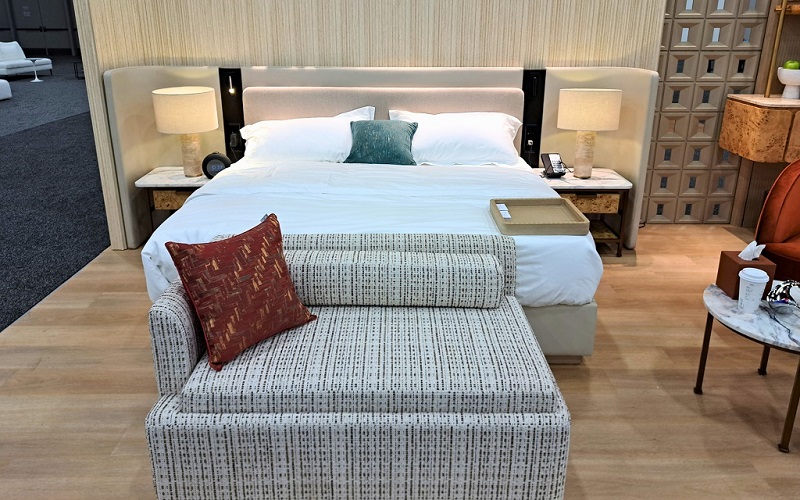
Aone’s bedroom booth exhibited at HD Expo 2026, showcasing various elements of comfort: wellness clock, in-bed reading lights, tray, storage bench, soothing color palette for rest, nearby seating area, and more.
The hospitality industry has been redefining luxury around how guests feel rather than simply what they consume, with an emphasis on restoration, personalization, and long-term well-being. Homeowners are now following suit.
Several HD Expo speakers specifically noted that wellness technology and sensory design are moving ‘from hotel to home’—and the list of what that means in practice is growing rapidly:
- Circadian lighting systems
- Air and water purification
- Spa-style bathrooms with hydrotherapy circuits and thermal bathing experiences
- Infrared saunas and cold plunges
- Sleep-focused amenities: premium bedding, soundproofing, blackout drapery, and aromatherapy
- Acoustic comfort and quiet spaces
- Nature-inspired materials and layouts
- Convenient outdoor access for fresh air and sunlight
- Healing lighting and audio systems
- Sensory gardens
- Wellness minibars stocked with supplements and recovery devices
- Personalized wellness programs tailored to individual fitness, nutrition, and sleep goals
The modern hotel spa has evolved into a comprehensive wellness hub—with meditation gardens, recovery lounges, and social wellness spaces centered around saunas and cold plunges moving from resort amenity to design expectation. Increasingly, wellness is becoming a central feature of hotel design rather than a secondary add-on.
Hospitality is also beginning to introduce dedicated longevity spaces—environments specifically engineered around the science of healthy aging. These include IV lounges, infrared and detox bars, cryotherapy suites, aqua spaces, energy rooms, and biophilic absorption spaces designed to reduce biological stress at a cellular level. What begins in leading resorts and wellness hotels reliably migrates into the home, and the most forward-thinking residential designers are already incorporating these typologies into luxury primary residences.
Also see:
2. “Resimercial” Design
A major crossover trend is referred to as “resimercial”—the blending of residential warmth with commercial-grade hospitality functionality.
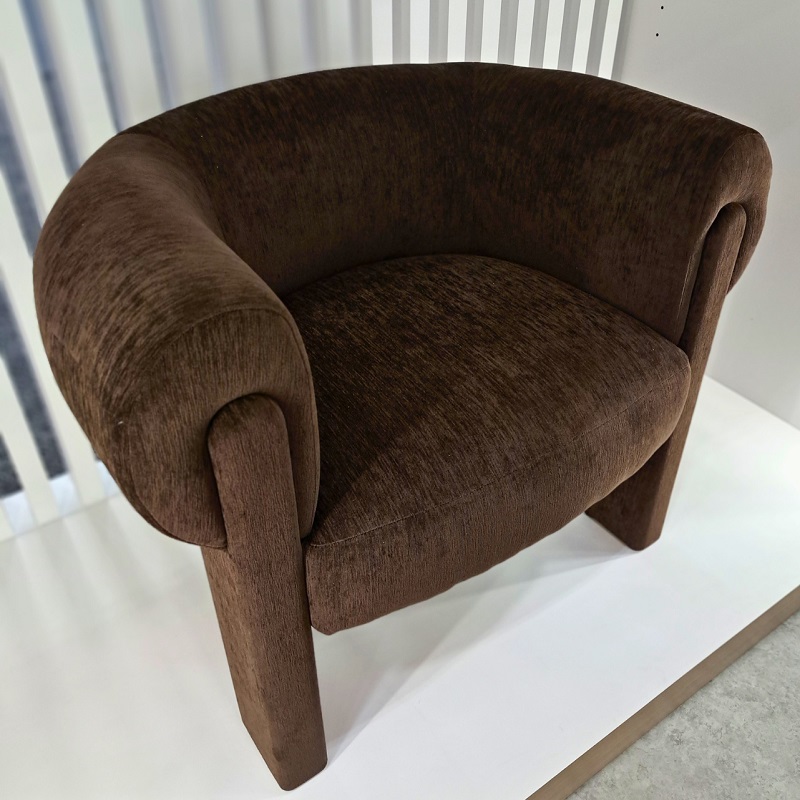
A brown resimercial chair exhibited by Article Pro at HD Expo 2026. Article’s Pro line of furniture launched after learning their popular residential furniture was being used for commercial applications by designers.
This trend became especially noticeable after hybrid work blurred boundaries between home, office, and entertaining situations. Hotels have responded by creating spaces that serve multiple modes—work, rest, socializing, and recovery—and residential designers are applying the same thinking.
Examples include:
- Hotel-lobby-inspired living rooms
- Flexible social seating areas
- Integrated smart systems
- Lounge-style kitchens and bars
- Multipurpose entertaining spaces
- Transformable furniture
- Device-free rooms and screen-free social spaces designed for mindfulness and human connection (a growing response to digital fatigue, sometimes called “analog wellness”)
3. Hospitality-Level Smart Technology
Luxury hotels are normalizing invisible technology, and more homeowners are expecting similar seamless experiences at home.
Trending features include:
- Voice-controlled lighting and climate
- Automated shades
- Hidden speakers and TVs
- Wireless charging built into furniture
- Personalized “scene” settings for sleep, entertaining, or work
- AI-driven room controls, fitness tracking integrations, smart mattresses, and recovery devices
- Personalized climate and comfort settings
The key trend is “muted tech”: technology that disappears into the architecture instead of looking gadget-heavy. Technology is increasingly being used to improve comfort, recovery, and personalization while remaining unobtrusive to the overall experience.
4. Boutique-Hotel Style Bedrooms
Hospitality design is reshaping residential bedrooms into immersive retreat spaces. Hotels are redesigning rooms to promote relaxation and better sleep actively—and homeowners are bringing the same experience home.
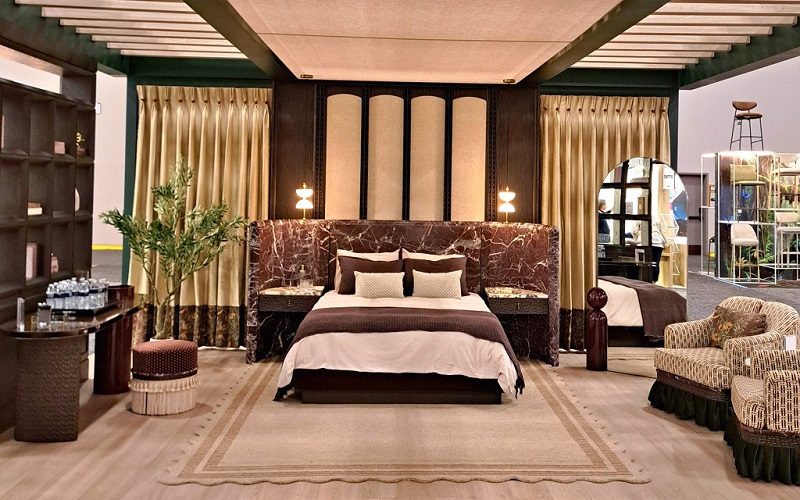
A luxurious bespoke bedroom designed by Jan Baran Design in partnership with TLC Hospitality, on display in TLC’s impressive booth at HD Expo 2026, featuring a wide-range of high-quality natural materials evoking comfort, safety, and restorative privacy.
Design elements include:
- Oversized upholstered headboards
- Layered textiles and mood lighting
- Sculptural furniture
- Curved silhouettes
- Warm earth tones
- Blackout drapery and acoustic softness
- Convenient, flexible lighting in bed
- Intimate seating areas
- Premium sleep-focused bedding, in-room recovery tools, and aromatherapy
The goal is emotional comfort and cocoon-like relaxation rather than minimalism.
5. Resort-Style Outdoor Living
Outdoor spaces are becoming mini-hospitality destinations. Hospitality designers say guests increasingly want immersive outdoor experiences, and homeowners are recreating similar resort atmospheres at home, no matter the size or dimensions of their exterior spaces.
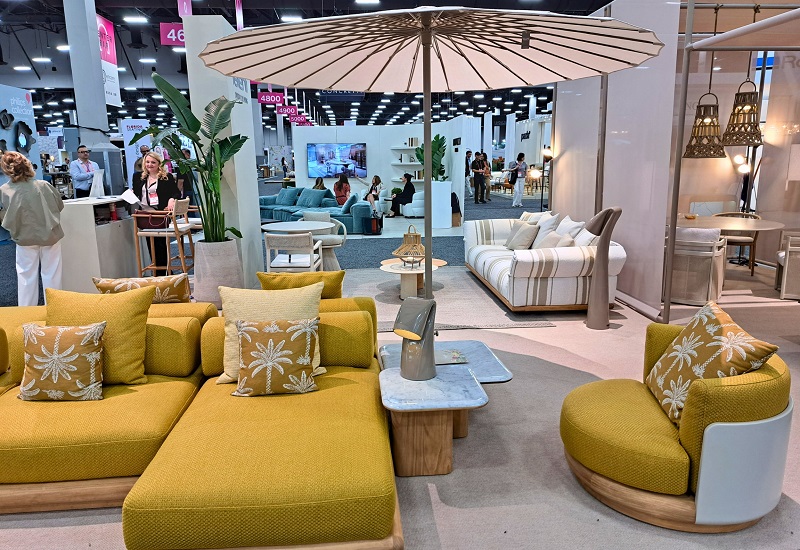
Talenti’s elegant, resort-durable outdoor furniture on display at HD Expo 2026
Popular features include:
- Outdoor lounges and kitchens
- Fire pits and wellness gardens
- Ambient resort lighting
- Poolside cabanas
- Integrated/portable audio systems
- Portable heating devices that are safe and convenient to use
- Covered entertaining zones
- Durable yet comfortable outdoor materials and fabrics
- Nature immersion areas and outdoor movement spaces, drawn from wellness resort design

Tuuci’s black and white cabana exhibited at HD Expo 2026
6. Experience-Driven Kitchens & Dining
Hotels are turning restaurants into social destinations, and homes are following suit. Healthy, transparent dining is also part of this shift—locally sourced ingredients, plant-forward menus, and thoughtful beverage programs are moving from hotel restaurants into the home.
Residential adaptations include:
- Chef-style kitchens
- Statement bars and beverage stations
- Open-concept entertaining
- Wine rooms
- Restaurant-inspired banquette seating
- Inviting, interactive dining spaces
The kitchen is increasingly viewed as a social gathering hub rather than just a functional cooking space.
7. Biophilic & Nature-Based Design
Hospitality brands are heavily investing in biophilic design, and residential designers are adopting the trend in tandem. The focus is on emotional calm and a pervasive connection to nature—used in both hospitality and residential settings to reduce stress and improve emotional well-being.

Phillip Jefferies biophilic wallcovering exhibited at HD Expo 2026
This includes:
- Indoor-outdoor transitions
- Natural woods and stone
- Organic curves
- Oversized windows
- Living walls and greenery
- Earth-tone palettes
- Textural materials
- Hiking, outdoor movement, and eco-conscious design inspired by wellness resorts
- Meditation gardens and sensory outdoor spaces
8. Branded Residences & Hotel-Lifestyle Living
One of the fastest-growing luxury real estate sectors is branded residences—homes attached to hospitality brands or designed around hotel-level amenities. This trend is manifesting primarily in luxury high-rise condominiums and standalone branded towers, where single-family privacy meets resort-level service.
Within this residential real estate category, buyers increasingly want:
- Concierge services & 24/7 staff
- Housekeeping & turnkey property management
- Wellness programming (integrated spa and biophilic spaces)
- Private clubs & resident-only lounges
- Shared luxury amenities (infinity pools, co-working hubs)
- Branded luxury hospitality care products
- Membership-based wellness clubs and fitness centers open to the broader local community—a growing feature of mixed-use hospitality developments
This “hospitality lifestyle at home” model is expanding rapidly, rewriting the blueprint especially for modern luxury multifamily development.
9. Emotional & Sensory Design
A major 2026 hospitality theme is designing spaces around emotion rather than aesthetics alone. The broader industry shift—toward restoration, mental health, and emotional balance—is now directly influencing residential interiors.
This translates into:
- Softer lighting
- Tactile fabrics
- Personalized interiors
- Scent integration
- Warm layered materials
- Spaces designed for memory and comfort
- Guided meditation, breathwork, and mindfulness programming integrated into home design or residential amenities
- Community-centered spaces designed to reduce stress and foster connection
Designers are moving away from cold minimalism toward spaces that feel deeply personal and restorative.
10. Sustainability as Luxury
Hospitality design now treats sustainability as part of the luxury experience, and residential homes are adopting the same philosophy. Eco-consciousness is becoming a visible status marker in high-end homes.
Key features include:
- Low-VOC materials
- Energy-efficient systems
- Reclaimed woods
- Durable, repairable furnishings
- Water-saving fixtures
- Passive cooling and lighting
- Locally sourced materials and products, echoing the farm-to-table and local-sourcing standards now common in luxury hospitality
- Investing in products, materials and systems that last
Home Wellness Trends Influencing Hospitality
This section of trends is most pertinent for members of the hospitality industry, as they need to stay abreast of advances in residential wellness. Over recent years, homeowners with the means and prioritized needs have been proactively addressing the reality that their homes can indeed can make them sick without proper remedy.
That said, today’s travelers are bringing a new set of expectations with them when they book hotels, resorts, and travel experiences. As wellness products and healthy living technologies have become increasingly integrated into everyday life, consumers now expect their preferred hospitality destinations to offer not only the same wellness amenities they already enjoy at home, but something elevated or unexpected. The modern guest no longer views wellness as an occasional luxury reserved for vacations; instead, wellness has become part of daily living, and travelers expect continuity between their home environment and their travel experience.
From air purification systems and filtered water to sleep-enhancing mattresses, circadian lighting, fitness technology, cold plunges, infrared saunas, meditation spaces, and nutrient-focused dining, wellness amenities that were once considered exclusive are now becoming mainstream in residential design.
As a result, hospitality brands are under increasing pressure to not only match these standards, but exceed them. Guests want hotel rooms that support restorative sleep, fitness facilities that rival premium health clubs, menus designed around functional nutrition, and environments that reduce stress while enhancing physical and mental well-being.
The rise of home wellness has fundamentally changed consumer expectations across the hospitality industry. Travelers are no longer simply seeking escape or indulgence; they are looking for destinations that help them maintain—and ideally improve—their personal wellness routines while away from home. Today’s wellness-conscious consumers are highly educated about health optimization, recovery, sleep science, mindfulness, and longevity, making them far more selective about where they stay and how those environments support their lifestyle goals.
This shift has elevated wellness from an optional amenity to a defining component of hospitality design and brand identity. Luxury resorts now integrate biophilic architecture, recovery therapies, personalized wellness programming, and advanced in-room technologies to create immersive experiences that feel both restorative and aspirational. Even business hotels and urban properties are incorporating wellness-centered features to meet the demands of travelers who want healthier, more balanced experiences regardless of trip purpose.
The expectations of wellness in hospitality settings have undeniably been raised. In many ways, hospitality is no longer competing solely with other hotels or resorts, but often:
hospitality is competing with the comfort, convenience, and wellness sophistication consumers have already created within their own homes.
The connection between travel and longevity is also well documented. Research cited by Berg from the NIH and National Institute on Aging found that individuals who maintain a sense of mission or adventure carry a 43% lower risk of mortality—making travel not merely a leisure activity but a longevity strategy. For hospitality brands, this reframes the stakes entirely: a well-designed wellness experience isn’t just an amenity upgrade, it’s a meaningful contribution to a guest’s long-term health.
The brands that succeed will be those that can seamlessly extend and elevate those wellness experiences, transforming travel into an opportunity for renewal, performance, and long-term well-being.
Noteworthy Wellness-Related Exhibitors at HD Expo 2026
Here are several exhibitors we encountered at HD Expo 2026 that in one or more ways are providing products that are collectively addressing many of the hospitality design trends mentioned.
- Access Product
- A.L. Contract
- Architectural Grille
- Basico Aroma
- BDL (Better Designed Lighting)
- Boca Terry
- Bromic Heating
- Crossley Axminster
- Gabriel
- Garrett Leather (CTL Leather)
- Glac Seat
- Humble Lights
- LOOK Wallcoverings
- Minibar Systems
- Nature’s Carpet
- Nonstop
- The Outdoor Plus
- Reid Witlin Textiles
- Ro Sham Beaux
- Townsend Leather
- Tuuci
- Wonderwood Books & Library Services
- Worthen Brass
NOTE: Companies are listed in alphabetical order.
1. Access Product Inc.
Integrated Charging & Power / Hospitality-Level Smart Technology
In an era when “muted tech”—technology that serves without being seen—is defining the best hospitality spaces, Access Product Inc. addresses one of the most persistently unglamorous problems in interior design: where do people actually plug in? Their patented Vault series offers motorized pop-up and roll-top power centers that integrate seamlessly into desktops, nightstands, conference tables, and hotel room surfaces, providing wireless charging, USB-A, USB-C, HDMI, and data ports in fully configurable combinations that disappear when not in use. For homeowners designing resimercial living spaces—where a kitchen island might double as a workspace and a media console needs to charge multiple devices simultaneously—Access Product’s surface-flush solutions bring hospitality-grade connectivity elegance into the home without a tangle of cords in sight.
2. A.L. Contract by American Leather
Transformable Furniture / Resimercial & Flexible Living
A.L. Contract by American Leather brought one of the more quietly ingenious pieces of furniture to this year’s show: a sleeper sofa designed to open partially—functioning as a chaise longue without requiring full deployment—giving it the flexibility to serve as casual seating, a reading perch, a guest bed, or something in between, all within the same footprint.
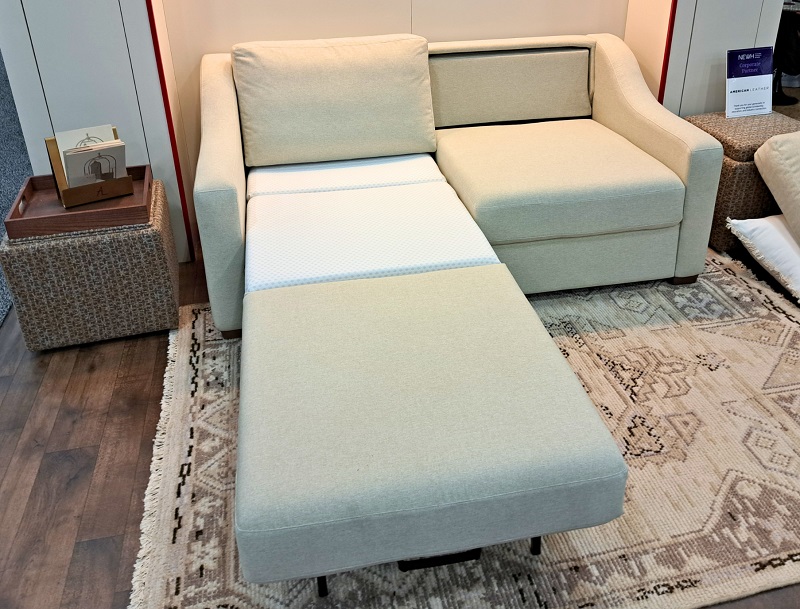
The innovative sleeper sofa by A.L. Contract of American Leather exhibited at HD Expo 2026
It’s a small innovation with significant implications for how we think about multipurpose living spaces. As resimercial design pushes rooms to serve more modes—work, rest, entertaining, recovery—transformable furniture that adapts without announcing itself becomes increasingly valuable, in both hospitality environments and the homes that are learning from them.
3. Architectural Grille
Decorative Ventilation / Air Quality / Invisible Wellness
Architectural Grille has found its place in all areas of construction, fabrication, and interior design, with products used for air conditioning, heating, ventilation, decorative screening, and artwork—spanning projects from luxury hotels to residential renovations. In an era when air quality and acoustic comfort are core components of wellness design, beautifully crafted, architecturally integrated grilles serve the “invisible wellness” principle: functional systems that disappear seamlessly into the design.
4. Basico Aroma
Scent Integration & Air Purification / Emotional & Sensory Design
Basico Aroma sits at a compelling intersection: part air purification system, part sensory experience. Their proprietary base dispensers—precision atomizers that can be integrated into a space’s air system—deliver curated fragrances that elevate mood, reduce stress, and create a distinctive sense of arrival, all while contributing to cleaner indoor air quality.
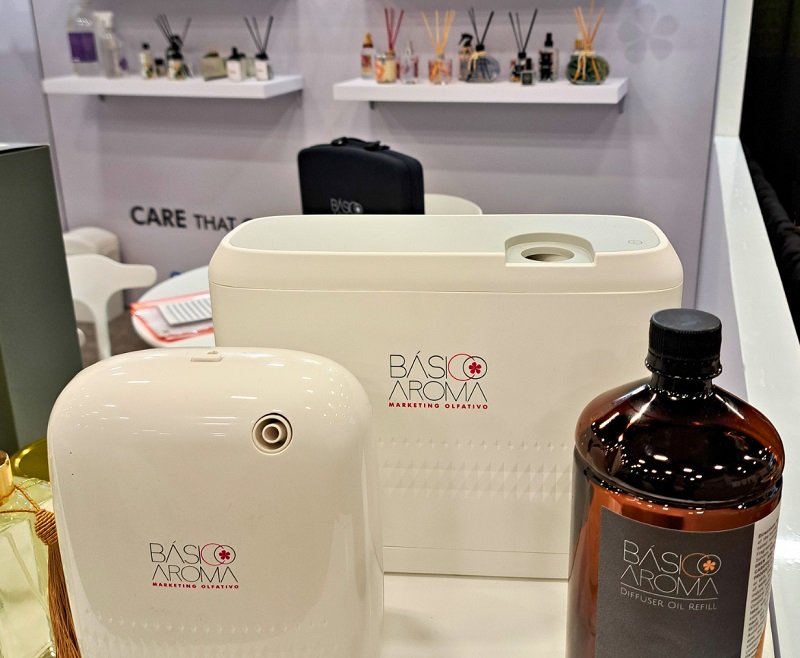
Basico Aroma’s scent dispensers exhibited at HD Expo 2026
While Basico Aroma’s “Scent Marketing” approach is primarily directed at hospitality brands seeking to create a memorable and distinctive sensory identity, the underlying technology translates naturally into residential wellness design, where scent is increasingly recognized as one of the most powerful—and often underutilized—tools for shaping mood, reducing stress, and creating a sense of calm and comfort. As sensory design becomes central to both hotel and residential wellness, Basico makes the case that air quality and atmosphere are not separate concerns, but two dimensions of the same wellness equation.
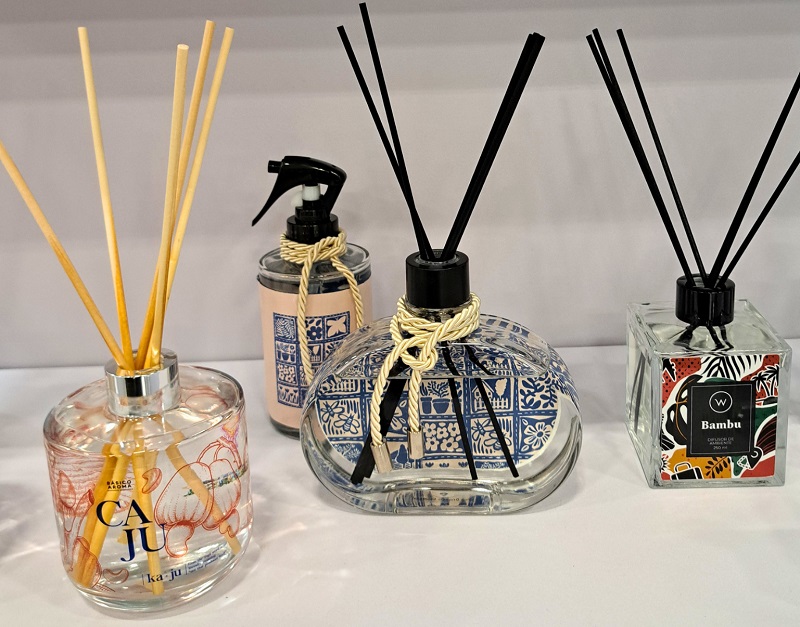
Stylish reed diffusers from Basico Aroma on display at HD Expo 2026
Also see:
5. BDL (Better Designed Lighting)
Custom Hospitality Lighting / Circadian & Mood Support / Wellness Technology
A trusted hospitality lighting partner since 2005, BDL provides designers, procurement teams, and ownership with limitless options to realize their design intent—from statement chandeliers to bedside lamps engineered for comfort. Their work is directly relevant to the wellness trend of circadian and mood-supportive lighting, offering custom-crafted fixtures that serve both aesthetic and functional wellness goals in hospitality and residential spaces alike.

BDL’s buzzing booth at HD Expo 2026
At HD Expo 2026, BDL offered a compelling glimpse into the future of wellness-focused lighting. Paul Adams, the executive overseeing BDL and its affiliated brands under Florida Lighting Investment Partners, shared a vision with Purgula that goes well beyond beautiful fixtures:
a future in which lighting actively supports human health, mood, and recovery—not as a secondary benefit, but as a primary purpose of lighting design.
Central to that vision is BDL’s development of proprietary full-spectrum lighting technology engineered to deliver not just circadian rhythm support, but a broader range of therapeutic and wellness benefits within hospitality and residential environments. The implications for how luxury hotels and high-end residences think about light—as a wellness tool rather than simply an aesthetic one—are significant. Full details of BDL’s technology roadmap are forthcoming, with Adams committed to leading the educational programs that will empower the professional design community to put this next generation of wellness lighting to proper use.
6. Boca Terry
Luxury Spa Textiles / Wellness-First Living
With over two decades of expertise in crafting high-quality spa robes, towels, and accessories, Boca Terry caters to the needs of premium hotels, spas, and wellness centers. Their products are found at Ritz-Carlton, Four Seasons, Raffles Hotels, and Golden Door Spas—and increasingly, homeowners are bringing the same spa-grade cotton terry experience home. Boca Terry represents perhaps the most literal expression of the “hotel-to-home” wellness trend: the desire to wrap yourself in the same quality of comfort you experience at the world’s best resorts.
7. Bromic Heating
Premium Outdoor Heating / Resort-Style Outdoor Living
Bromic Heating makes premium infrared outdoor heaters engineered to extend the usability of outdoor spaces across all seasons. Sustainable, design-forward heaters from Bromic, including the Eclipse and Platinum collections, integrate heat and lighting into the architecture—elevating outdoor hospitality spaces without disrupting design intent. As resort-style outdoor living becomes a top residential priority, Bromic’s radiant heating solutions help homeowners create year-round wellness gardens, outdoor lounges, and spa spaces that rival the best resort destinations.

Bromic Heating’s combo electric infrared heater and light fixture on display at HD Expo 2026
8. Crossley Axminster
Custom Woven Carpets / Emotional Design / Recycled Materials
Axminster weaving is one of the oldest and most revered traditions in carpet making, and Crossley Axminster brings that heritage into the present with a fresh, design-forward approach built for the most demanding hospitality environments. Their custom woven carpets—crafted from an 80/20 wool and nylon blend for lasting softness and durability—draw from an archive of over 75,000 patterns, with the ability to build entirely bespoke designs from scratch. Carpet tiles feature an Eco-Soft backing made from 100% recycled materials. What makes Crossley particularly compelling for residential applications is the same quality that makes them exceptional in hospitality: the ability to turn a floor into a narrative—a richly patterned, emotionally resonant surface that anchors a room and gives it a soul.

Close up view of just one of several attention grabbing carpets by Crossley Axminster on display at HD Expo 2026
9. Gabriel Fabrics
Sustainable Wool Fabrics / Tactile Wellness
A Danish textile company with over 170 years of heritage, Gabriel Fabrics combines design, innovation, in-house production, and textile engineering with a focus on environmental responsibility. Their wool fabrics, with natural antistatic and water-repellent properties, are designed to support healthy indoor spaces—making them a natural fit for the tactile, sensory-forward interiors that define today’s wellness hospitality design. Their Loop collection recycles textile waste into new fabrics, reinforcing sustainability as a design value.
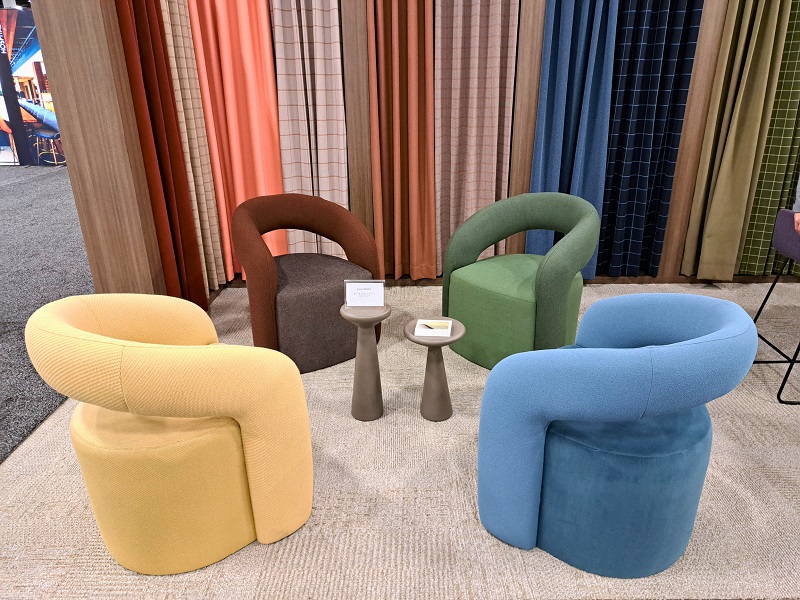
Gabriel Fabrics booth at HD Expo 2026 with meeting chairs upholstered in their stellar fabrics
10. Garrett Leather (CTL Leather)
Luxury Leather / Sensory & Emotional Design
A leading supplier of luxury leathers to the hospitality and design industries, Garrett Leather offers an extensive collection of hides prized for their tactile richness and natural authenticity. In the context of sensory and emotional design, leather brings warmth, texture, and an organic quality to interiors that synthetic materials simply cannot replicate—supporting the broader shift toward spaces that feel deeply personal and grounded.

Garrett Leather colorful samples on display at HD Expo 2026
11. Glac Seat
Experience-Driven Dining / Emotional Design
Glac Seat’s iconic bistro chairs trace their lineage directly to the original French manufacturer Poitoux, whose rattan café seating has graced Parisian sidewalks since the 19th century—and whose unmistakable woven aesthetic has found its way into grand brasseries, boutique hotels, and storied café terraces around the world. The owner of Glac shared a story that perfectly captures the hospitality-to-home spirit: during the pandemic, a homeowner who deeply missed the atmosphere of European café life simply created one at home—a small, beautifully considered bistro corner with the right chairs, the right table, and suddenly the right feeling. It’s a reminder that the experience of hospitality doesn’t always require a renovation. Sometimes it begins with a single, well-chosen chair.

Glac Seat’s striking natural rattan bistro chair (CT-815) in black and white on display at HD Expo 2026
12. Humble Lights
Portable Cordless Lighting / Seamless Indoor-Outdoor Living
Portable, cordless, and designed with a hospitality sensibility, Humble Lights addresses something that surprisingly few residential lighting solutions get right: the ability to move light intuitively through a space rather than being anchored to what’s hardwired into the walls. As seamless indoor/outdoor living becomes a defining feature of wellness-focused home design, the ability to carry ambient lighting from a living room to a terrace, from a dining table to a garden—without losing atmosphere or aesthetic—becomes genuinely valuable.
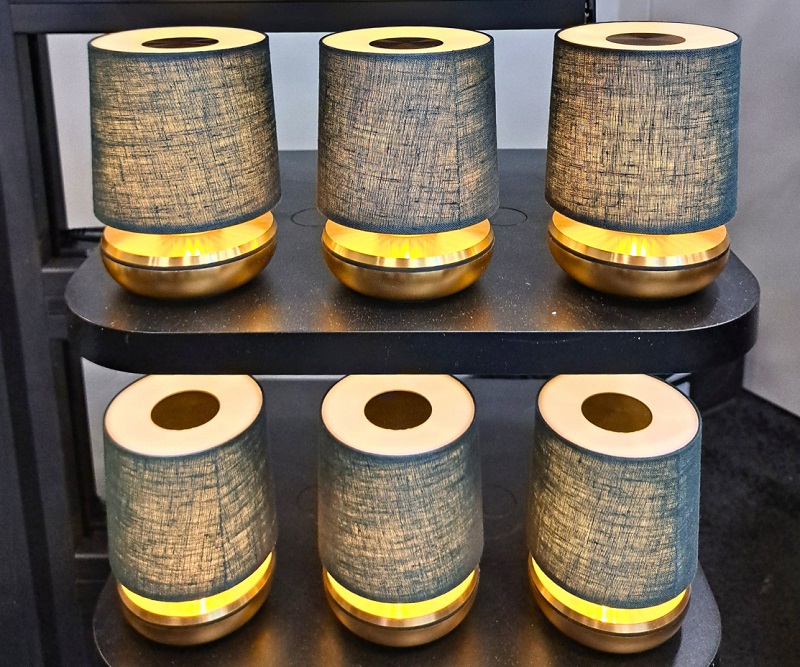
A suite of portable Humble lights on display at HD Expo 2026
Humble’s pieces are stylish enough to hold their own as design objects and practical enough to follow you wherever the evening leads, making them a natural fit for the kind of fluid, resort-inspired outdoor living that is reshaping how homeowners think about their exterior spaces after dark. Their modular, plug-and-play component design adds another layer of practicality: individual parts can be replaced without discarding the entire fixture—a sustainability-minded approach that is particularly valuable for commercial operators managing large inventories, but equally appealing to any homeowner who prefers investing in quality pieces built to last rather than disposable ones built to be replaced.

Three more styles of Humble lights
13. Look Walls & Interiors
Biophilic Wall Coverings / Cultural & Sensory Expression
In a compact booth, Look Walls & Interiors made a memorable impression with bold, culturally rooted biophilic pattern work—the kind of design that stops you mid-aisle. Their striking blue Pájaro Azul print—designed by Mexican folk artist Tomás Ramírez—demonstrates how wallcoverings can function as far more than background surface. Ramírez’s design is an expression of place, story, and the natural world rendered in vivid, artisan-driven pattern.

Close up view of Pájaro Azul—designed by Mexican folk artist Tomás Ramírez in partnership with Look Wall Coverings, displayed at HD Expo 2026
In the context of biophilic and emotional design, wall surfaces are one of the most accessible and impactful tools available to homeowners—a single statement wall can shift the entire atmosphere of a room, connecting it to nature, culture, and a sense of “somewhere specific” rather than “anywhere generic”.
14. Minibar Systems
In-Room Amenity Solutions / Wellness Bar Integration
Operating since the 1970s and with over two million minibars and safes installed worldwide, Minibar Systems is one of the global hospitality industry’s most established in-room amenity providers. What makes them relevant to today’s wellness conversation is the evolution of what a minibar is. Their flagship SmartCube is a fully automated, plug-in system running on infrared sensing technology that integrates directly with hotel property management software—automatically tracking inventory, utilizing silent thermoelectric cooling, and billing in real time.
More broadly, the minibar itself is being reimagined across hospitality as a wellness station: stocked not just with spirits and snacks, but with supplements, hydration products, recovery tools, and better-for-you options that reflect the health priorities of today’s guests. As that shift moves from hotels into luxury residential design, the in-room wellness bar becomes a compelling home amenity in its own right.
15. Nature’s Carpet
Natural Wool Broadloom & Rugs / Sustainability as Luxury
Nature’s Carpet occupies a genuinely distinct position in the flooring world: a company for whom sustainability is not a marketing overlay but a foundational design principle. Their Colortec Origin carpet is Cradle-to-Cradle Certified® and made with undyed wool in nature’s own color variations—containing absolutely no synthetic dyes—while their broader Green Spectrum framework offers designers a clear, honest progression from fully natural, chemical-free, biodegradable wool with jute backing to low-VOC wool blends, depending on project needs. For homeowners seeking flooring that is non-toxic, renewable, acoustically soft underfoot, and genuinely beautiful, Nature’s Carpet makes the case that the most responsible choice and the most luxurious one are increasingly the same thing.
16. Nonstop
Bedside Electronics & Wireless Charging / Smart Guest Room Technology
What began as a hotel alarm clock company has quietly evolved into something more aligned with the wellness bedroom than the traditional nightstand gadget—a maker of hotel wellness clocks. Nonstop’s latest Station R combines a white noise machine, alarm clock, and phone charger into a single sleek device—with six soothing soundscapes, a GentleWake alarm that simulates a sunrise, and wireless USB-C charging, all in a compact, design-forward form trusted by Marriott, Hyatt, Hilton, and IHG properties across North America. For homeowners who want their bedroom to function as a genuine sleep sanctuary—with the same thoughtful, integrated technology they encounter at the best hotels—Nonstop illustrates how a single well-designed bedside device can quietly support better rest, well-orchestrated mornings, and a cleaner, less cluttered nightstand.
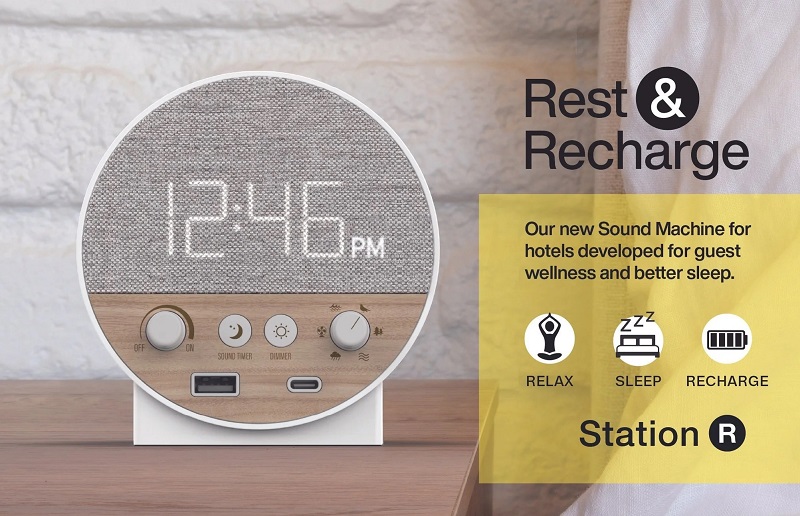
Nonstop’s Station R, an easy-to-use hotel wellness clock,
Image courtesy of Nonstop
17. The Outdoor Plus
Fire & Water Features / Resort-Style Outdoor Living
The Outdoor Plus merges modern architecture, artisan craftsmanship, and engineered performance into a full line of fire and water features—creating outdoor spaces that inspire connection, beauty, and comfort. Proudly designed and handcrafted in California using premium materials including stainless steel, Corten, copper, and glass fiber reinforced concrete, their fire pits, fire tables, fire bowls, and water features serve both residential and hospitality environments. There is genuine science behind the appeal: gazing into an open flame measurably reduces blood pressure, while the sound of moving water triggers neurochemical responses associated with calm and relaxation. For homeowners creating resort-inspired outdoor wellness spaces—the fire pit at the center of an evening gathering, the water bowl anchoring a meditation garden—The Outdoor Plus delivers the kind of functional, sculptural focal points that turn a backyard into a destination oasis.
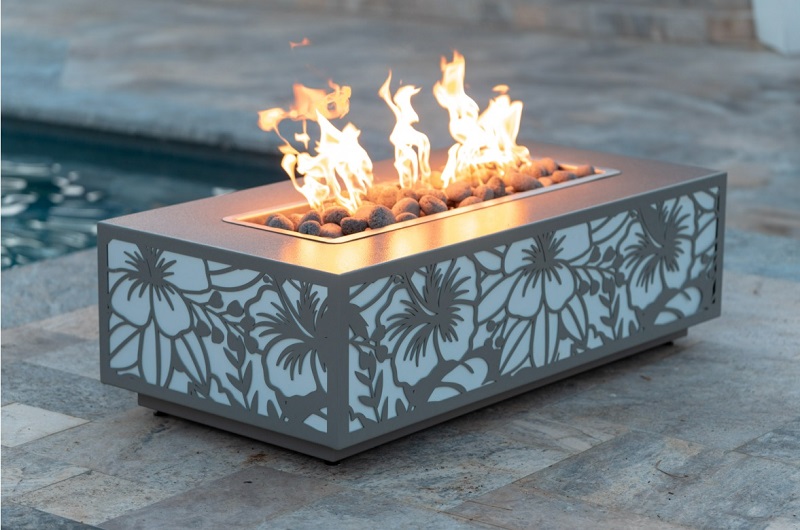
A gray biophilic fir pit by The Outdoor Plus
Image courtesy of The Outdoor Plus
18. Reid Witlin Textiles
Performance Textiles / Resimercial & Indoor-Outdoor Design / Sustainability
A third-generation, family-owned business with roots stretching back to 1955, Reid Witlin Textiles has long been a trusted supplier of high-performance fabrics to the hospitality industry. At HD Expo 2026, they arrived with two compelling new collections that showcase both their range and their values.
The Woodstock Collection is their most expressive offering yet—a vibrant, boldly patterned line inspired by the spirit of the iconic 1969 music festival, with a deeply personal touch: the Yasgoor family, who owns Reid Witlin, has a direct connection to the original Woodstock site, where blood relative Max Yasgur hosted the generation-defining moment in music and culture. Patterns like Wild Child, Gypsy Soul, Peace & Love, and Funkadelic bring color, energy, and tactile richness to hospitality and residential interiors alike—each designed to stand alone or layer beautifully with others, in spaces that feel alive and deeply connected.
The After Hours Collection takes a different, more refined approach—featuring two eco-conscious vinyls, Nightcap and Do Not Disturb, and one luxurious velvet, Room Key, in a palette of sophisticated neutrals and moody blues. Elegant yet fiercely durable, featuring abrasion ratings reaching an extraordinary 250,000 double rubs and a suite of sustainability certifications including PFA/PFAO Free, REACH compliance, and Healthcare Product Declaration, After Hours embodies the resimercial ideal:
fabrics that perform at the commercial level while feeling entirely at home in a residential setting.
Together, the two collections illustrate what makes Reid Witlin a standout in the wellness-conscious design conversation:
the conviction that sustainability, performance, and genuine beauty are not competing priorities, but a single, unified standard.
19. Ro Sham Beaux
Biophilic Lighting / Natural & Sustainable Materials
A standout in biophilic lighting design, Ro Sham Beaux distinguishes itself through its use of thoughtful, eco-conscious materials such as semi-precious stones, hemp, recycled glass, and rattan—paired with a commitment to craftsmanship and customization. Founder Ann Yancy describes lighting as “the jewelry of the home,” and her handcrafted fixtures—found in boutique hotels and luxury residences worldwide—embody the emotional and sensory design principles driving wellness-focused interiors today.
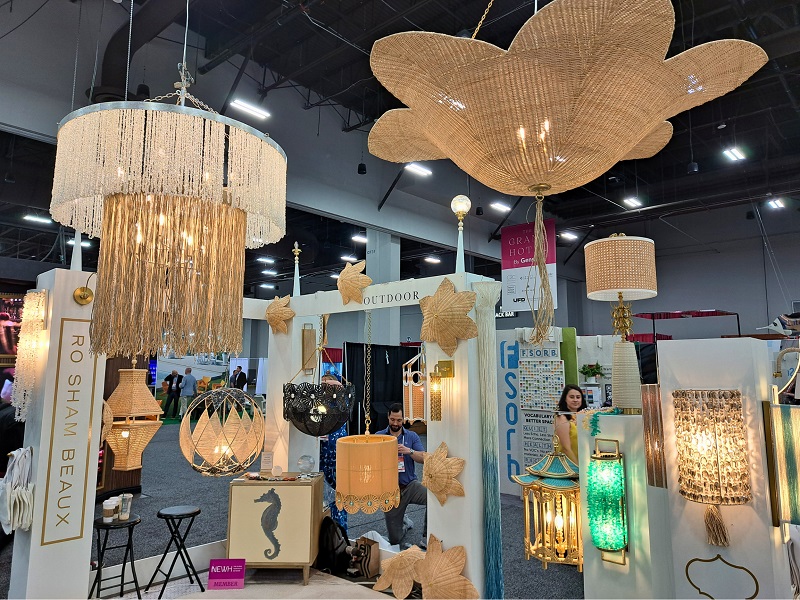
Ro Sham Beaux biophilic light fixtures on display at HD Expo 2026
20. Townsend Leather
Luxury Leather / The Cleopatra Collection / Emotional Design
A family-owned American tannery with decades of experience supplying luxury leather to the hospitality industry, Townsend Leather is known for producing hides of exceptional depth, texture, and character. Their Cleopatra Collection represents their most refined offering—rich, tactile leathers that bring warmth and sensory dimension to upholstered furniture, wall panels, and accent pieces. In the context of emotional and sensory design, Townsend’s leathers do exactly what wellness-focused interiors demand: they make a space feel inhabited, purposeful, and deeply comfortable rather than merely designed.

Closeup view of Townsend Leather’s Palm Damask pattern
21. Tuuci
Resort-Grade Shade & Outdoor Furnishings / Hospitality-Level Outdoor Living
For over 25 years, Tuuci has set the standard for resort-grade outdoor shade and furnishings, bringing nautically inspired engineering and refined aesthetics to hospitality’s most demanding outdoor environments—from poolside cabanas at five-star resorts to rooftop terraces at boutique hotels worldwide. Their latest rotating umbrella and cabana designs showcase exactly where outdoor living is heading: away from purely functional shade solutions and toward immersive, design-forward outdoor rooms that feel as considered and comfortable as any interior space. As homeowners increasingly invest in resort-style outdoor living, Tuuci represents the aspirational benchmark—the kind of elegant, weather-ready, whimsical shading that transforms a backyard, terrace, or garden into a true destination.
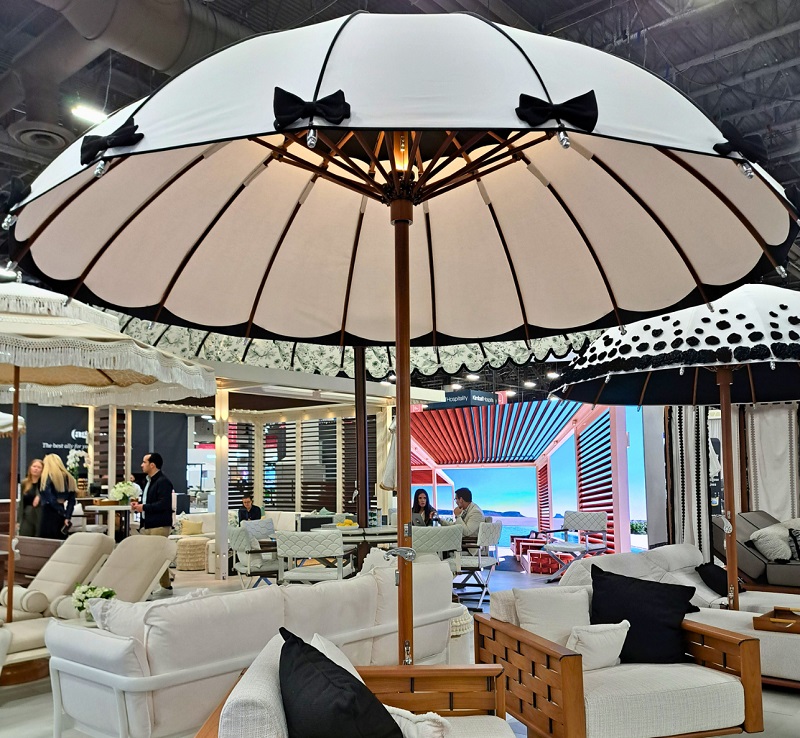
Tuuci’s black and white rotating umbrella with bows proudly displayed at HD Expo 2026
22. Wonderwood Books & Library Services
Curated Libraries / Digital Detox / Wellness Through Culture
Wonderwood may be the most quietly radical exhibitor in the wellness space at HD Expo 2026—a company built on the conviction that a thoughtfully curated library is itself a wellness amenity. They specialize in designing and curating bespoke home and boutique hotel libraries that reflect the unique character of the place and the people who inhabit it, with collections chosen to create a deep sense of immersion, discovery, and connection to local culture. Though not designed by Wonderwood, a terrific example of a well-curated cultural collection can be found in the Hotel Paisano in Marfa, Texas, where guests can explore the rich history of the filming of the classic movie Giant—the kind of place-specific literary experience that no streaming service can replicate. At home, the analog library serves a different but equally powerful purpose: a deliberate retreat from screens, a place to read real books, turn real pages, think slowly, and practice the kind of digital detox that wellness culture increasingly recognizes as essential. In an age of infinite digital content, a beautifully curated shelf of books may be the most underrated wellness investment in the home.
23. Worthen Brass
Custom Iron & Brass Furniture / Heirloom Craftsmanship
Since 1975, Worthen—a maker of custom iron and brass furniture—has collaborated with designers and retailers to create truly remarkable furniture pieces for both residential and hospitality applications. Their handcrafted, heirloom-quality approach aligns with the broader shift toward durable, emotionally resonant furnishings—pieces designed not just to fill a space, but to anchor it with character and longevity.

A view of the Worthen booth at HD Expo 2026
Shoppable Luxury Hotels
Here are links to online stores where you can purchase various types of products, such as bath accessories, bedding, and even furniture, that are used by leading luxury hospitality brands.
- Four Seasons at Home
- JW Marriott
- Le Méridien
- The Luxury Collection
- Mandalay Bay
- Mandarin Oriental
- Ritz-Carlton
- Rosewood
- Sofitel
- St. Regis
- W Hotels
- Waldorf Astoria
HD Expo Resources
For more information on the HD Expo + Conference 2026, including additional media coverage, visit these links:
- 3 Takeaways from Day Three of HD Expo 2026
- 5 Takeaways from Day Two of HD Expo 2026
- Best Booth Awards HD Expo 2026
- HD Expo 2026 Panel Sessions
- Hospitality Design
- Science in Design
- Hotels at Home Websites
More Recommended Interior Design Articles
- How to Integrate Satellite Tables In Your Home Creatively
- Why Coffee Tables are Key to the Design of Living Room Spaces
- 8 Spa Décor Ideas to Make Your Home More Comfortable & Relaxing
- Why You Should Apply Cinematically Inspired Design to Your Home
- Top 5 Color Schemes for Your Living Room
- How to Apply Transformable Interior Design to Your Home
- 8 Wellness Design Tips for Your Kitchen & Bath
- Related Topics: ADUs | Interior Design | Home Décor | Entertaining at Home
| Purgula is reader-supported. When you click on links to other sites from our website, we may earn affiliate commissions, at no cost to you. If you find our content to be helpful, this is an easy way for you to support our mission. Thanks! Learn more. |