Homeownership in the United States has never been more closely tied to understanding regional hazards. A property’s location directly determines its exposure to damage, insurance costs, and long-term maintenance demands. Today, more than one in four U.S. homes—representing roughly $12.7 trillion in property value—face severe or extreme risk from flooding, hurricane winds, or wildfires.
Homeowners, investors, and builders increasingly treat risk awareness as a fundamental part of responsible property management. With destructive weather events on the rise—23 billion-dollar disasters struck the U.S. in 2025 alone, causing $115 billion in damage—preparation and resilient design have become essential for protecting both lives and assets.
This article breaks down major weather hazards across four key U.S. regions, highlighting what makes each area uniquely vulnerable, while sharing practical steps homeowners and builders can take to strengthen property resilience.
Table of Contents
- Northeast and Mid-Atlantic States
- The Midwest and Tornado Alley
- Western States
- Coastal Southeast and Gulf Coast
- How Regional Risks Are Reshaping Homes
- Beyond Upgrades: The Critical Role of Preparedness
Also see:
Northeast and Mid-Atlantic States
Flooding and Winter Storms in Dense, Aging Communities
Heavy rainfall, flooding, nor’easters, and winter storms dominate risks in the Northeast and Mid-Atlantic, where dense populations and older infrastructure amplify vulnerabilities.

While these events rarely produce the sudden, catastrophic structural destruction seen in other regions, repeated flooding and ice damage strain roofs, foundations, and drainage systems over time. Aging homes and older utilities in urban corridors like New York, Philadelphia, and Boston increase repair costs and recovery challenges when storms hit. Homeowners benefit most from proactive steps such as upgrading gutters and downspouts, installing sump pumps with battery backups, elevating utilities, and creating clear flood diversion paths. Consistent seasonal maintenance remains one of the most cost-effective ways to limit gradual but expensive damage.
Also see:
The Midwest and Tornado Alley
Preparing for Sudden, High-Force Wind Destruction

An EF3 tornado near Dodge City, Kansas on May 24, 2016. EF3 tornados have 3-second gust wind speeds of 136–165 mph.
Oklahoma, Kansas, Missouri, and surrounding states in Tornado Alley face frequent severe thunderstorms, powerful tornadoes, and damaging hail. These events deliver intense, localized destruction to roofs, windows, siding, and structural framing within minutes. In 2025, multiple billion-dollar tornado outbreaks across the central U.S. highlighted the ongoing threat, with some storms producing hundreds of twisters in days.

Tornado damage to a stucco home in Missouri
Unlike widespread coastal events, tornado impacts are often pinpoint but devastating. Homeowners strengthen resilience with reinforced roofing systems (such as hurricane straps and impact-resistant shingles), shatter-resistant windows, anchored garages, and safe rooms or storm shelters built to FEMA standards. Community early-warning systems and family emergency plans further reduce risk when seconds matter most.
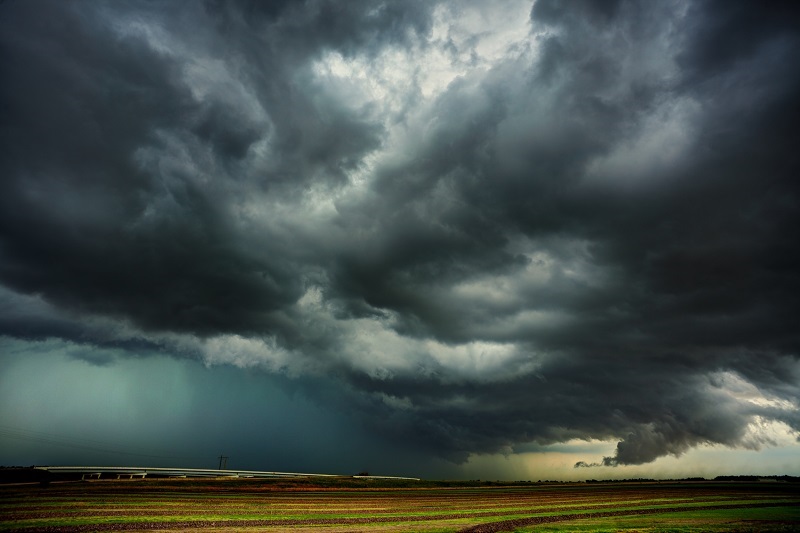
Heavy rain storm above Arkansas farmland
Tornado Alley Shift: Since the late 1980s, the highest concentration of tornadoes has migrated from the central Plains toward the Mississippi Valley. In 2025 alone, Arkansas saw nearly four times as many tornado warnings as Texas during peak spring months.
Also see:
Western States
Escalating Wildfire Threats in Dry, Expanding Communities
California, Oregon, and parts of Colorado and the broader West confront growing wildfire danger fueled by prolonged dry seasons, dense vegetation, and expanding development into the wildland-urban interface.

Southern California wildfire near WUI (Wildland-Urban Interface) development
Wildfires can spread quickly across large areas, threatening entire neighborhoods with flames, extreme heat, and airborne embers. The January 2025 Los Angeles wildfires, which became the costliest in U.S. history at an estimated $65 billion, underscored how quickly these events can escalate in populated areas.
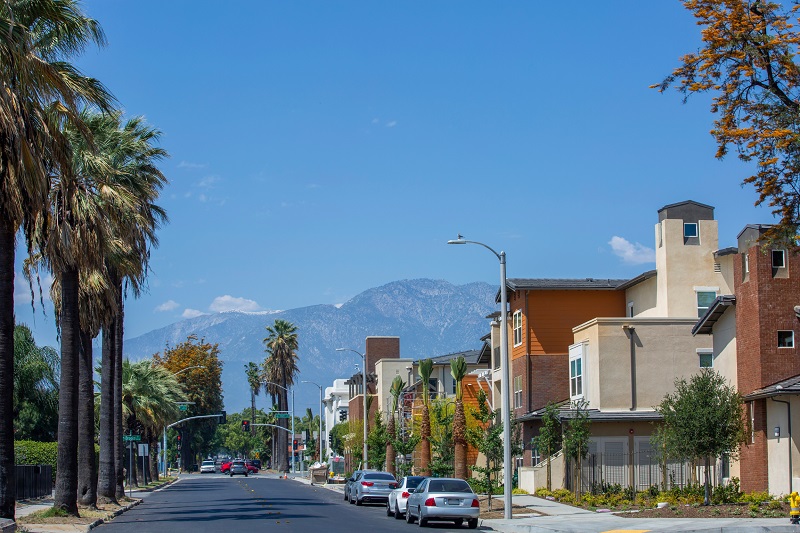
Parts of Ontario, California face a high risk of heat, coupled with significant wildfire and flood hazards, which are all characteristics of development in, or near, WUI areas.
Since development in fire-prone zones increases the likelihood of property exposure, builders and homeowners can reduce fire risk by choosing fire-resistant roofing and siding, and installing ember-proof vents and screens. Clearing defensible space and using hardened landscaping are also critically important tactics to incorporate. Community-wide efforts like shared evacuation routes and early detection systems are increasingly essential as fire seasons intensive and lengthen.
Also see:
Coastal Southeast and Gulf Coast
America’s Highest Hurricane and Flood Risk Zones
Florida, Louisiana, and Texas stand out as the nation’s highest overall home disaster risk regions due to powerful hurricanes, storm surge, widespread flooding, and tropical storms. A 2024 study from the National Oceanic and Atmospheric Administration (NOAA) reports a steady rise in billion-dollar weather events concentrated in these areas.

Palm trees blowing in tropical storm winds
These extreme weather events often impact large population areas simultaneously, causing extensive wind, water, and mold damage that leads to the highest cumulative financial losses. Even in years without major landfalls, such as 2025, the region’s exposure to flooding and severe weather remains unmatched.
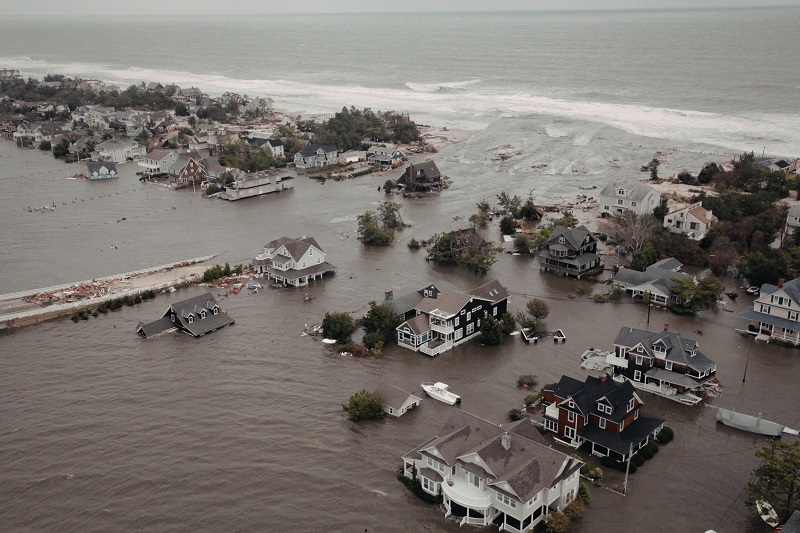
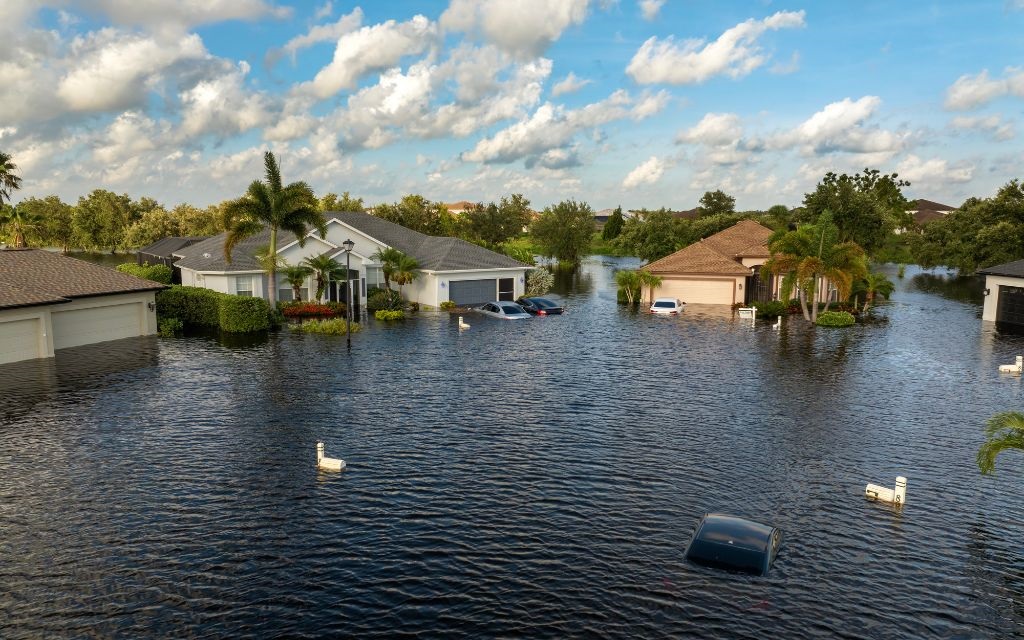
Aerial view of a coastal town submerged by floodwaters
Homes in many coastal metros face severe or extreme hurricane wind risk, often paired with high flood potential. Elevated construction on pilings or stem walls, fortified roofing and windows meeting IBHS FORTIFIED standards, flood barriers, and improved drainage systems play critical roles in reducing long-term damage and insurance costs.

Houston is frequently cited as a prime example of a coastal metropolis where severe hurricane wind risk and high flood potential converge.
Also see:
How Regional Risks Are Reshaping Homes
Understanding regional risks is fundamentally shaping how architects, builders, and homeowners approach designing, building, maintaining and renovating homes. Instead of one-size-fits-all construction, professionals increasingly tailor homes to local threats—creating more resilient structures that better withstand the specific hazards in their area.
Modern building practices continue to evolve with upgrades that target regional hazards: fire-resistant roofing, siding, and vents in wildfire zones; reinforced framing, hurricane straps, and impact-resistant windows in high-wind regions; and elevated foundations with flood vents along hurricane-prone coasts.
These region-specific features not only reduce potential damage but also help maintain or increase long-term property values. More homeowners now see resilience features as a smart investment rather than an added expense, especially as insurance costs rise in vulnerable areas.
Also see:
Beyond Upgrades: The Critical Role of Preparedness
Structural upgrades reduce risk, but preparedness plays an equally important role. Flooding remains one of the most common and costly disasters in the U.S., even outside designated high-risk zones. Many homeowners underestimate their exposure until damage occurs. Early planning can significantly reduce losses.
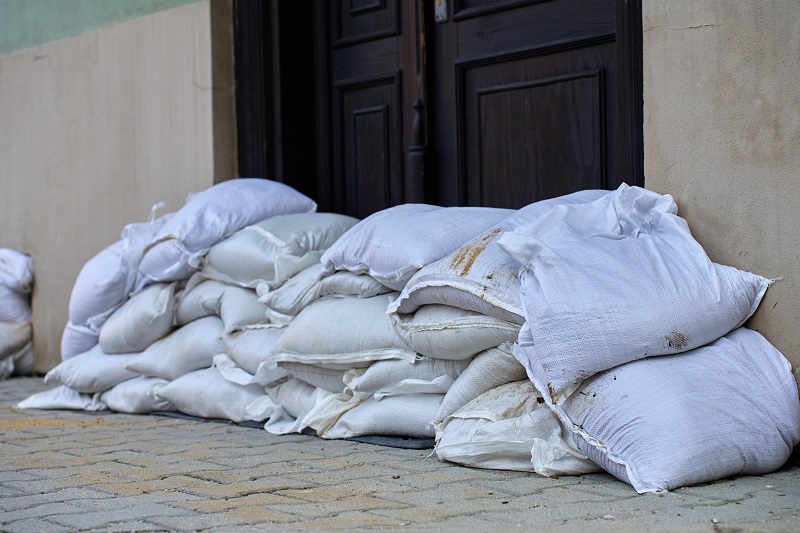
Florida home with large sandbag wall for flood protection
Homeowners who plan ahead and act early gain a major advantage. Simple but effective steps—such as installing flood barriers and sump pumps, improving lot grading and drainage, sealing foundations, and elevating critical utilities—can dramatically reduce losses. Creating a family emergency plan, maintaining an updated disaster supply kit, and knowing your evacuation routes will further enhance safety.

Take Action Today: Assess your property’s specific risks using free tools like FEMA’s National Risk Index or First Street Foundation’s Risk Factor (enter your address for a free risk assessment). Even modest investments in resilience frequently deliver big returns through lower insurance premiums, faster recovery, and higher resale value.
Also see:
Related Articles
- Best Roof Types to Prevent Storm Damage
- Firescaping: How to Protect Your Home with Fire Resistant Landscapes
- Innovative Zero-Damage Fire Suppression for The Home
- If You Own a Fireplace, You Need to Read This
- The Traits & Risks of Dangerous Trees: Is Your Property Safe?
- Related Topics: Resilience | Home Safety | Construction | Roofing | Maintenance
| Purgula is reader-supported. When you click on links to other sites from our website, we may earn affiliate commissions, at no cost to you. If you find our content to be helpful, this is an easy way for you to support our mission. Thanks! Learn more. |