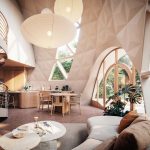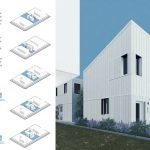

The main image showcases the approved Spanish Modern home design by Geddes Ulinskas Architects for a house damaged by fire in Pacific Palisades, showing a modern, safety-focused architectural plan. Image courtesy of Geddes Ulinskas Architects (GUA).
Last week, leaders from the Southern California home construction industry gathered at the Lualdi Los Angeles showroom for a thought-provoking panel titled “Redefining Luxury.”
Moderated by Jennifer Koster, CEO of Werkwell, the discussion brought together four prominent voices in the Los Angeles residential design world:
- Roman James, President & CEO of Roman James Design Build
- Lauri Morrison, Owner and Principal Architect of Lauri Morrison Studio
- Russell Linch, Owner of RAL Design & Management
- Geddes Ulinskas, Founder and Principal of Geddes Ulinskas Architects

“Redefining Luxury” panel held at Lualdi Los Angeles showroom March 4, 2026.
Left to right: Anolan Dragitsch; Roman James; Jennifer Koster; Lauri Morrison; Russell Linch; Geddes Ulinskas
Photo by Rafael Najarian, Pasadena Real Estate Photography
The conversation took place against the backdrop of the 2025 LA Fires —events that have forced both homeowners and industry professionals to reconsider long-standing assumptions about luxury housing.
What emerged over the evening was a clear consensus:
luxury homes are no longer defined solely by aesthetics or scale. Instead, resilience, longevity, and performance are rapidly becoming the new hallmarks of high-end residential design.
The event was produced by Anolan Dragitsch, founder and CEO of Anolan LuxeWorld, and sponsored by Lualdi Los Angeles, Werkwell and DECOR California.
Here are highlights of the intriguing topics discussed throughout the evening:
- A New Definition of Luxury
- Resilience as a Design Priority
- Moving Beyond “Stick-Built” Construction
- Technology’s Growing Role in Home Design
- Energy Independence and Infrastructure
- Fire Protection and Community Resilience
- Multigenerational Living and Wellness
- Making the Process Human Again
- The Return of Longevity and Legacy
- The New Luxury Home
Also see:
- The Forever Home Myth: Why Adaptability is More Important than Endless Love
- The New American Home 2026: Innovation Meets Philanthropy
- The Future of Homebuilding Arrives in Pacific Palisades: Cover Delivers First Fire Rebuild
- More Recommended Luxury Design Articles
- Related Topics: Home Safety | Home Wellness | Aging in Place | Multigenerational
A New Definition of Luxury
Jennifer Koster opened the discussion with a central question facing the construction industry:
How can we build better, faster, and more affordably—without sacrificing quality?

The deeply knowledgeable Jennifer Koster, CEO of WerkWell, kickstarts the “Redefining Luxury” panel at Lualdi Los Angeles.
Photo by Rafael Najarian, Pasadena Real Estate Photography
For decades, luxury residential design in Los Angeles was largely driven by architectural expression, interior finishes, and visual statement. Today, Koster suggested that the definition of luxury building has shifted dramatically.
Modern luxury increasingly revolves around safety, infrastructure, and independence—a home’s ability to function during extreme events such as fires, power outages, or water disruptions.
Panelists confirmed that conversations with clients have changed significantly in recent years. Homeowners are now asking different questions:
- Will my home still function during a grid outage?
- Can it survive wildfire exposure?
- Will insurance companies still insure it?
As Koster framed it:
Can a home protect you—and continue operating—when systems around it fail?
Resilience as a Design Priority
One of the strongest themes of the evening was resilience—the ability of homes to withstand natural disasters and operate independently when infrastructure breaks down.
Russell Linch noted that during last year’s wildfire events, homes that were not physically damaged still lost power for extended periods. Many residents were without electricity for two weeks, while others experienced outages lasting as long as two months.

Russell Linch, Owner of RAL Design & Management, shares insights at the Redefining Luxury panel.
Photo by Rafael Najarian, Pasadena Real Estate Photography
This reality is driving homeowners to consider more robust building systems.
Regarding fire resilience, Geddes Ulinskas described emerging fire-prevention technologies capable of pre-wetting or conditioning a home before a wildfire arrives, potentially protecting structures when a fire is detected several miles away.
Roman James discussed the growing use of concrete construction as an alternative to traditional wood framing. According to James, concrete structures offer several advantages: they are resistant to termites and fire, can withstand extremely high temperatures, and can reduce construction time and costs, while delivering superior insulation performance.
These types of systems reflect a broader shift toward high-performance building, where durability and disaster readiness are considered core design criteria.
Moving Beyond “Stick-Built” Construction
The panel also explored how new construction methods could reshape the rebuilding of Los Angeles neighborhoods over the coming years and decades.
Koster highlighted the role of prefabrication and modular construction, noting that in the Netherlands roughly 70 percent of residential construction is now prefab. In Los Angeles, however, prefabrication has historically carried a stigma.
Some panelists acknowledged limited direct experience with prefab systems but expressed growing curiosity about their potential benefits, particularly speed of construction and labor efficiencies.
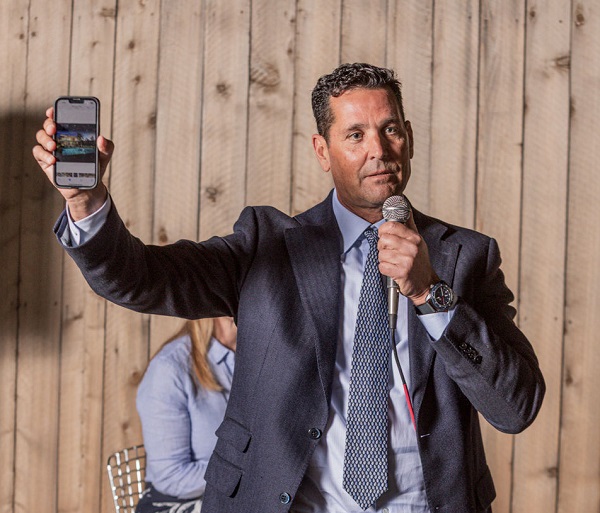
Roman James sharing his passion for innovative construction materials and processes.
Photo by Rafael Najarian, Pasadena Real Estate Photography
Roman James shared an example of a prefabricated home project in Costa Mesa where windows were installed just four days after the foundation was completed, illustrating how dramatically these systems can accelerate timelines.
Others described alternative construction approaches already gaining traction:
- Insulated Concrete Forms (ICF) used in basement construction, functioning like “Lego blocks” filled with concrete.
- Mass Timber Systems, large engineered wood components that char rather than ignite in fire conditions.
- Structural Insulated Panels (SIP) and composite wall systems that integrate insulation into the building structure itself.
The common thread across these methods is a growing appetite to leverage new materials and construction methods that deliver greater efficiency, durability, and performance.
Technology’s Growing Role in Home Design
Beyond construction materials, digital tools continue to reshape the way homes are designed and engineered.
Several panelists discussed the use of Building Information Modeling (BIM) and LiDAR scanning to create precise digital models of homes before construction begins. These technologies allow architects and builders to evaluate airflow, acoustics, structural loads, and even ventilation noise long before the first wall is built. These digital models (AKA digital twins) are also enabling homeowners to envision prospective alterations to original drawings without requiring extensive time to rework or risking the integrity of the integrated plans.
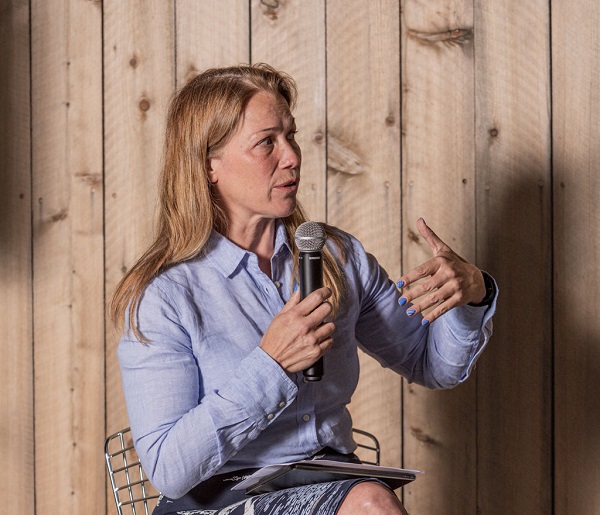
Jennifer Koster mentioning the power of parametric modeling in home construction.
Photo by Rafael Najarian, Pasadena Real Estate Photography
Koster also pointed to the increasing use of parametric modeling, where computer systems evaluate thousands of variables—from sunlight and wind patterns to building usage—to optimize a home’s placement and design.
Despite the sophistication of these tools, Roman James emphasized that traditional design skills still matter. Even as technology evolves, the creative process often still begins with something quite simple, yet effective, such as:
a No. 2 pencil and sketch pad.

Roman James reflects on how simple tools, like a no. 2 pencil and sketch pad, are still extremely important to the creative process.
Photo by Rafael Najarian, Pasadena Real Estate Photography
Energy Independence and Infrastructure
Energy resilience was another major topic mentioned throughout the discussion.
Solar power, battery storage, and backup power systems are becoming standard features in many high-end homes. Linch noted that some clients still request diesel generators, but architects and builders are increasingly steering homeowners toward battery-based energy systems.
Geddes Ulinskas pointed out that new construction in California is already mandated to meet Net Zero Energy Standards, though convincing homeowners to fully embrace these systems (i.e. “get them excited about”) can still be challenging.
Other technologies gaining attention include:
- Geothermal Energy Systems, which Ulinskas described as delivering “jaw-dropping” performance.
- Solar panels integrated directly into roofing materials that look like a modern standing-seam metal roof
- Smart home systems capable of automatically sealing vents and closing building openings when wildfire conditions approach.
James shared two amazing technologies being incororated within a pioneering 100% off-grid residential community in Belize, consisting of approximately 100 homes:
- Atmospheric Water Generators—machines that extract potable water directly from the air’s humidity
- A compact portable microreactor—Kaleidos by Radiant Nuclear—that delivers 1 MW of electricity and 1.9 MW of thermal power as a clean alternative to diesel generators
Also see:
Fire Protection and Community Resilience
In wildfire-prone regions like Southern California, fire hardening has become one of the most urgent design considerations.

Lauri Morrison sharing the importance of spreading awareness of new fire resilient products and solutions to homeowners.
Photo by Rafael Najarian, Pasadena Real Estate Photography
Lauri Morrison confirmed that fire resistant products and spacing—the strategic separation of combustible elements—have been a top area of interest of her clients. She added that educating homeowners and HOAs alike on new products and solutions is vital for making well-informed, properly prioritized decisions.
Panelists discussed a wide range of emerging solutions, including:
- Fire-resistant coatings (e.g. paint) and materials
- Fire-resistant vents designed to block embers
- Non-combustible fencing
- Intelligent home automation systems that seal buildings during wildfire events
- Experimental sonic fire suppression technologies that extinguish flames without risk of water damage.
- Home Dome, an advanced exterior wildfire protection system that uses proprietary Strong Water Technology—a non-toxic, biodegradable, CA Prop 65-compliant fire-blocking gel mixed with water—to create a durable, clinging moisture barrier and shield around a home and its landscape. The solution multiplies water’s effectiveness by up to 10x, while providing up to 30 hours of defense against embers, heat, and flames.
However, Ulinskas stressed that individual homes alone cannot solve the wildfire problem in isolation. Communities must also address fire resilience, such as “Zone 0” landscaping and fuel modification (AKA firescaping), removing combustible materials near homes, while building defensive firebreaks around and throughout a neighborhood.
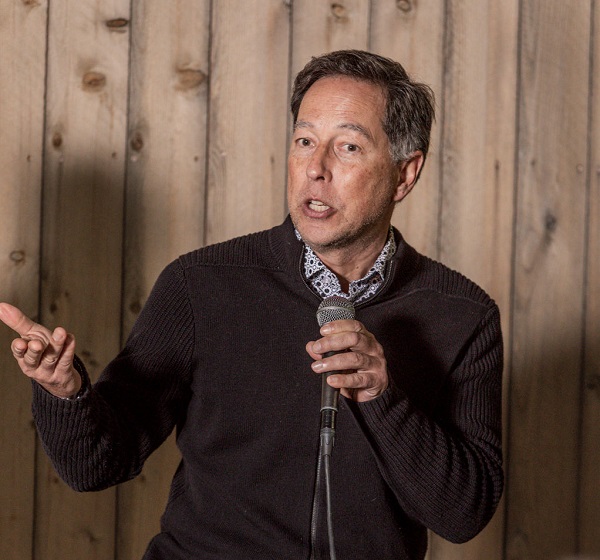
Geddes Ulinskas explains the importance of communities building resilience and not just individual homes.
Photo by Rafael Najarian, Pasadena Real Estate Photography
As he explained, a single hardened home surrounded by vulnerable structures stands little chance of survival—true resilience requires neighborhood-scale planning.
Also see:
Multigenerational Living and Wellness
As conversations turned to the future of residential living, panelists also highlighted a shift toward multigenerational housing.
Rather than designing solely for aging in place, many homeowners are now planning residences that can comfortably accommodate extended family members.
Common design strategies include:
- Dual primary bedroom suites
- Bedrooms and living spaces on the main floor
- Elevators for long-term accessibility
- Flexible layouts that adapt to changing household structures
- Detached ADUs for downsizing or housing for fulltime, onsite caregivers
Roman James also pointed to growing interest in wellness technologies, including circadian lighting systems, healthier building materials, and environmental controls designed to support occupant health.
Also see:
Making the Process Human Again
Despite the technical complexity of modern homebuilding, several panelists emphasized the importance of maintaining creativity and joy throughout the design process.
Russell Linch noted that many clients approach construction with anxiety, often after hearing horror stories about difficult building projects. Advanced modeling tools can help reduce uncertainty, allowing homeowners to visualize the process and make better decisions earlier.
Ultimately, the panel concluded that designing a home should remain a collaborative and inspiring experience.
As Koster summarized with a smile:
“Let’s make construction fun again!”
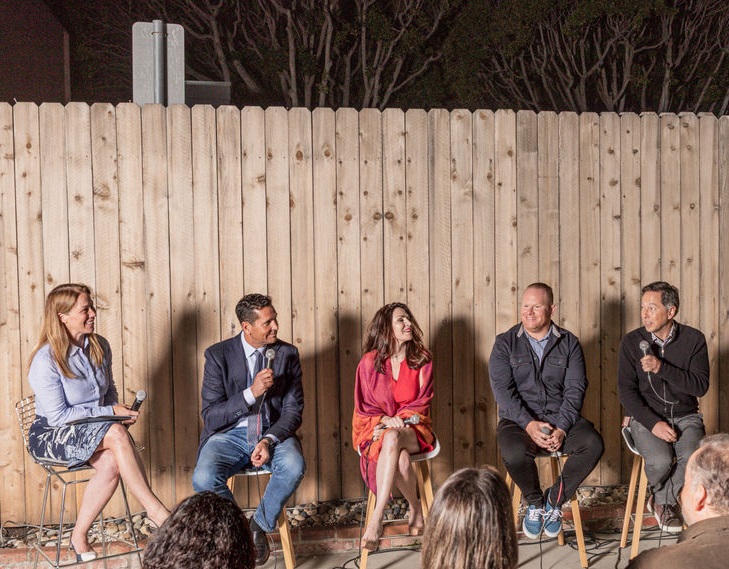
Panelists sharing a cathartic laugh.
Photo by Rafael Najarian, Pasadena Real Estate Photography
The Return of Longevity and Legacy
Perhaps the most philosophical theme of the evening emerged in the panel’s final question from the moderator:
What truly defines luxury today?
For Ulinskas, the answer lies in longevity. Rather than building disposable structures, architects should strive to create homes that can last 100 to 300 years, becoming enduring parts of the landscape.
He described this mindset as building a legacy—homes that will serve many generations.
This idea echoes a growing interest in what many designers call “Forever Homes.” These residences are designed not just for immediate lifestyle needs, but for long-term adaptability, multigenerational living, and aging in place.
NOTE: Recent examples of innovative Forever Homes highlighted by Purgula include The New American Home 2026, as well as the first wildfire rebuild completed in Pacific Palisades by Cover—both projects illustrate how resilience, sustainability, wellness and aging in place are converging within modern residential design.
The New Luxury Home
If one message stood out from the evening, it was that luxury is evolving from visible opulence to invisible performance.
Today’s high-end homes are increasingly defined by:
- Resilience to natural disasters
- Energy independence and infrastructure reliability
- Advanced construction methods
- Wellness and environmental performance
- Longevity and multigenerational adaptability
In other words, the most valuable luxury feature may be something homeowners rarely see:
a home designed to endure—protecting families for generations to come.
Additional Luxury Design Articles
- The New American Home 2025: Artistic Craftsmanship that Wows
- 10 Stellar Products in The New American Home 2025
- The New American Home 2024: Indoor-Outdoor Transformable Warmth
- How to Make a Bathroom Accessible, Safe and Comfortable
- Future-Proof Secrets for a Master Bathroom in a New Build
- Never Thought You’d Live in a Multigenerational Home? Think Again!
- Related Topics: Home Safety | Home Wellness | Aging in Place | Multigenerational
| Purgula is reader-supported. When you click on links to other sites from our website, we may earn affiliate commissions, at no cost to you. If you find our content to be helpful, this is an easy way for you to support our mission. Thanks! Learn more. |