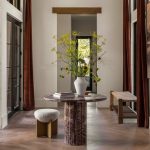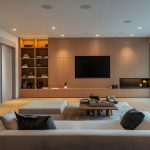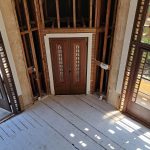

The main photo is courtesy of Cover and Vishal Mane—which showcases a close-up view of Sue Labella’s newly rebuilt home by Cover—the first home to be rebuilt for a displaced homeowner in Pacific Palisades after the January 2025 LA Fires.
In the protracted wake of the devastating January 2025 LA Fires that scorched thousands of acres and destroyed over 13,000 homes across Los Angeles County, stories of recovery have been few and far between.
Amid the lingering rubble and bureaucratic morass, however, one beacon of progress stands out:
The completion of the first ground-up fire rebuild in Pacific Palisades by Cover, a young, innovative Los Angeles-based homebuilder specializing in prefabricated, resilient structures.
Achieved for an octogenarian widow, Sue Labella, a resident of the Palisades for nearly five decades—this milestone isn’t just about a house being quickly rebuilt—it’s a testament to what’s possible when cutting-edge technology meets unwavering determination. This accomplishment offers a much-needed spark of encouragement for thousands still grappling with loss and confusion. To dispell any confusion surrounding a previous “Palisades First”, this property holds greater symbolic value as it marks the first actual return of a displaced Palisades resident to their original lot.
In a moment resonating far beyond one ordinary parcel on a once lovely, thriving neighborhood street, Cover has accomplished what many believed would take years. This achievement is not just a construction milestone—it is a powerful signpost of resilience, reinvention, and renewal for thousands of families still navigating the long road from loss to recovery.
Table of Contents
- Backstory of the First Palisades Rebuild
- Design Challenges
- Project Timeline
- Property Details
- Secrets About the Home
- About Cover
- A New Chapter in the LA Recovery Story
- Project Resources
Purgula would like to express special thanks to Thomas Heyer, Design Lead at Cover, for his generous sharing of invaluable details on this historic project.
Also see:
Backstory of the First Palisades Rebuild
For 86-year-old homeowner Sue Labella, who has proudly enjoyed lived in Pacific Palisades for 48 years, the notion of returning to her beloved neighborhood seemed, at first, a slim likelihood, if not entirely impossible. Spending the next several years figuring out permits, plans, and construction would be understandably daunting for anyone, at any age.
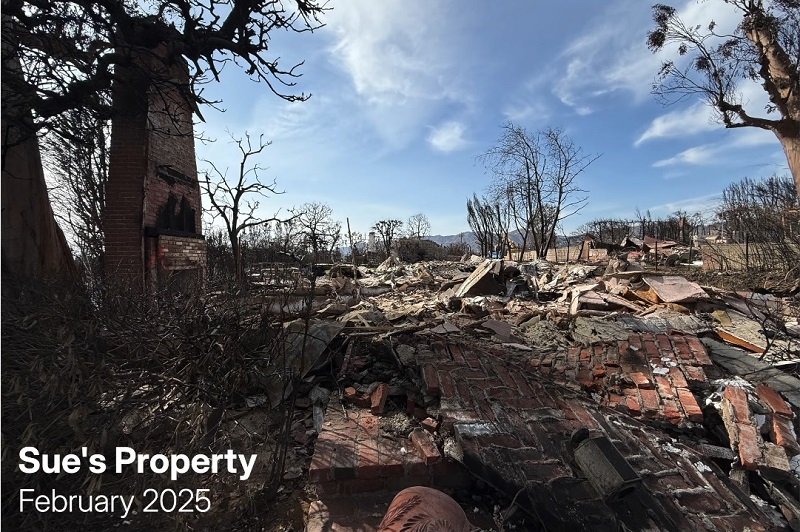
Sue Labella’s Pacific Palisades property in the aftermath of the January 2025 Palisades Fire
Image courtesy of Sue Labella and Cover
“I couldn’t imagine even being in a house anytime soon, because it’s so difficult to build,” Labella reflected in a recent video interview. Watching friends and neighbors struggle with contractors and endless challenges, “I couldn’t have done that” she admitted.
In the aftermath of the LA Fires, homeowners wishing to rebuild have found themselves enmeshed in a complex and slow-moving rebuilding landscape, rife with permit backlogs, supply chain challenges, insurance disputes, and construction labor shortages that have delayed recovery across the region. At one point, rebuilding permits had only been issued for a small fraction of damaged homes even months after the fire, leaving many residents displaced and uncertain.
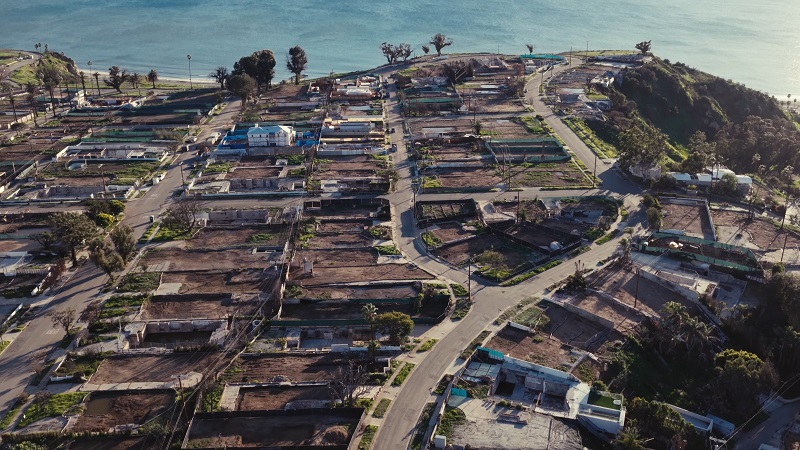
Aerial view of Sue Labella’s Pacific Palisades neighborhood post-clean up phase after the January 2025 LA Fires
Image courtesy of Cover
Fortunately for Labella, a friend recommended Cover to her as a more viable pathway to get her home back, quickly, conveniently, and to high quality standards. Cover’s streamlined process immediately resonated with Sue for several reassuring reasons:
“Instead, with Cover, it was so easy. That was the first time that I felt that it could work. They did the permitting, the drawings, the architecture—everything—and we didn’t have to worry about anything! It is made to our specs that we fell in love with. So, that’s the way to build a house!”
The First Palisades Homeowner Fire Rebuild: A Video Recap by Cover

Design Challenges
Though Labella knew what she wanted “programmatically”—e.g. the number of bedrooms and bathrooms; inclusion of a detached ADU; etc.—she needed to rely on the design skills of Cover—specifically Design Lead Thomas Heyer. Labella empowered Heyer—with minimal direction—to address the unique constraints of her lot to bring everything she needed and wanted together holistically, as one cohesive design.

Aerial view of Sue Labella’s property that shows how the lot was maximized for privacy and connections to outdoor spaces
When asking Heyer what were the keys to establishing this mutual trust that led to a successful partnership with Labella and her family, he shared the following with Purgula:
“I think what ultimately built trust was a combination of clear communication, transparency about constraints, and demonstrating early on how our system could solve for density, privacy, and quality of space without compromise.” — Thomas Heyer, Design Lead, Cover
Project Timeline
The timeline alone, of Labella’s rebuild, is truly remarkable:
- Labella lost her home on January 7, 2025
- Permits were issued on May 23
- The foundation was poured in July
- The home was fully constructed by the end of December
- A Certificate of Occupancy was granted on January 7, 2026
The expedient completion of this project arrives at a critical moment, as other impacted homeowners face mounting frustrations. A year after the fires, a grim poll reveals only 13% of Pacific Palisades single-family homeowners have started reconstruction, with a third abandoning plans entirely due to insurance shortfalls, permitting delays, and rising costs.
Across Los Angeles County, fewer than a dozen homes have been fully rebuilt, leaving thousands displaced. According to ClaimArchitect, the average insurance gap for Palisades homeowners is a shocking $603 per square foot, or $1.5 million overall.
Bureaucratic red tape exacerbates the pain:
- Just 14% of destroyed homes have received rebuilding permits, and
- Historical data from 2017-2020 fires shows only 38% of lost properties being rebuilt after five years
- In Pacific Palisades, and nearby areas like Altadena and Malibu, vacant lots dominate, with some estimates suggesting only 25-30% of residents will ultimately rebuild.
Property Details
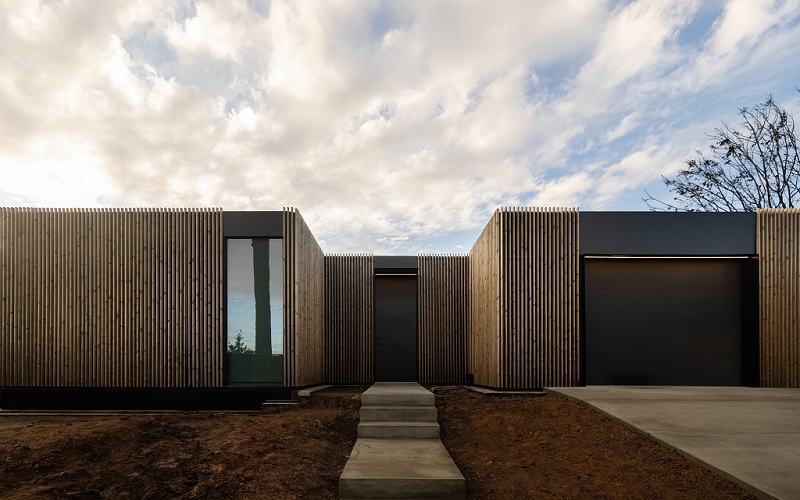
Front view of Su Labella’s new home, built by Cover
Image courtesy of Cover
Labella’s rebuilt property consists of a 2,300-square-foot main residence that is organized around a central courtyard, plus an 800-square-foot detached two-bedroom guest home (ADU). Both structures were fabricated in Cover’s Gardena factory using non-combustible, all-steel panels and assembled on-site without need for a crane. The structure not only meets but exceeds California’s stringent fire, seismic, and energy codes, ensuring durability in a region prone to natural disasters.
- Key Features
- Aging in Place & Universal Design Elements
- Indoor-Outdoor Living with Multigenerational Options
Key Features
- Architectural Description: Custom Coastal Residence
- 2,300-Square-Foot Main Residence
- 4 Bedrooms
- 2.5 Bathrooms
- Central Courtyard
- Open Integrated Kitchen Connected to Living and Dining Areas
- 800-Square-Foot Detached ADU Guest Home with 2 Bedrooms and 1 Bathroom
- Floor-to-ceiling windows with special glazing that create an inward-facing openness that prioritizes privacy over exposure
- The two structures are organized around a series of private courtyards
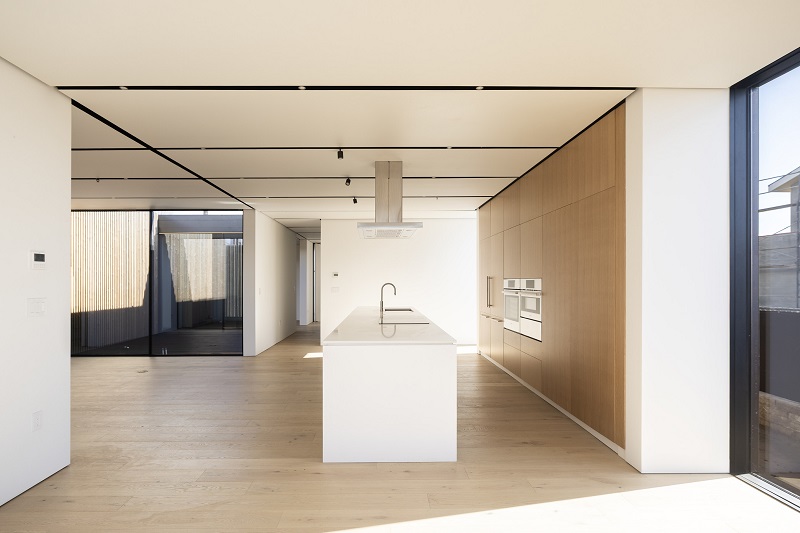
View of the integrated kitchen that connects to the dining and living room spaces, with a view of the central courtyard.
Image courtesy of Cover.
What distinguishes Cover’s approach to homebuilding are the innovative features and processes that come standard, blending modern aesthetics with practical resilience, all possible through their low-stress construction methods:
- High-performance floor-to-ceiling aluminum windows with thin sight lines for maximal natural light, energy efficiency, and overall thermal comfort, with a higher glass-to-wall ratio than typical stick-built homes
- Custom floorplans that optimize site-specific views and functionality
- Non-combustible all-steel framework engineered to prioritize life-safety and long-term resilience that are Class A fire-rated and WUI (Wildland-Urban Interface) compliant assemblies
- Optional sustainable wood cladding for a timeless mid-century aesthetic that provides a warm visual complement to the modern steel framework
- Rapid on-site assembly with fully customized designs are possible with Cover’s prefab panel system, likened to “Lego blocks” for roofs, walls, and panels
- Baked-in sustainable, biophilic design, with energy-efficient insulation, recessed lighting tracks integrated with vents and sensors, and a focus on connecting indoor spaces to nature throughout each home
- Premium integrated fixtures, appliances, and thoughtful design details that elevate day-to-day living into luxurious comfort and convenience
- Streamlined all-in-one process where Cover handles everything from permitting to installation, reducing delays and setbacks often encountered with traditional builds, where 24 separate trades are typically involved
For Labella, Cover’s approach translated to a modern steel-structured home flooded with windows, creating a beautiful, comfortable sanctuary she “had no idea” could be so inviting.

Homeowner Sue Labella being interviewed inside her new home
Image courtesy of Cover
Aging in Place & Universal Design Elements
Though Aging in Place was certainly part of Cover’s design approach for Labella’s re-envisioned home, they didn’t need to make any special accommodations, such as seeking ADA-compliance, as their building system is inherently well-suited for accessibility.
The home features several universal design safety and accessibility features, such as:
- All bathrooms and doorways are all generous in scale
- All showers are curbless
- The garage floor is flush with the interior floor of the home, allowing for step-free access on entry
- The landscape design allows for access without the need for steps, even though the finished floor elevation of the home is higher than street level
- The detached ADU is designed to function as a fully independent living space, conducive for a busy multigenerational household
Indoor-Outdoor Living with Multigenerational Options
The main home and backyard are designed together to create a series of intimate, yet varied, outdoor spaces that feel deeply connected to the interior. This connection begins immediately upon entry, where you’re greeted by a courtyard with windows spanning its full width and a clear sightline that runs all the way through the home to the backyard beyond.
Designed as a fully independent living space, the backyard ADU is visually private from the main home, with its own outdoor area, completely separate from the main residence. This privacy is achieved through the placement and shaping of the ADU at the rear of the lot, where it wraps around its own dedicated outdoor space.

Sleek integrated kitchen in the detached 2BR ADU apartment
Image courtesy of Cover
The ADU was part of the client’s vision from the very beginning. By designing it as a truly standalone indoor and outdoor environment, it also has the flexibility to eventually serve as the client’s primary residence, if Labella’s needs change in the future. For instance, a popular aging in place option for homeowners with adult children is to downsize to a detached backyard ADU apartment, with family moving into the main residence to facilitate a convenient, socially-supportive multigenerational compound.
Secrets About the Home
While learning about the home from Heyer, he shared with us a few intriguing, lesser-known features of the home—(our favorite being the hidden screens!):
- Integrated Storage
- Floor-to-Ceiling Swing Doors
- Hidden Integrated Insect Screens
- Higher Glass-to-Wall Ratio
Integrated Storage
Ample integrated storage was incorporated throughout the home. In the kitchen, a hidden counter space sits behind pocket doors, allowing the room to shift seamlessly between everyday use, and a cleaner, more minimal appearance. In the ensuite bathroom, an 8’ × 4’ mirror—made of a single pane of glass—has hidden medicine cabinets concealed behind both side edges, which are accessible through a push-to-open mechanism.
Floor-to-Ceiling Swing Doors
Every swing door in the home, including each closet door, is full height and operates on a pivot mechanism integrated into the floor and ceiling, reinforcing the clean, continuous lines of the interiors.
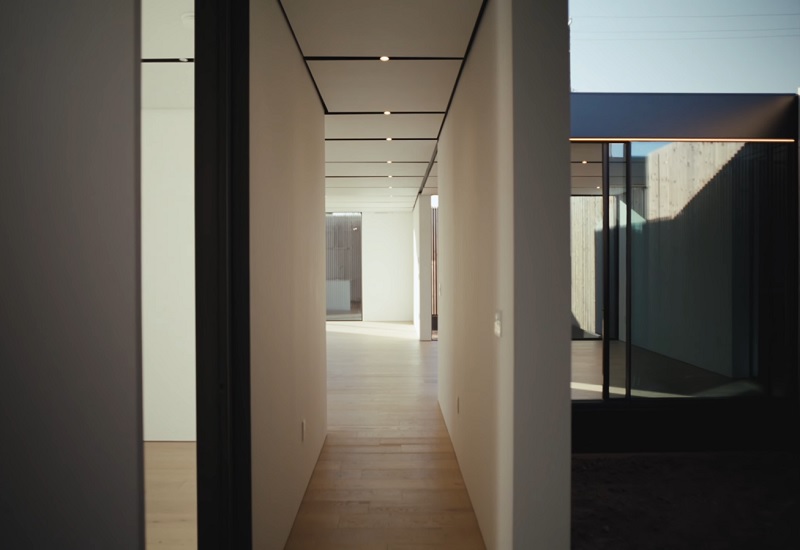
Inside view of high ceilings, integrated doors, and floor-to-ceiling windows
Image courtesy of Cover
Hidden Integrated Insect Screens
Insect screens were integrated into the window systems, so when not in use, they are completely concealed to enable unobstructed views of the outdoor surrounds. When deployed, they magnetically latch to the glass sliders, for practical and comfortable indoor-outdoor living.
Higher Glass-to-Wall Ratio
All our doors and windows are fully floor-to-ceiling, with frames integrated into the structure, which expands the feel of the height of the interiors, resulting in a much higher glass to wall ratio than a typical stick build home.

Close up view of the main entrance, with tall front door and floor-to-ceiling window pane
Image courtesy of Cover
About Cover
Cover’s accomplishment is not an isolated instance of success or a stroke of good timing. It represents the culmination of years of investment in new construction technologies aimed at reinventing how houses are built.

View inside Cover’s production facility in Gardena, California
Image courtesy of Cover
By integrating sophisticated manufacturing practices, advanced materials, and streamlined permitting support, Cover has been demonstrating that traditional barriers—long lead times, fragmented subcontractors, and uncertain costs—can be overcome.
Cover has spent over a decade revolutionizing homebuilding, honing their panelized system to deliver custom, high-quality homes faster and more predictably than traditional methods.
In a video recap of the project, CEO Alexis Rivas reminds observers of LA’s rebuild that Labella’s home is “the first of many,” with additional post-fire rebuilds already underway in Pacific Palisades and Altadena, confidently declaring:
“We’re going to do this again and again—and by doing so—prove to the world that this is the future of home building,” Rivas stated.
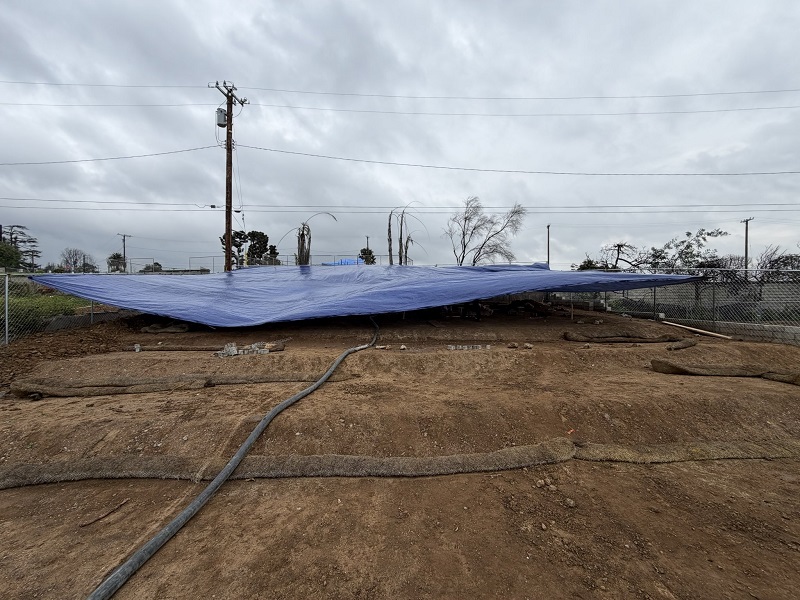
View of another Cover project in Pacific Palisades: prepping for the foundation on a rainy day in December 2025
Image courtesy of Cover
This confidence matters not only for fire survivors in Los Angeles, but for the broader future of residential construction in high-risk and high-demand regions across the U.S. As communities reevaluate the meaning of resilience against wide-ranging environmental risks, Cover’s model demonstrates that speed, quality, and safety can be aligned at scale.
Given the historic significance of the project, Purgula was curious to know what Heyer, and the rest of the Cover team, were most proud of:
“Beyond being the first completed Palisades rebuild, I’m most proud of how clearly this home demonstrates the capabilities of our building system without any custom modifications. Everything you see is created using our standard kit-of-parts, yet through thoughtful layout, careful sightlines, and strategic indoor-outdoor moments, the home feels highly tailored and personal. It’s a strong example of how a standardized system can still produce architecture that feels custom and special.” — Thomas Heyer, Design Lead, Cover
A New Chapter in the LA Recovery Story
For the thousands of homeowners still navigating insurance battles and displacement, Cover’s success provides tangible hope. It demonstrates that rebuilding can be swift, stress-free, and superior—turning tragedy into triumph.
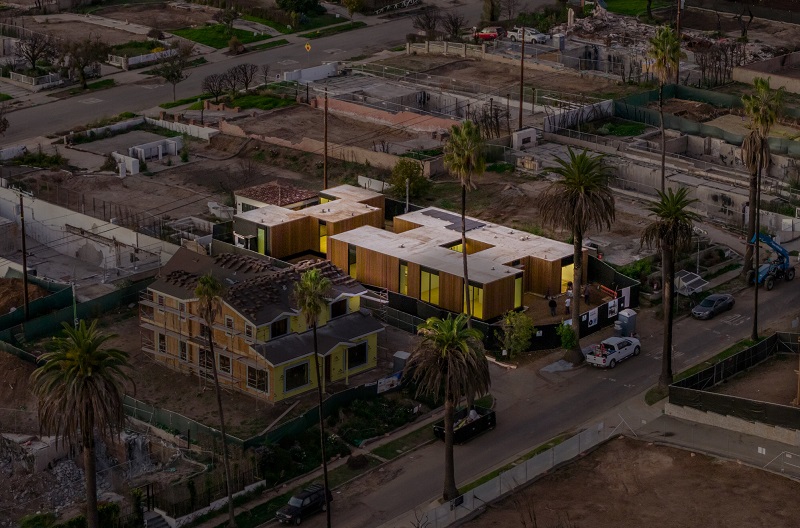
Drone aerial view of the Cover-Labella Palisades project in-progress
Image courtesy of Cover
For homeowners like Labella—and for countless others still waiting to see progress on their own properties—this finished modern home represents more than sleek cladding, steel and glass. It is a beacon of possibility, proof that rebuilding can happen faster and better than many people believed. As Los Angeles continues to grapple with the legacy of the 2025 wildfires, milestones such as this symbolic project will be essential—not just in the on-going tally of homes erected, but in the renewed confidence they inspire throughout the community. In short, the public desperately needs to believe that things can get done and that the near future holds tangible promise.
As Labella prepares to settle in to her new home, her story reminds us: from the ashes, stronger, more resilient homes can arise:
“I knew that I wanted to be in this place—and I had no idea—I didn’t envision how beautiful it could be,” Labella shared, “and how comfortable I know it’s going to be.”
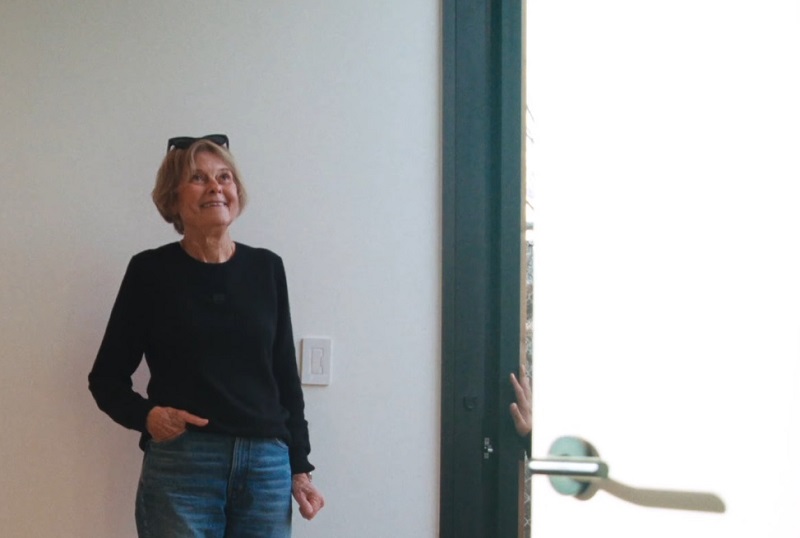
Sue Labella admiring her new home
Image courtesy of Cover
Project Resources
- Cover Labella Project Overview
- Cover Labella Project Recap Video
- Cover Press Release of Labella Certificate of Occupancy
- Cover Fire Rebuild Information for LA Homeowners
- Cover Website
- Cover Instagram Account
- Cover X Account
- Cover Facebook Account
Recommended Rebuilding Articles
- 9 Expert Tips on Planning an ADU Construction
- Choosing Between a Prefab ADU and a Traditional Stick-Built ADU
- How to Make Your Home Wildfire Resilient
- Firescaping: How to Protect Your Home with Fire Resistant Landscapes
- How to Avoid the Most Common Homeowner Scams
- Best Roof Types to Prevent Storm Damage
- Building Technologies for Disaster Resistant Homes
- Related Topics: ADUs | Fire | Home Safety | Construction | Materials
| Purgula is reader-supported. When you click on links to other sites from our website, we may earn affiliate commissions, at no cost to you. If you find our content to be helpful, this is an easy way for you to support our mission. Thanks! Learn more. |