
In a culture where next-day delivery and constant upgrades have become the norm, it’s easy to forget that most of what we own was once designed and built to last—and be fixed when necessary.
A loose wire, a torn seam, or a worn-out switch often sends perfectly salvageable items to landfills, not because they’re beyond repair, but because repair itself has become a neglected option: inconvenient, undervalued, or simply unfamiliar.
The result is a quiet, yet growing, gnawing disconnect between:
- the things we own
- the skills to maintain them
- the people who once passed repair skills onto others
Repair Cafés, however, push back against that trend in a simple, human way. They create spaces where repair is not only possible, but socially encouraged. Instead of handing off a broken item and walking away, participant-owners sit side by side with volunteer fixers, learning how and why something works—and how it can work again. The process transforms repair from a transaction into a shared experience, one that builds confidence and curiosity, as much as it restores function.
These gatherings also reflect a broader shift toward empowerment—personal and economic—as well as sustainability—not as an abstract goal, but as a practical, everyday habit. Extending the life of a coffee maker or mending a jacket may seem small, but this type of feat conserves capital for other valuable uses. Multiplied across communities, those actions also reduce waste, conserve resources, and challenge the assumption that replacement is the default solution. Just as importantly, they reintroduce a sense of care and responsibility into consumption.
Repair Cafés offer a refreshing alternative—one rooted in community, sustainability, and shared knowledge. These grassroots gatherings bring people together to fix broken items, extend product lifespans, and reconnect with the value of repair.
Given that we only recently learned of Repair Cafés, we thought others would benefit from learning about this inspiring movement, especially homeowners.
Table of Contents
- What is a Repair Café?
- Consumers’ Right to Repair
- How to Find a Repair Café Near You
- What to Bring and What to Expect
- Getting Involved in a Repair Café
- The Repair Café Mindset at Home
- More Than Repairs: Related Trends
- Fix It Resources
Also see these related Home Maintenance articles:
What Is a Repair Café?
A Repair Café is a free, community-driven gathering where people bring broken or worn household items—such as small appliances, clothing, electronics, bicycles, or furniture—and work together with skilled volunteers, to repair them. These events are typically held in accessible public spaces like public libraries, schools, or community centers, creating a welcoming environment where anyone can participate regardless of their experience level.

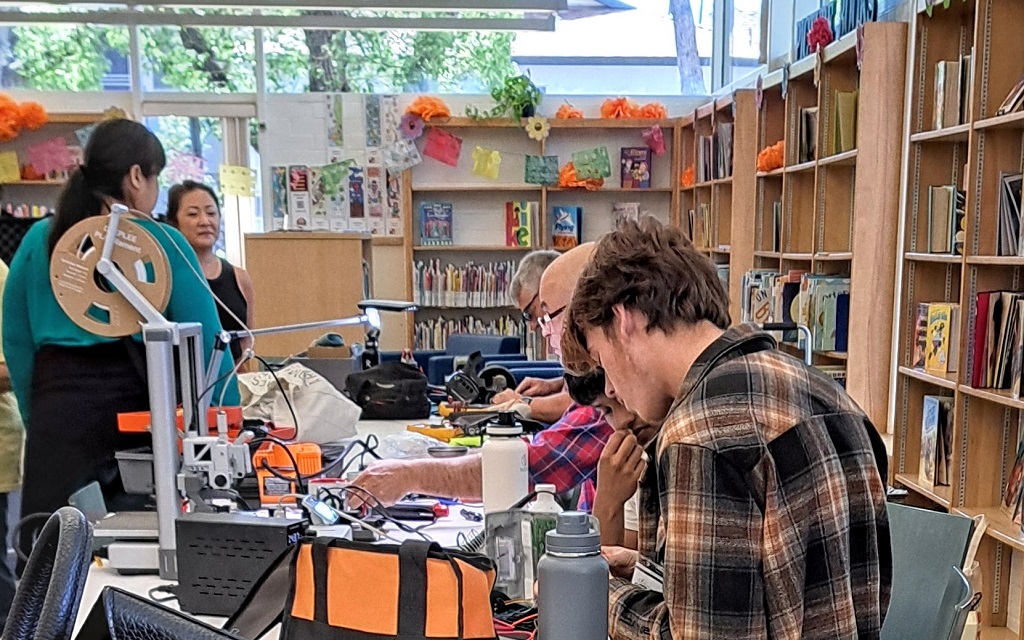
A bustling Repair Café in Southern California
What makes a Repair Café unique is that the focus goes beyond simply fixing objects. Visitors are encouraged to take an active role in the repair process, sitting side by side with volunteers who explain each step, demonstrate techniques, and share practical knowledge. Whether it’s learning how to sew a torn seam, troubleshoot a faulty circuit with a “tinkerer”, or tighten bicycle components, participants gain hands-on skills that empower them to handle future repairs on their own.
Repair Cafés also play an important role in promoting sustainability. By refurbishing items instead of discarding them, these events help reduce waste, conserve resources, and challenge the throwaway culture that dominates modern consumer habits. At the same time, they foster a sense of community by bringing together people of different ages and backgrounds who might not otherwise meet, all working toward a common purpose.
History of the Repair Café Movement
The global Repair Café movement is supported by organizations like the Repair Café Foundation, which provides guidance, resources, and a shared network for local groups. Through this support, thousands of Repair Cafés have been established worldwide, each contributing to a culture of repair, learning, and collaboration that extends far beyond the events themselves.
The first Repair Café was launched in 2009 in Amsterdam by Martine Postma, a journalist and environmental advocate who was concerned about the growing culture of disposability.
Her idea was simple but powerful:
create a welcoming space where people could come together to repair everyday items instead of throwing them away.
The very first event drew large crowds, revealing a widespread appetite not only for fixing things, but also for reconnecting with practical skills that had been fading from everyday life.
What began as a small, local initiative quickly gained momentum. Communities across Europe began replicating the concept, inspired by its accessibility and impact. Within a few years, Repair Cafés had spread far beyond the Netherlands, appearing in countries across Europe, North America, Asia, and Australia. Today, thousands of Repair Cafés operate worldwide in places like libraries, community centers, schools, and churches—anywhere people can gather and share knowledge.
There are now over 3,000 Repair Cafés in more than 40 countries. This growth accelerated notably post-COVID, as supply chain disruptions made people more aware of their dependence on replaceable goods. The U.S. has seen particularly fast growth, with chapters in most major metro areas.
The rapid growth of Repair Cafés signals a deeper cultural change—one that values sustainability and mindful consumption, while also empowering everyday people to become more resourceful, self-reliant, and connected to the objects in their lives.
A Grassroots Engine for the Circular Economy
Repair Cafés are now widely seen as part of the emerging movement toward a circular economy—a system that emphasizes keeping products and materials in use for as long as possible, rather than discarding them after a short lifecycle. By extending the life of everyday items, these events help reduce landfill waste, lower demand for new manufacturing, and cut down on the environmental impact associated with production and disposal.
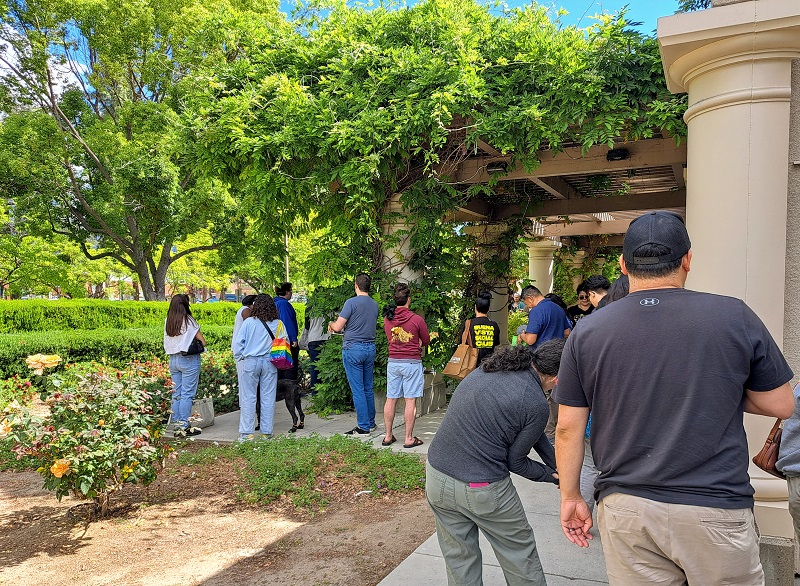
Long line at a popular Southern California Repair Café
Repair Cafés act as the engine of the circular economy by transforming neighbors into active participants, breathing new life into items and reducing waste. These community-driven initiatives turn the theoretical circular economy into a practical, easy-to-comprehend, localized reality.
At the same time, the movement has taken on social and educational significance. It challenges the notion that products are disposable and encourages people to value craftsmanship, resourcefulness, and shared knowledge. In doing so, Repair Cafés not only address environmental concerns but also help rebuild a culture of repair, resilience, and community connection in an increasingly fast-paced, consumption-driven world.
Consumers’ Right to Repair
Repair Cafés exist within a much larger and increasingly influential dialog about the Right to Repair. This movement advocates for consumers’ ability to fix, modify, and maintain their own devices without unnecessary restrictions imposed by manufacturers. At its core, it challenges the idea that once you purchase a product, you still don’t fully control how it can be used or repaired.
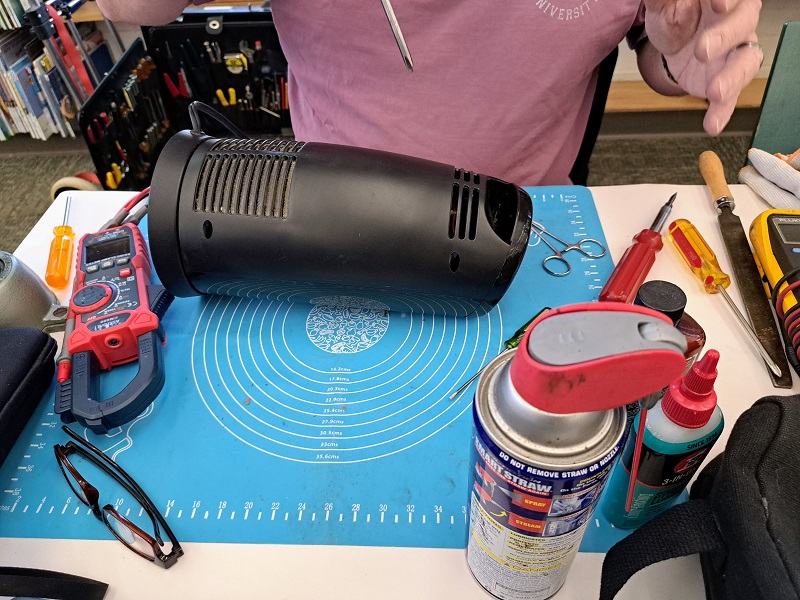
A Bionaire mini tower fan about to be repaired at a Repair Café
In recent years, many modern products—especially electronics like smartphones, laptops, and appliances—have been designed in ways that make repair difficult or even impossible. This can include proprietary screws and components, software locks that prevent third-party fixes, glued or sealed parts that can’t be opened without damage, and limited access to official repair documentation. These design choices often push consumers toward replacing items rather than repairing them, contributing to rising costs and growing environmental waste.
Right to Repair legislation aims to address these barriers. Proposed and enacted laws in various regions seek to require manufacturers to provide independent repair shops and consumers with access to necessary tools, replacement parts, diagnostic software, and repair manuals. The goal is making repair a viable option by lowering repair costs and increasing available parts, both of which will lead to longer appliance lifespans, a benefit to all consumers.
Repair Cafés play a meaningful role within this broader movement. While they don’t change laws directly, they put the principles of repair into practice at the community level. By helping people fix their belongings and teaching them how things work, they demystify the repair process and build confidence. At the same time, they raise awareness about how product design and policy decisions affect everyday life. Someone who struggles to repair a sealed device at a Repair Café often walks away not just with a lesson in repair, but with a clearer understanding of why repair-friendly design and supportive legislation matter.

Plenty of new tools available at a Repair Café
In this way, Repair Cafés act as both educational spaces and quiet forms of advocacy—empowering individuals, strengthening local resilience, and reinforcing the growing demand for products and systems that are built to last, not just to be replaced.
According to Repair.org, the goals of the Right to Repair movement are to unlock consumer freedom by ensuring fair access to third-party parts and repair options, empowering independent repair shops and reducing waste.
The Right to Repair movement has scored real legislative wins recently: the FTC issued a repair policy statement, and several states (including Colorado, Minnesota, and California) have passed Right to Repair laws covering electronics and appliances.
How to Find a Repair Café Near You
If you’re interested in attending a café, the easiest way is through the official Repair Café directory, maintained by the Repair Café Foundation. Many cities host regular events, often monthly.
You’ll also find Repair Cafés listed at:
- Local libraries and community centers
- Environmental or sustainability groups
- Makerspaces, tool libraries and schools
A quick search for “Repair Café near me” will usually point you to upcoming events in your area.
What to Bring and What to Expect
What Actually Gets Fixed and What Doesn’t
Data from the Repair Café Foundation shows that roughly 70–80% of items brought in are successfully repaired or partially repaired. Electronics, lamps, and clothing are among the most common items.
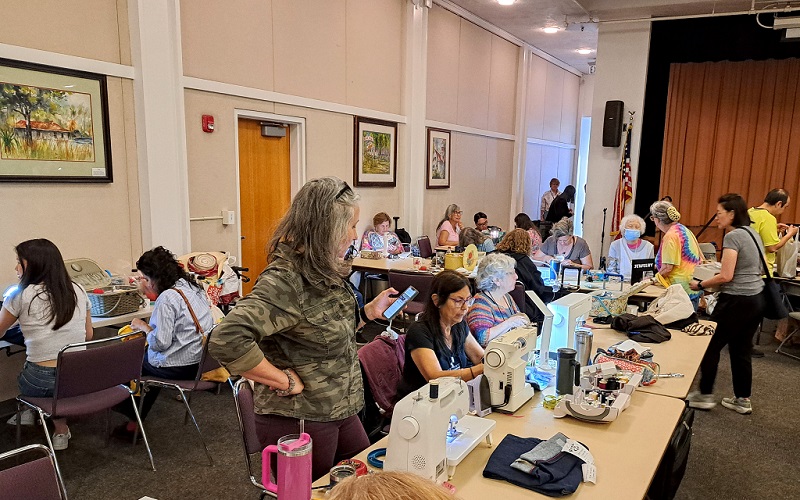
A volunteer sewing team hard at work at a Southern California Repair Café
Small appliances, like coffee makers and toasters, have high success rates, as well. Items that can’t be repaired often reveal an underlying design problem—proprietary parts, glued-together casings, no available schematics—which ties directly into the Right to Repair issue.
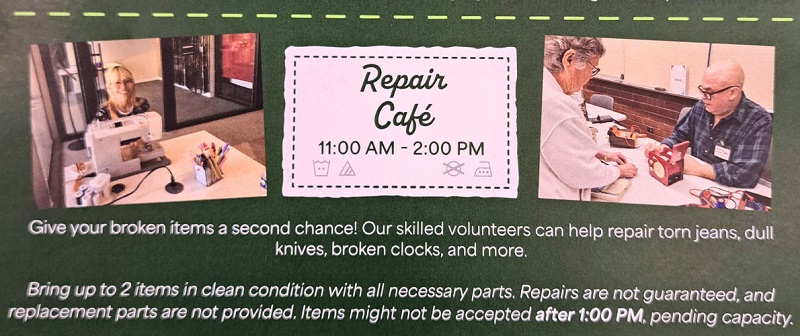
Repair Café details and instructions on a flyer
Promotional materials for an upcoming café will include specifics on what items are accepted or not, plus any limitations (e.g. 2 items per household, or 1 item per category). The event will post start and end times, as well as the cutoff time to check-in your item(s).

Knife sharpening skills are always in demand at Repair Cafés, including gardening shears
Most Common Categories of Repair Items
- Clothing & Textiles: sewing repairs, mending tears/holes, zippers, hems, buttons, tailoring basics. Also bags, shoes, linens, curtains, and upholstery patches.
- Small Electrical & Electronic Appliances: lamps, fans, toasters, coffee makers, electric kettles, vacuums, blenders, mixers, irons, radios, clocks, hair dryers, chargers, small kitchen gadgets.
- Mechanical / Hand Tools & Sharpening: knives, scissors, garden tools, hand tools, clippers. Sharpening services are popular at many events.
- Bicycles: flat tires, brake/gear adjustments, basic maintenance and safety checks.
- Small Furniture & Household Items: chairs (e.g., fixing slats or wobbly legs), small tables, lamps, Venetian blinds, crockery (gluing ceramics), jewelry (clasps, loose stones).
- Toys, Games & Miscellaneous: electronic and mechanical toys, board games, clocks/watches.
- Computers & Personal Electronics: laptops, printers, game consoles, stereos (often diagnostics + simple fixes like cleaning or replacing cables).

Up-to-date Repair Café details and updates on a whiteboard at an event
Getting Involved in a Repair Café
Repair Cafés thrive on participation. Whether you’re a seasoned fixer or someone who’s never opened a toolbox, there’s a place for you.
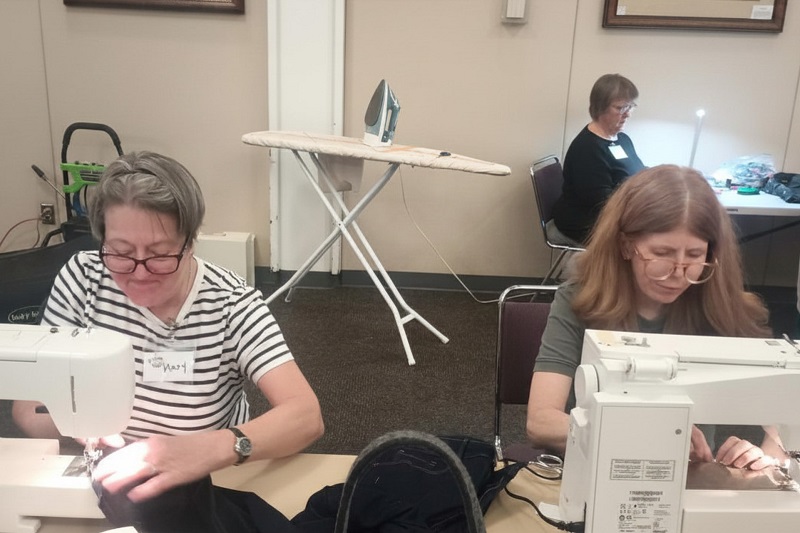
Happy Repair Café volunteers making a difference for others
YiFan Rao, founder of the San Fernando Valley Repair Café (Los Angeles County), shared this advice with Purgula for those interested in volunteering or starting a new branch:
“Though finding skilled volunteers is our top priority, there’s always a need for non-fixer volunteers to help us run an event. Just reach out to a local chapter and inquire on how you can help. For those considering launching a new Repair Café, keep in mind that securing a venue near bus routes will ensure a larger turnout. If a location wants to charge a fee, keep looking for a site that supports and understands the grass roots nature of Repair Café.”
Healthy Aging in Place
For older adults, Repair Cafés offer something genuinely valuable: a reason to show up, contribute, and connect. Retired tradespeople, hobbyists, and lifelong tinkerers often bring decades of hard-won expertise that would otherwise go unused —and in many cases, unshared. Volunteering as a fixer keeps those skills active while providing regular social engagement, a combination that research consistently links to better cognitive and physical health outcomes. For older adults committed to aging in place, a Repair Café can be both a meaningful contribution to the community and a source of personal vitality.
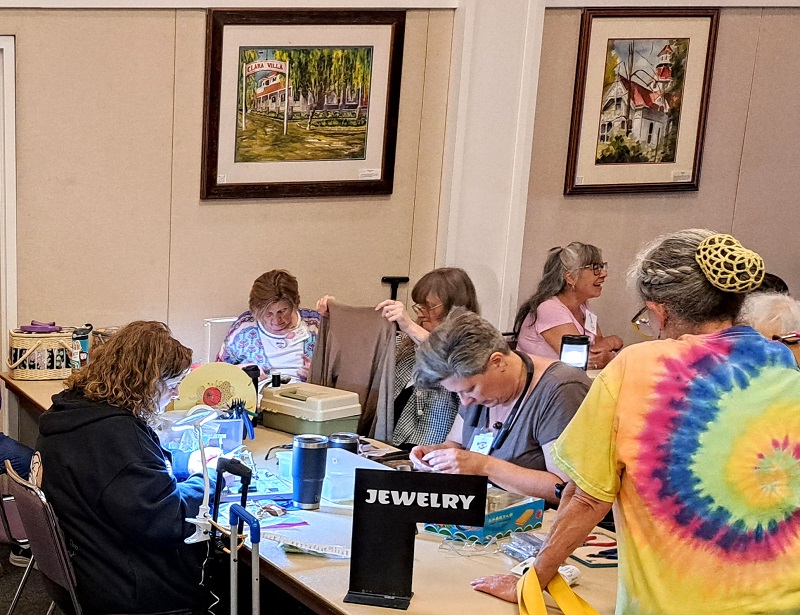
Jewelry makers at a Southern California Repair Café
Helping Elderly Neighbors
The benefits of Repair Cafés extend naturally to elderly residents who may not know the resource exists or feel hesitant to attend alone. A broken appliance that seems minor to a younger person can significantly affect the daily comfort, safety, or independence of an older neighbor—as illustrated by the Dream Machine story earlier in this article. Checking in with elderly neighbors about items that need repair, and offering to accompany them to a local event, is a small gesture with potentially meaningful impact. It also introduces them to a welcoming community resource they may return to on their own.
Knowledge Sharing Across Generations
One of the most powerful aspects of Repair Cafés is intergenerational learning. Younger participants gain practical skills that aren’t always taught in schools, while older volunteers pass down knowledge that might otherwise be lost. This exchange strengthens community bonds and preserves craftsmanship.

Intergenerational knowledge sharing and learning at a Repair Café
Building Confidence in Younger Generations
For younger people, successfully repairing an item can be transformative. It builds confidence, problem-solving ability, and a mindset that values repair over replacement. These experiences can even inspire future careers in engineering, design, or sustainability.
The Repair Café Mindset at Home
Research from the Netherlands (where the movement is most studied) shows that participants report increased confidence in their own problem-solving ability after attending—even if their specific item wasn’t fixed. The process of addressing and understanding a broken item is valuable in itself.
There’s an interesting parallel to homeownership:
people who understand how their home works (plumbing, electrical basics, HVAC) make better decisions, catch problems earlier, and feel less helpless during emergencies.
Repair Cafés foster exactly that kind of functional curiosity upon which confident problem-solving skills are built.
The social dimension is also underrated. These events are intergenerational in a rare way—older volunteers with trade skills mentoring younger attendees. In turn, less-experienced fixers can develop their skills alongside more-experienced volunteers. For many urban and suburban neighborhoods, that’s a nearly vanished dynamic.
Repair Cafés are also a reminder that small fixes can carry outsized meaning—particularly for elderly residents living independently. One volunteer fixer recently restored the off switch of a decades-old Dream Machine for a retiree who had come to rely on it for sleep. A seemingly minor repair, but one with a direct impact on her health and quality of life.
That mindset doesn’t stop at the repair table—it connects to broader trends that are quietly reshaping how people access empowering tools and develop new skills and knowledge.
More Than Repairs: Related Trends
Repair Cafés are about more than fixing broken items. In a time when replacing is often easier than repairing, these gatherings offer something rare:
the chance to slow down, learn, and rebuild—not just objects, but confidence and connections.
Communities grow stronger when people share skills and help one another. What is most exciting about experiencing a Repair Café is that it is addressing so many interrelated trends and needs.
The Modern Library as Community Resilience Hub
Perhaps the most surprising development in this space is the role that public libraries are increasingly playing as anchors for this self-reliance movement. Libraries have long understood that their mission is access—to information, yes, but more broadly to resources people need to access in order to solve problems.
In recent years, many have expanded that mission in strikingly tangible ways, hosting Repair Cafés, lending tools, and opening makerspace annexes alongside their traditional stacks. This repositioning reflects a shrewd and necessary evolution:
as communities look for trusted, neutral spaces to rebuild practical skills and foster self-reliance, libraries are well-positioned to serve that need.
For homeowners, it’s worth knowing that their local library branch may now offer far more than books—it may be one of the most underutilized resilience resources in their neighborhood. Two of the most valuable—and most overlooked—offerings now found in increasing numbers of libraries are Makerspaces and Tool Libraries.
Makerspaces
Makerspaces are community workshops that provide shared access to tools, equipment, and expertise that most individuals couldn’t justify owning on their own—think 3D printers, laser cutters, woodworking equipment, soldering stations, and sewing machines. Maker production equipment is available in approximately 40% of libraries overall, and an impressive 75% of city libraries, according to a 2023 survey by The Public Library Association (PLA).
Originally associated with tech-forward hobbyists and entrepreneurs, makerspaces have evolved into inclusive community resources, welcoming everyone from students and small business owners to retirees learning new skills.
For homeowners specifically, a makerspace can be the difference between fabricating a custom replacement part, reupholstering a worn chair, or simply having access to a professional-grade tool for a one-time project. Their ethos—hands-on learning, peer knowledge-sharing, and a bias toward making and fixing over discarding—aligns naturally with the Repair Café spirit.
Tool Libraries
While specific national percentages for “tool libraries” (e.g. hardware, gardening, or automotive tools) are less commonly tracked as a single category by the Public Libraries Survey, they fall under the rapidly growing umbrella of “Library of Things” collections. “Library of Things” collections have expanded into diverse areas like home repair, culinary arts, high-tech fabrication and even wellness, such as light therapy lamps.
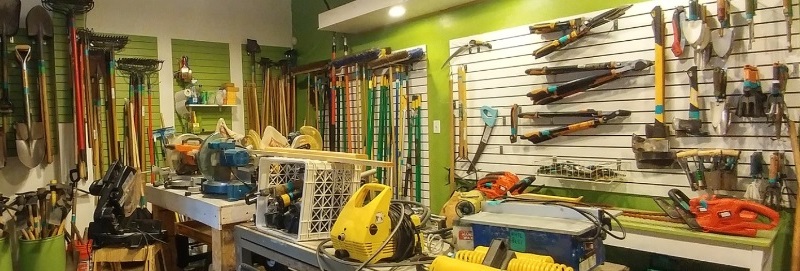
Large tool library with gardening tools
Image courtesy of the Tool Library Alliance
Tool libraries operate on a simple but powerful premise. For instance, most homeowners might need a tile saw or a pipe wrench occasionally, not permanently. Rather than buying tools that will sit unused in a garage for years, members can borrow what they need, when they need it—often for free or a modest membership fee.
Beyond the obvious economic benefit, tool libraries quietly lower the barrier to attempting a repair or home improvement project in the first place, or learn a new skill. When the cost and commitment of tool ownership is removed, homeowners are far more likely to try fixing something themselves. Many tool libraries also offer basic instruction, connecting borrowers with volunteers or staff who can advise on technique—another commonality with the Repair Café model.
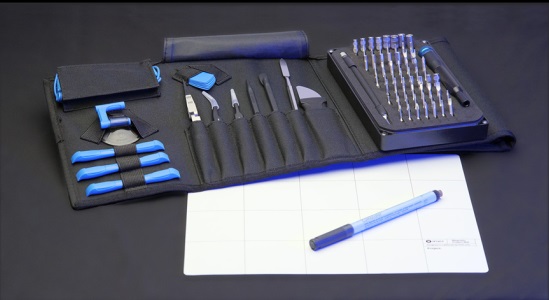
A popular iFixit toolkit available at several public libraries in the Los Angeles metro area
For homeowners looking to build practical skills and stretch their budgets, the combination of tool access and hands-on guidance makes tool libraries an invaluable resource—especially as professional help becomes harder and more costly to come by.
The “Repair Gap”: A Skills Crisis
A generational skills gap—one that Repair Cafés are quietly helping to address—has led to a deficit in repair skills and fluency of ordinary citizens. Many homeowners in their 30s–50s never learned to sew a button, replace an outlet, or patch drywall—not because they’re incapable, but because those skills simply weren’t passed down. Repair Cafés are one of a few community venues actively reversing this skills deficit.
In parallel, another generational skills gap is growing on a much larger and more consequential stage across the skilled trades. Plumbers, electricians, HVAC technicians, and carpenters are retiring in large numbers, taking decades of hard-won knowledge with them—and not enough younger workers are stepping in to replace them.
Enrollment in vocational and trade programs declined sharply in the U.S. from the 1980s onward, as higher education was increasingly promoted as the singular path to success. The result is a shortage that is already driving up costs and wait times for homeowners, and one that is projected to worsen significantly over the next decade. According to the National Center for Construction Education and Research (NCCER), the construction industry alone may need to attract an estimated 500,000 additional workers above normal hiring levels just to meet current demand.
For homeowners, this shortage has a direct and practical implication: professional help may not always be available quickly, or affordably—and waiting passively for a pro to arrive is increasingly not a viable strategy. The homeowners who will fare best are those who can diagnose a problem accurately, make a smart temporary fix, and know when a situation genuinely requires professional intervention. That demands a level of resourcefulness and repair literacy that, for many, will need to be deliberately rebuilt—whether through Repair Cafés, community workshops, online resources like iFixit, or the willingness to watch a tutorial and pick up the necessary tools for the task at hand.
We are confident that the optimistic spirit of Repair Cafés will continue to fuel the desire to learn, to try, and to overcome—all imperative traits of a resilient homeowner.
Repair Resources
In-Person Repair Communities
- Repair Café Foundation
- Repair Café Global Directory
- Repair Café US Directory
- Fixit Clinic (US)
- The Restart Project (UK)
- Shareable
Online Repair Communities
- iFixit
- Household Repair (iFixit)
- iFixit Answers Forum
- Reddit r/fixit Community
- Manuall (Online Product Manuals)
Makerspaces & Tool Libraries
- Global Map of Tool Libraries (TLA)
- International Directory of Makerspaces (Make: Magazine)
- International Directory of Tool Libraries (iFixit)
- Makerspace Directory
Miscellaneous Resources
- Library of Things Toolkit v2.0 (Shareable)
- Nation of Makers (National nonprofit supporting maker organizations)
- Repair.org (The Repair Association, a Right to Repair advocacy group)
- The Tool Library Alliance (TLA)
Additional Home Maintenance Articles
- How to Manage the Rising Costs of Homeownership
- 10 Basic Skills Every Homeowner Should Develop
- 5 Tips for Homeowners from Expert Property Managers
- A Proactive Plumbing Maintenance Plan for the Entire Year
- 17 Important Home Maintenance Tasks to Do in the Fall
- 5 Important Things to Know About Maintaining a Brick Home
- How to Prevent Costly Heating Repairs This Season
- Related Topics: Maintenance | Prevention | Home Safety | Cost Savings
| Purgula is reader-supported. When you click on links to other sites from our website, we may earn affiliate commissions, at no cost to you. If you find our content to be helpful, this is an easy way for you to support our mission. Thanks! Learn more. |