
Tile design is undergoing a meaningful evolution—moving away from flat, purely functional surfaces toward expressive, tactile, and emotionally resonant materials. What was once considered a background finish is now a central design driver, shaping how spaces look, feel, and even function.
Within this context, tile is no longer just a material—it has become a vehicle for storytelling, craftsmanship, and atmosphere. Designers are increasingly prioritizing surfaces that engage the senses:
tiles that invite touch, reflect light in nuanced ways, and carry the visual language of natural materials, textiles, and handcrafted processes.
Recent design showcases and industry events further reinforce this direction, highlighting a growing emphasis on texture, imperfection, and material contrast as key components of contemporary interiors.
The result is a new design paradigm—one defined not by uniformity, but by depth, individuality, and quiet luxury. Across residential and commercial interiors alike, tile is being elevated from a passive surface to an active, expressive element.
This article includes a summary of industry initiatives and design trends defining this transformation of the tile industry presented by Eric Astrachan, Executive Director of TCNA (Tile Council of North America) and Roxanne Morris, an editor at WhyTile.com and Marketing and Media Relations Manager at TCNA, at the 2026 Coverings Tile & Stone Tradeshow. Also included are photos from the exhibit halls of Coverings 2026 that reveal the wide range of aesthetic styles capable with porcelain tile.
Table of Contents
- A Brief Modern History of Tile Innovation
- Tile Trends by the Numbers
- 5 Macro Trends Driving Tile Design
- An Industry Challenge: Porcelain Mislabeling
- Updates from the Tile Heritage Foundation
- Conclusion: From Surface to Experience
Also see:
- A Return to Craft: This Year’s Pasadena Showcase House Reveals a New Arts & Crafts Spirit
- WestEdge Design Fair 2025: Jewels for the Home and More!
- Neuroaesthetics: Designing Homes That Feel as Good as They Look
- More Recommended Reading
- Related Topics: Design Events | Materials | Architecture | Inspiration | Restoration
A Brief Modern History of Tile Innovation
To give context for today’s inspiring tile trends and design directions, we tabulated key advancements in the tile industry over recent decades—from pioneering technological leaps to major industry shifts. These innovations have transformed tile from purely functional surfaces into expressive, tactile, high-performance materials that are more personalized and sustainable than ever before.

Ceramica Rondine’s impressive Japanese-themed Exhibit Booth at Coverings 2026, which won Best Display award
These advancements generally progressed in this order: material strength first, followed by larger sizes, more realistic aesthetics, richer textures and feel, improved manufacturing precision, greater sustainability, and finally enhanced everyday performance.
- Porcelain Revolution: Starting in the 1980s, porcelain tiles emerged as a game-changer due to their extreme durability, low water absorption, and versatility. Innovations in pressing and firing (like roller hearth kilns) made them stronger and more suitable for high-traffic areas, floors, and even outdoor use, moving tile beyond basic wall applications.
- Shift to Larger Formats: In the late 20th and early 21st centuries, manufacturing advances allowed tiles to grow dramatically in size—from small, traditional pieces to large-format and even slab-sized porcelain tiles. This created seamless, modern looks with fewer grout lines, making installations faster and more elegant in both homes and commercial spaces.
- Digital Printing Technology: Around 2010, high-resolution digital inkjet printing transformed tile design. Manufacturers could now create hyper-realistic patterns mimicking wood, marble, stone, or textiles with incredible detail and color variation—turning each tile into a unique, artistic piece rather than uniform repeats.
- High-Definition Aesthetics and Color-Body Durability: In the early 2000s, Florida Tile pioneered High Definition Porcelain (HDP), a breakthrough in digital inkjet technology that allows for incredibly realistic patterns and textures. To complement these visuals, the technology is often paired with color-body manufacturing—where the tile’s substrate is pigment-matched to the surface design. While the high-definition pattern is applied to the surface, the coordinated body color ensures that the tile maintains a uniform appearance even if subjected to heavy wear or minor chipping. The result is a highly realistic, designer-grade surface engineered for the rigors of high-traffic environments.
- Advanced Glazing and Textures: Over the past 20–25 years, new glazing techniques introduced tactile surfaces, from soft matte finishes to dynamic 3D textures and anti-slip properties that activate when wet. These engage the senses, improve safety, and add depth, moving tile from flat backgrounds to expressive design elements.
- Precision Manufacturing and Installation: Over the past 15–20 years, hydraulic presses, continuous production lines (e.g., Continua+), and refined raw materials enabled thinner, lighter, yet stronger tiles with millimeter precision. This supports creative applications like curved surfaces or ultra-thin slabs while simplifying installation.
- Sustainability and Eco-Innovations: In recent decades, the tile industry has made significant strides toward greater sustainability. Manufacturers now commonly use recycled materials, energy-efficient kilns, and water-recycling systems. Two key certifications help guide environmentally conscious choices: 1) Green Squared (developed by TCNA) is the industry’s primary multi-attribute sustainability certification, evaluating raw materials, manufacturing practices, social responsibility, recyclability, and product durability; 2) UL GREENGUARD certification focuses specifically on low chemical emissions and improved indoor air quality. Many leading manufacturers now carry both certifications. Additional innovations include programs that divert unsellable tiles from landfills, waterjet cutting that minimizes material waste, and optimized production processes that significantly reduce overall environmental impact.
- Performance Enhancements: In recent years, modern tiles now feature built-in antimicrobial properties, better stain resistance, easy-clean surfaces, and improved slip resistance. These functional upgrades, combined with aesthetic variety, have elevated tile to a premium, low-maintenance choice for both health-focused and high-end interiors.

Graniser Seramik biophilic Chill porcelain tile exhibited at Coverings 2026
Tile Trends by the Numbers
The evolution of tile and stone continues against the backdrop of a massive global industry. The worldwide ceramic tile market was valued at roughly $226.4 billion in 2025, according to Grand View Research. During this same period, the total U.S. ceramic and porcelain tile market was valued at $19.4 billion, projecting growth to $38.09 billion by 2034, according to Custom Market Insights, even as wholesale consumption saw a 4.9% decline in 2025 per TCNA.

One of several entrances to the exhibit halls of Coverings 2026 held at the Las Vegas Convention Center
2025 U.S. Market Snapshot (per TCNA):
- U.S. ceramic tile consumption reached 2.57 billion square feet, down 4.9% from 2024—marking the fourth consecutive year of contraction.
- Consumption by value totaled $3.76 billion (wholesale value), a modest 0.8% decline.
- Imports accounted for 72.4% of U.S. tile consumption by volume (up from 71.5% the prior year).
- Spain became the largest exporter to the U.S. by volume (21.4% share), overtaking India, with import volume from Spain rising 17.5%.
- Italy ranked second, achieving its strongest position since 2022.
Consumer preferences are shifting noticeably even amid softer demand:
- Large-format tiles now represent roughly 40% of residential sales.
- Demand for wood-look and plank-style tiles has surged 180% over the past decade.
- Interest in 3D/textured tiles has grown more than 20% in recent years, while matte finishes have overtaken high-gloss as the preferred surface for many homeowners.
These trends point to a deeper cultural shift:
a move toward environments that feel grounded, sensory, and authentic.
Even with short-term market fluctuations, long-term demand remains supported by residential renovations, hospitality projects, and wellness-focused design.
5 Macro Trends Driving Tile Design
This section summarizes Roxanne Morris’ presentation at the TCNA press conference at Coverings 2026, while also referencing five tile design trends for 2026—a collection of articles written by Morris that provide further details on each trend covered.
The five trends highlighted in this section were on full display at Coverings 2026, the premier tile and stone exhibition held in Las Vegas earlier this month. Across exhibitor booths and product launches, a consistent narrative emerged:
surfaces are becoming more dimensional, more crafted, and more emotionally engaging.
From fluted wall tiles and fabric-inspired porcelains to honed stone visuals and artisanal glazes, the emphasis was clear:
tile is no longer just a finish, but a medium for storytelling and sensory experience.
Within this context, a new design paradigm is taking shape—one defined not by uniformity, but by depth, individuality, and quiet luxury. Designers are prioritizing materials that invite touch, play with light, and carry subtle references to nature, fashion, and handcraft.
The following five macro trends—highlighted both in the marketplace and at Coverings—define this transformation.
5 Macro Trends Driving Tile Design:
1. Articulated Accents
Texture and Tactile Appeal
The era of flat, uniform tile is fading. In its place, articulated accents—tiles with purposeful dimension, relief, and tactile qualities— are taking precedence.
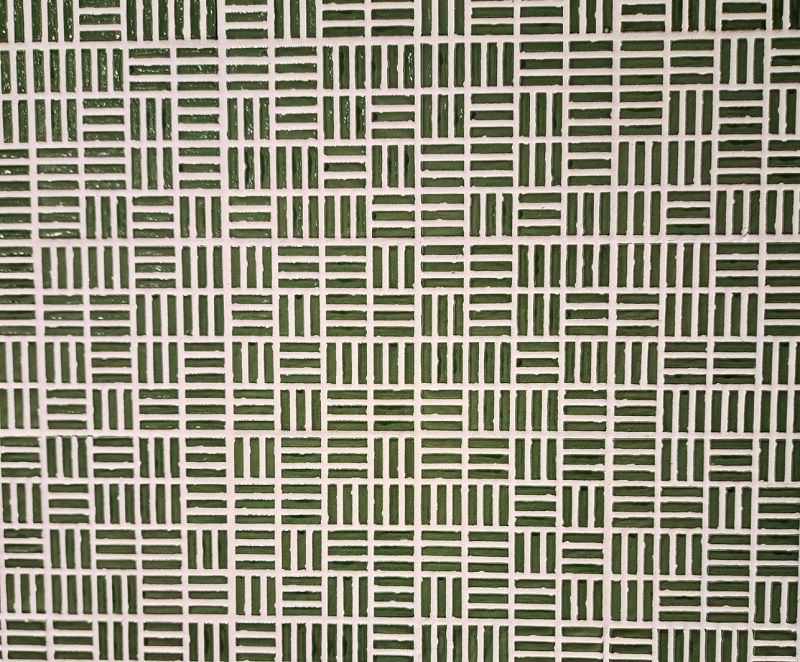
Close up view of a green geometric pattern with texture exhibited by APE Grupo at Coverings 2026
These surfaces celebrate “the synchronized harmony of graphic precision and surface articulation”. Using advanced micro-relief techniques, glazing, and 3D texturing, today’s tiles create remarkable visual depth and a genuinely touchable feel. From subtle undulations and fluted ribs to pronounced sculpted ridges, stitched impressions, and hand-formed textures, these surfaces engage multiple senses and respond dynamically to light and shadow.

Cifre demonstrated the visual versatility of porcelain tile with a mosaic of sample pieces that showcased a wide array of finishes and textures, at Coverings 2026
Far more than decorative, articulated accents add warmth, rhythm, and visual intrigue—especially powerful in neutral palettes where texture becomes the primary design language. Designers are increasingly using tiles with articulated surfaces to break monotony and create focal points on:
- Feature Walls
- Backsplashes
- Accent Zones
- Fireplace Surrounds
This trend reflects a broader shift toward “tactile luxury”—spaces that invite interaction and feel as good as they look. The fine relief details of articulated tile can mimic the hand feel of other materials, such as fabric, wood, or stone, while responding wonderfully to light.
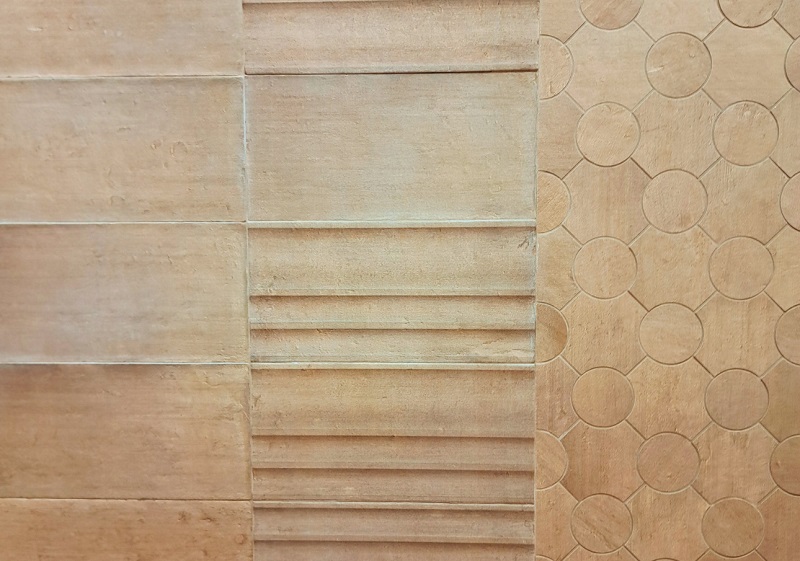
Subtle textured looks of porcelain exhibited at Coverings 2026
Also see:
- 2026 Tile Trends: Articulated Accents (WhyTile.com)
2. Tailored Craft
Fashion and Fabric Influence
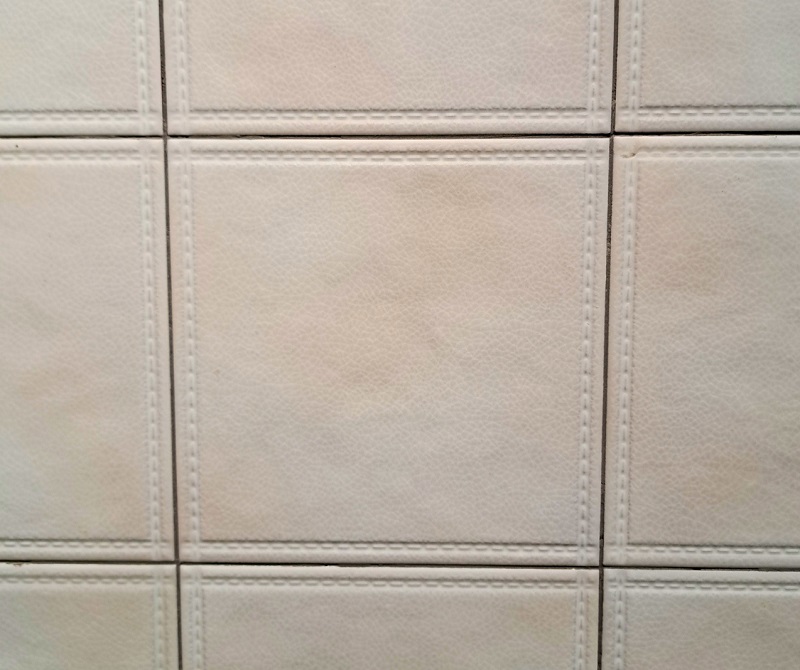
Close up view of an example of “Tailored Craft” tile that looks like stiched leather exhibited by Merola at Coverings 2026
Tile design is increasingly being inspired by the language and techniques of fashion and textiles, giving rise to Tailored Craft—a sophisticated blend of softness and structure on hard surfaces. This look celebrates fabric-inspired textures and artisanal detailing. This trend brings fabric-like qualities to tile, with collections that convincingly mimic:
- Woven Textiles
- Linen
- Leather
- Couture Tailoring
Manufacturers, such as Merola Tile, Florida Tile, and the broader Panariagroup, exemplify these aesthetic capabilities with refined interpretations that include:
- Subtle crosshatching and woven effects
- Soft linen and textile-like surfaces
- Leather looks with printed stitching and gentle undulations
- Soft matte glazes reminiscent of natural fibers
- Tailored geometric patterns with couture-inspired detailing
The result is a hybrid aesthetic:
architectural yet soft, structured yet inviting—bridging the gap between fashion and interiors.
This direction aligns with a growing desire for spaces that feel curated, personalized and thoughtfully crafted, rather than mass-produced. This style of tile also pairs beautifully with neutral palettes and articulated surfaces.
Also see:
- 2026 Tile Trends: Tailored Craft (WhyTile.com)
3. Brutalist Sanctuary
Matte Stone and Quiet Minimalism
A refined new interpretation of minimalism is emerging—one that softens Brutalist roots into calm, protective spaces. Called Brutalish Sanctuary, this trend merges raw materiality with refined restraint, creating environments that feel architecturally strong yet emotionally restorative.
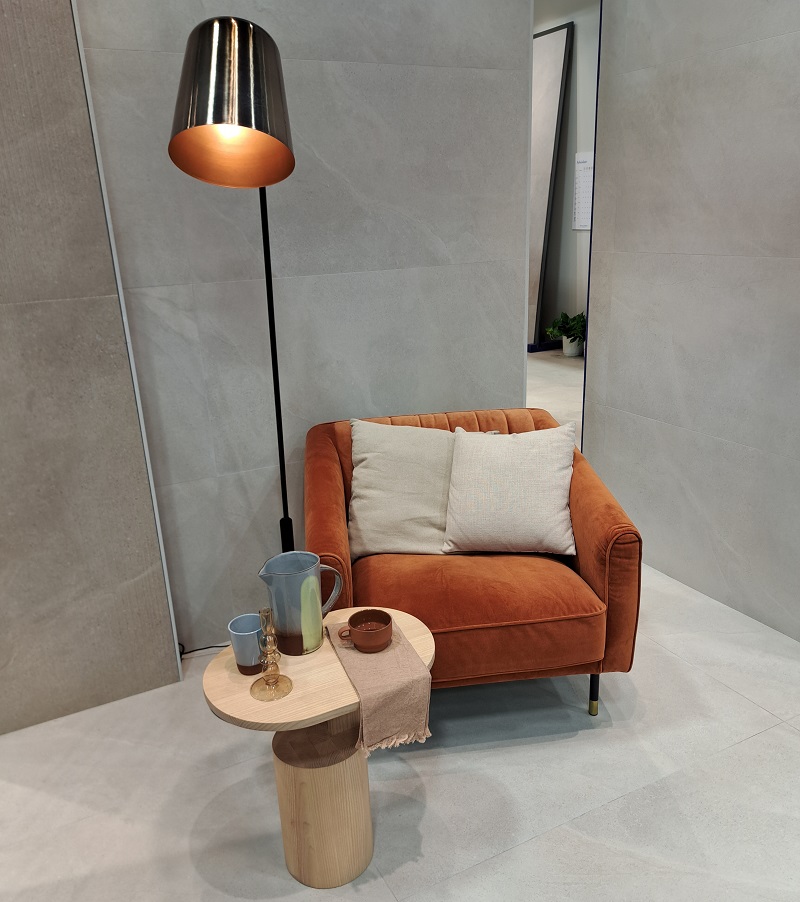
A section of Marca Corona’s exhibit booth at Coverings 2026 displayed an example of the Brutalist Sanctuary aesthetic
Matte and honed stone-look porcelain, concrete visuals, and terrazzo textures are central to this movement. Unlike polished finishes, matte surfaces absorb light, creating a soft, grounded atmosphere that feels both timeless and serene.
Key characteristics include:
- Concrete, terrazzo, and matte stone-look tiles as the primary surfaces
- Grounded palettes of grays, clays, greiges, and warm neutrals
- Matte, honed, or softly textured finishes that diffuse light
- Large-format, slab-like, or elongated tiles with minimal grout lines
- Unglazed or through-body porcelain that reveals material honesty at the edges
These spaces are intentionally restrained, allowing material authenticity to take center stage.
The goal is not austerity, but calm—spaces that feel introspective, grounded, and enduring.
Also see:
- 2026 Tile Trends: Brutalish Sanctuary (WhyTile.com)
4. Long Game
Elongated Formats and Linear Expression
Proportion and orientation have become powerful design tools. The Long Game trend embraces slim, elongated tiles and linear formats that guide the eye, create rhythm, and dramatically influence how a space feels.
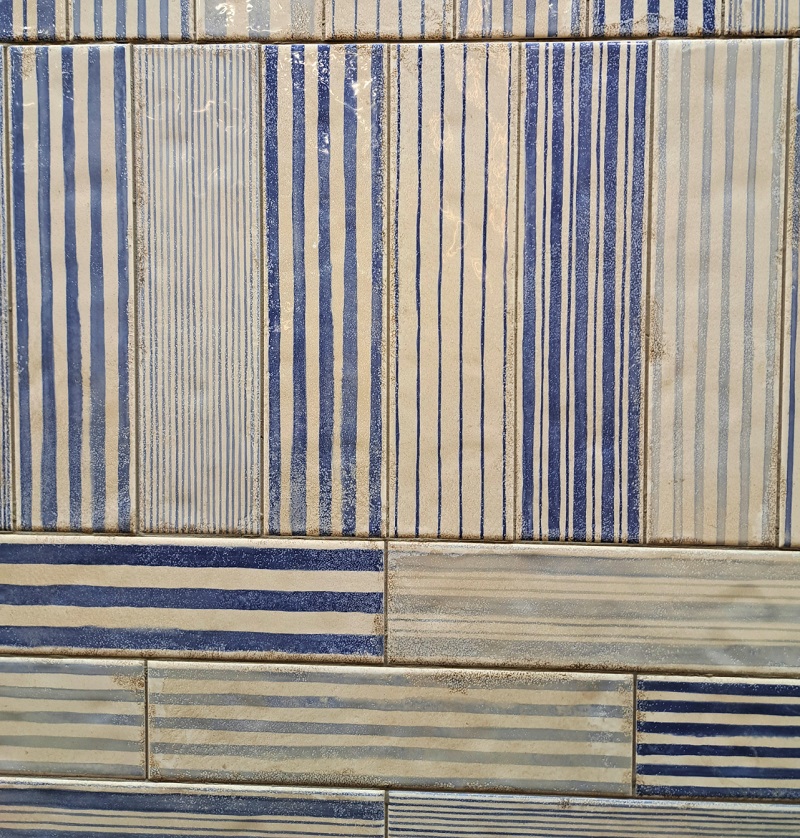
Close up view of long style tiles exhibited by Merola at Coverings 2026
This trend favors extreme length-to-width ratios—from slender planks and linear mosaics to elongated subway tiles and fluted large-format pieces. Designers are using these to shape perception through thoughtful repetition and restraint:
- Vertical stacking to emphasize height and draw the eye upward
- Horizontal layouts to elongate walls and create a sense of width and flow
- Fluted and ribbed surfaces that add depth, catch light, and cast dynamic shadows
- Linear mosaics for delicate, high-frequency texture
Fluted tiles in particular are gaining traction for their ability to create architectural depth and directional movement, offering a contemporary alternative to traditional flat surfaces.

Via Del Sale long tile collection exhibited by Ceramica Rondine at Coverings 2026. The collection is inspired by the movement of water and salt deposits, creating dynamic, textured surfaces with rich character.
Additionally, wood-look planks and large-format rectangular tiles reinforce this linear aesthetic, producing seamless, continuous surfaces with minimal visual interruptions. The format excels on both flat planes and curved applications, wrapping columns, arches, and niches with ease.
Beyond style, the Long Game is deeply spatial:
it influences movement, flow, and the overall sense of calm or energy in a room., delivering a presence that feels both modern and enduring.
Also see:
- 2026 Tile Trends: Long Game (WhyTile.com)
5. Artisan Aesthetic
Craftsmanship and Storytelling
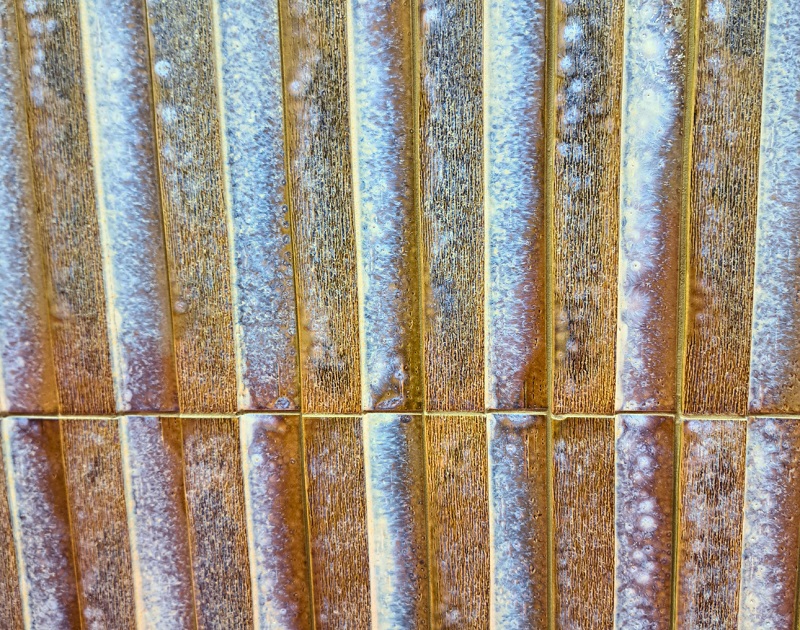
Long articulated tile with patina exhibited by Natucer at Coverings 2026
Perhaps the most meaningful shift in tile is the renewed celebration of artisan craftsmanship and narrative—referred to as Artisan Aesthetic. This trends represents a return to visible craftsmanship and the stories embedded in every tile.
In an age of mass production, imperfection has become a prized feature rather than a flaw.
Handcrafted looks, zellige-inspired surfaces, hand-painted effects, and organic textures now take center stage, embracing:
- Visible brush marks, glaze pools, and subtle variations in tone
- Softened edges, irregular surfaces, and gentle undulations
- Dimensional relief and sculpted details that create depth and shadow
- Motifs that hint at regional traditions, studio craft, or personal nostalgia
Designers are increasingly drawn to materials that carry a sense of origin—tiles that evoke tradition, locality, and artistry.

Close up view of artisan style tiles exhibited by Merola at Coverings 2026
Whether bold and colorful or quietly neutral, these surfaces bring warmth, personality, and emotional depth to a space. The Artesian Aesthetic aligns with a broader cultural movement toward authenticity, sustainability, individuality, and emotional connection to the design and maker.
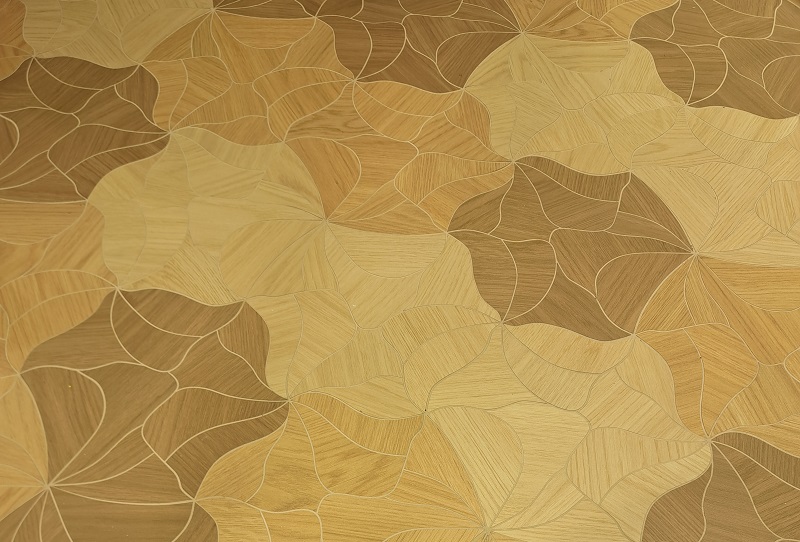
View of the intricate Blooming Parquet porcelain tile flooring by Gionvanni Barbieri exhibited by MILEstone at Coverings 2026
Special Callout: Portobello America’s New Sabi Collection
Inspired by the Japanese philosophy of wabi-sabi—the beauty of imperfection and the quiet passage of time—Portobello America’s new Sabi collection captures the poetic effects of aging, memory, and natural wear. Though not made by hand, the collection reflects a deeply thoughtful artisan approach.
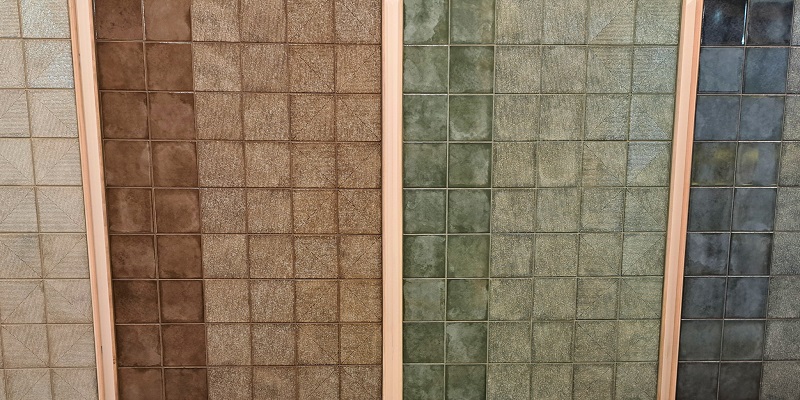
Sabi tile display in Portobello America’s exhibit booth at Coverings 2026
Designers started by studying coffee stains on watercolor paper to capture organic shapes. Next, they spent days observing a nearby river, closely watching how water interacts with surfaces over time, creating organic markings, tonal shifts, and subtle erosion. Then, using advanced ceramic technology, Portobello America was able to reproduce this rich, lived-in character faithfully across six serene colors: Bone, Clay, Earth, Indigo, Moss and Sand. Each color set features 45 different surface variations with remarkable depth revealed by subtle color shifts, organic edges, and beautiful light-and-shadow interplay—celebrating authentic marks of time rather than hiding them. The result is a deeply tactile, sensorial surface that feels lived-in and genuinely human.
The Sabi collection represents an innovative hybrid solution—a modern, glazed ceramic wall tile that delivers genuine emotional depth and tactile authenticity, making it one of the most compelling expressions of the Artisan Aesthetic we encountered at Coverings 2026.
The Artisan Aesthetic can be summarized as:
It’s not just about how a tile looks—it’s about the story it tells and the human touch it carries.
Also see:
- 2026 Tile Trends: Artisan Aesthetic (WhyTile.com)
An Industry Challenge: Porcelain Mislabeling
One of the important topics Astrachan addressed at Coverings 2026 is the widespread problem of porcelain mislabeling—a persistent issue that affects homeowners, designers, and installers alike. According to TCNA, porcelain tile accounts for nearly half—and in many categories the majority—of ceramic tile sales in the U.S.
According to the industry standard ANSI A137.1, true porcelain tile must have a water absorption rate of 0.5% or less. This low absorption makes porcelain significantly more durable, stain-resistant, and suitable for wet areas. However, many products are still marketed as “porcelain” even though they fail to meet this standard.
The materials, energy, and special manufacturing equipment needed to produce such low porosity, high density tiles are why real porcelain tile is typically more expensive than non-porcelain tiles (for tiles with similar decorative elements). The family of ceramic tile products include:
- Porcelain Tile
- Pressed Floor Tile
- Quarry Tile
- Wall Tile
- Mosaic Tile
- Gauged Porcelain Tile (GPT)
- Specialty Tile
To combat this confusion, the Porcelain Tile Certification Agency (PTCA) offers independent third-party verification. Manufacturers that meet the strict criteria can display the official Certified Porcelain logo.

Official porcelain tile certification logo from the Porcelain Tile Certification Agency (PTCA)
Good News for Homeowners & Designers:
PTCA announced at Coverings 2026 that a new searchable online database of certified porcelain products will soon launch on their website. This tool will make it much easier for buyers to quickly verify that the tile they’re purchasing is genuine porcelain.
Also see:
Updates from the Tile Heritage Foundation
Astrachan also provided updates on the Tile Heritage Foundation during his Coverings 2026 press conference, highlighting the organization’s impressive archives and several exciting new digital initiatives designed to preserve tile history and recognize the people behind it.
The Foundation’s tile archive is substantial, containing:
- 4,000+ unique glazed decorative tiles
- 700+ historic tile catalogs
- 2,700+ tile-related periodicals
- 140,000+ physical documents and records
- 44,000+ digital images of tile and installations
- 1,100+ tile books from 20 countries
Major new initiatives announced included the following:
- National Tile Installation Registry: A new public database that will document and celebrate exceptional historic and contemporary tile and mosaic installations, while connecting the public with talented makers, installers, designers, and architects.
- Tile Identification Tool: A powerful new pubic resource that allows homeowners, collectors and professionals to identify historic tiles through visual and text searches.
- Digital Resource Directory: A public platform designed to connect active tile professionals with prospective clients.
While discussing the Tile Heritage Foundation, Astrachan made a compelling observation:
while movie credits carefully document every contributor to a film, very few records exist for the artisans and master installers who create beautiful tilework that last centuries.
His point underscores a long-standing gap—while films of all caliber receive meticulous documentation, the artisans and master craftspeople who create beautiful, century-lasting tile installations have often remained anonymous. These new tools and initiatives from the Tile Heritage Foundation represent an important step toward correcting this imbalance by celebrating craftsmanship, preserving knowledge, and giving proper recognition to the human hands behind enduring tilework.
Conclusion: From Surface to Experience
Tile has evolved far beyond its traditional role as a passive finish. In 2026, it has become an active participant in shaping atmosphere, emotion, and identity.
Across the five major design trends explored—Articulated Accents, Tailored Craft, Brutalish Sanctuary, Long Game, and Artisan Aesthetic—a clear direction emerges:
a decisive move toward depth, authenticity, and sensory engagement.
Texture is replacing flatness. Craft is replacing uniformity. Matte softness is replacing high-gloss shine. Linear forms are reshaping how we perceive space, while storytelling is elevating material into meaning.
What unites all these directions is a renewed desire for spaces that don’t just look beautiful, but feel alive. Homeowners and designers alike are seeking environments that engage the hand as much as the eye, that tell stories, and that connect us to something real and enduring in an increasingly digital world.
The most compelling interiors of the coming years will be those where tile doesn’t merely cover surfaces, but enhance how we feel and live within them.
Recommended Reading
- What You Need to Know About Shower Flooring
- 5 Reasons Victorian Homes Are Still So Popular
- New Technologies to Restore Time-Ravaged Older & Historic Homes
- What to Consider When Purchasing an Older or Historic Home
- 5 Simple Tips to Improve Your Home’s Curb Appeal
- Related Topics: Design Events | Materials | Architecture | Inspiration | Restoration
| Purgula is reader-supported. When you click on links to other sites from our website, we may earn affiliate commissions, at no cost to you. If you find our content to be helpful, this is an easy way for you to support our mission. Thanks! Learn more. |