
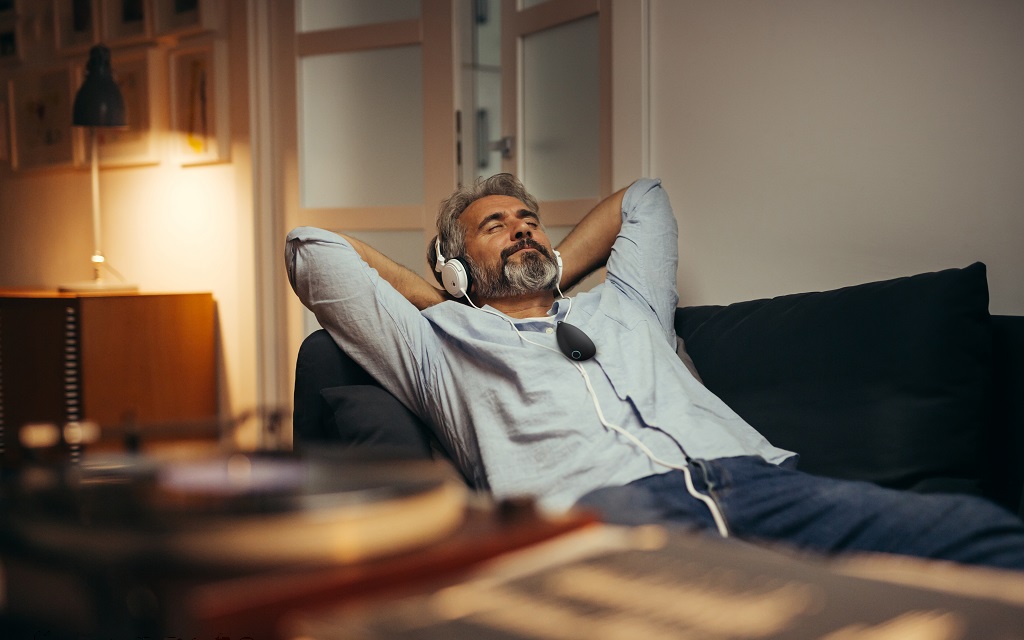
How Sensate’s passive technology aims to ease anxiety and stress at home, one calm moment at a time.
Home used to be the one place you could shut off the outside world, including work—especially work. Today, for a growing share of the workforce, it no longer is.
Instant messaging, round-the-clock operations, and an unofficial expectation of constant availability have collapsed the boundary between “on the clock” and “at home”—even for people who work full-time on-site. A customer service employee might be off shift but still one call or text away from an urgent fire drill. A marketer may be expected to respond to a live campaign issue at 9 p.m. rather than wait until the next workday. Someone in online retail or fulfillment knows the orders never actually stop coming in, regardless of the hour. For millions of people, “leaving work at work” has quietly become a dreamlike fantasy.
The result isn’t just work stress following people home—it’s work stress layering on top of everything else that already happens there:
family responsibilities; aging-home repairs; health concerns; even friction with neighbors.
Home has become less a sanctuary and more a landing zone for every kind of stress at once, arriving from every direction simultaneously.
Anxiety has become one of the defining health challenges of modern life, and for many people, home is no longer the refuge from it that it once was. Yet despite the availability of effective treatments, only one in four people with anxiety receive care, leaving millions searching for accessible ways to manage stress and improve their well-being—increasingly, from inside their own homes. According to estimates by Precedence Research, wellness technology has emerged as one of the fastest-growing areas of consumer health, with home-based devices and applications among its fastest-growing segments—practical ways to decompress between meetings, after the school run, or before bed, without requiring a trip to a clinic, gym, or spa.
Among the latest innovations is Sensate, a wearable wellness device that rests on the chest and uses low-frequency sound vibrations, paired with immersive audio, to encourage relaxation through acoustic stimulation of the vagus nerve—a key component of the parasympathetic nervous system that helps regulate the body’s “rest and digest” response. Unlike implanted medical vagus nerve stimulators used for specific clinical conditions, Sensate is marketed as a non-invasive wellness device intended to help users feel calmer, reduce stress, and improve sleep.
To understand both the science and the story behind the product, Purgula spoke with Anna Gudmundson, Sensate’s CEO, whose own background in wearable computing—and firsthand experience with professional burnout—shapes how the company thinks about the device and the people who use it.
As interest in nervous system regulation continues to grow, products like Sensate are capturing attention from consumers, clinicians, and researchers alike. But how does vagus nerve stimulation work, what does the scientific evidence actually say, and can a device like this make a meaningful difference for people navigating the pressures of modern life—particularly those seeking practical wellness solutions they can use in the comfort of their own homes?
This article explores the science behind Sensate, the research supporting vagus nerve stimulation, and where the technology fits within the rapidly expanding landscape of home wellness and stress-management tools.
Table of Contents
- Why Stress Has Become a Modern Epidemic
- The Science of the Vagus Nerve and Relaxation
- How Sensate Works: A New Approach to Home Wellness
- What the Research Says About Vagus Nerve Stimulation
- Is Sensate Worth It? Benefits, Limitations, and Ideal Users
Also see:
- Designing Against Loneliness: A Look at The Granary in Milton, Delaware
- Neuroaesthetics: Designing Homes That Feel as Good as They Look
- 5 Design Techniques to be More Productive at Home
- More Recommended Wellness Design Articles
- Related Topics: Home Wellness | Work From Home | Aging in Place | Prevention | Resilience
Why Stress Has Become a Modern Epidemic
Stress has always been part of the human experience, but the pace and persistence of modern life have transformed it from an occasional response to a near-constant companion. According to the National Institute of Mental Health, an estimated 19.1% of U.S. adults experienced an anxiety disorder in the past year, with a 31.1% lifetime risk—making anxiety one of the most common mental health conditions in the country. Anxiety and depression are also estimated to cost the global economy $1 trillion annually in lost productivity; no clean U.S.-specific equivalent exists yet, though untreated mental illness broadly is estimated to cost the U.S. economy $282 billion a year, underscoring the enormous personal and economic burden of chronic stress.
Today’s adults are expected to navigate careers, financial pressures, family responsibilities, an always-on digital culture, and a relentless stream of information—all while finding time to exercise, sleep well, and maintain meaningful relationships. For many, there is little opportunity for the nervous system to fully switch out of “fight or flight” mode before the next challenge arrives.
Beyond the pressures of daily life, a growing body of national survey data suggests that societal division and economic uncertainty have become significant, measurable stressors in their own right. Recent polling from the American Psychological Association found that a majority of U.S. adults now cite societal division as a significant source of stress, while separate research from the American Psychiatric Association found that concerns over current events and the cost of living are now among the leading drivers of rising anxiety nationwide. For many, this adds a layer of chronic, low-grade strain that compounds the more familiar pressures of work and home life.

The shift toward hybrid and remote work has also blurred the boundary between professional and personal life—and nowhere is that more visible than inside the home itself. According to the Bureau of Labor Statistics, roughly 1 in 5 U.S. employees now work remotely at least part of the time, and among those with flexible arrangements, hybrid schedules—splitting time between home and office—have become the norm rather than the exception. What was once a place to disconnect from work has, for many, become the site of it:
work emails, video meetings, and household responsibilities now compete for attention in the same rooms where people are supposed to unwind.
This makes the home not just where the stress happens, but the most logical place to address it.
Add to this, the rigors of raising children, caring for aging relatives, or simply managing a busy household, and it’s easy to see why many people struggle to find moments of genuine calm. As Gudmundson described when asked about common misconceptions around stress:
“It is believing that we won’t have stress in our lives. Stress is unavoidable. So we need to know how to handle it.”

Anna Gudmundson, Sensate CEO, speaking at a recent AgeTech Connect event held in Los Angeles.
Image courtesy of AgeTech Connect LA
That reactive-versus-proactive divide shows up across professions far beyond remote and hybrid office work—day traders managing high-stakes decisions in real time, and athletes needing to downshift physically and mentally after high-intensity performance, are just two examples of people who need practical tools for recovery, not just performance. By nature, Gudmundson noted, most people are reactive rather than proactive when it comes to stress—addressing it only once it’s already causing pain, rather than building habits to manage it in advance. Rather than seeking occasional stress relief, consumers are increasingly looking for practical, science-informed tools they can use at home to help regulate their nervous system, improve resilience, and build healthier daily routines. This growing demand has fueled interest in home wellness technologies designed to make relaxation more accessible, convenient, affordable and sustainable.
The Science of the Vagus Nerve and Relaxation
To understand why products like Sensate have attracted so much attention, it helps to understand the role of the vagus nerve. Often described as the body’s “superhighway” of communication, the vagus nerve is the longest cranial nerve, extending from the brainstem through the neck and into the chest and abdomen. Along the way, it connects with major organs including the heart, lungs, and digestive system, carrying signals in both directions between the brain and the body.
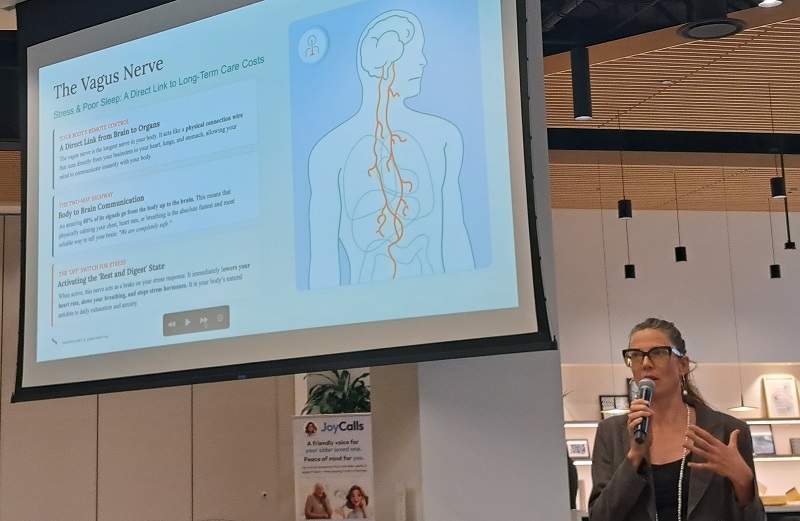
Anna Gudmundson, CEO of Sensate, discussing the vagus nerve at a recent AgeTech Connect event held in Los Angeles.
The vagus nerve is a central component of the parasympathetic nervous system—the branch of the autonomic nervous system responsible for the body’s “rest and digest” response. When activated, it helps slow the heart rate, regulate breathing, support digestion, and promote a sense of calm after periods of stress. This process counterbalances the sympathetic nervous system, which prepares the body for action by increasing alertness, heart rate, and the release of stress hormones, such as adrenaline and cortisol.
In healthy individuals, the sympathetic and parasympathetic nervous systems work together to maintain balance.
The body responds quickly to challenges and then returns to a relaxed state once the threat has passed. However, chronic stress can disrupt this natural rhythm. Constant work demands, financial worries, family pressures, and digital overload may leave the sympathetic nervous system activated for extended periods, making it harder to relax, sleep well, or recover fully between stressful events.
Researchers often use a measure known as vagal tone to describe how effectively the vagus nerve helps regulate the body’s stress response.
Higher vagal tone is generally associated with greater resilience, improved emotional regulation, healthier cardiovascular function, and faster recovery after stressful experiences. Although vagal tone is influenced by genetics and overall health, research suggests it may also be strengthened through practices such as:
- Slow diaphragmatic breathing
- Meditation
- Yoga
- Regular physical activity
- Singing
- Humming
- Cold-water exposure
All of these activities encourage parasympathetic activation.
This growing understanding of the vagus nerve has sparked significant scientific and commercial interest in Vagus Nerve Stimulation (VNS). Clinically, implanted VNS devices have been used for decades to treat conditions such as drug-resistant epilepsy and treatment-resistant depression under medical supervision. More recently, researchers and technology companies have begun exploring non-invasive approaches that seek to stimulate the vagus nerve through the skin or by using sound and vibration.
These devices aim to encourage relaxation and support nervous system regulation without surgery or medication.
While the biology behind the vagus nerve is well established, the evidence for non-invasive stimulation devices is still developing. Early studies have produced encouraging results in areas such as stress reduction, heart rate variability, and subjective wellbeing, but larger, high-quality clinical trials are still needed to determine which approaches are most effective, for whom, and under what circumstances. Understanding this distinction is important when evaluating products like Sensate:
the underlying physiology is well understood, but the evidence supporting individual consumer devices varies in both quality and quantity.
How Sensate Works: A New Approach to Home Wellness
Sensate’s underlying concept originated with Stefan Chmelik, the company’s co-founder and inventor, an integrated healthcare physician who spent more than three decades in clinical practice treating anxiety, stress, and trauma at his Harley Street clinic in London. Chmelik has said his interest in the vagus nerve grew out of observing, across years of patient work, how consistently calming the nervous system produced meaningful results with virtually no adverse effects—leading him to develop a non-invasive way to reproduce that effect outside a clinical setting. That work is now protected under patent, and forms the technical basis for the device Sensate sells today.
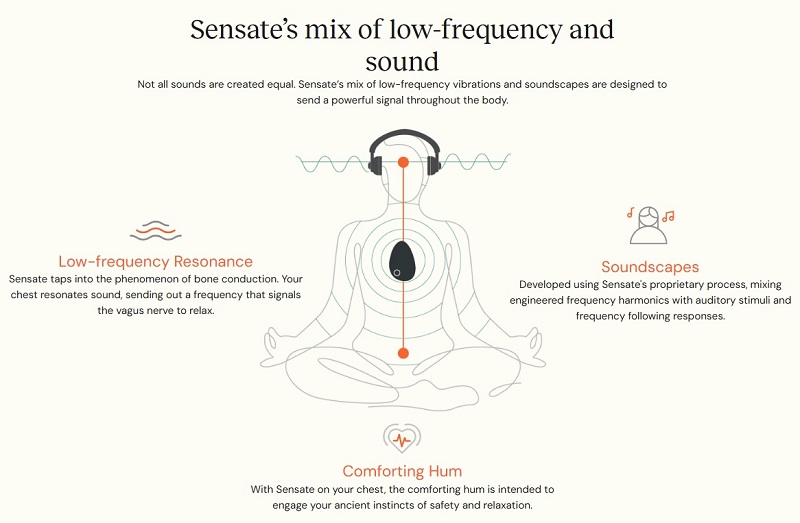
Sensate Low Frequency and Sound Diagram
Image courtesy of Sensate
Unlike wearable fitness trackers that monitor the body’s response to stress, Sensate is designed to actively encourage relaxation. About the size of a small smooth rock, the device is placed on the center of the chest while the user reclines comfortably. It is paired with a smartphone app that plays immersive infrasonic waves—called soundscapes—through headphones, while the device emits gentle, low-frequency vibrations that are synchronized with the audio experience. The combined multi-sensory effect resonates through the body, facilitating a feeling of calm. Sessions typically last between 10 and 30 minutes, making them easy to fit into a lunch break, after work, or before bedtime.
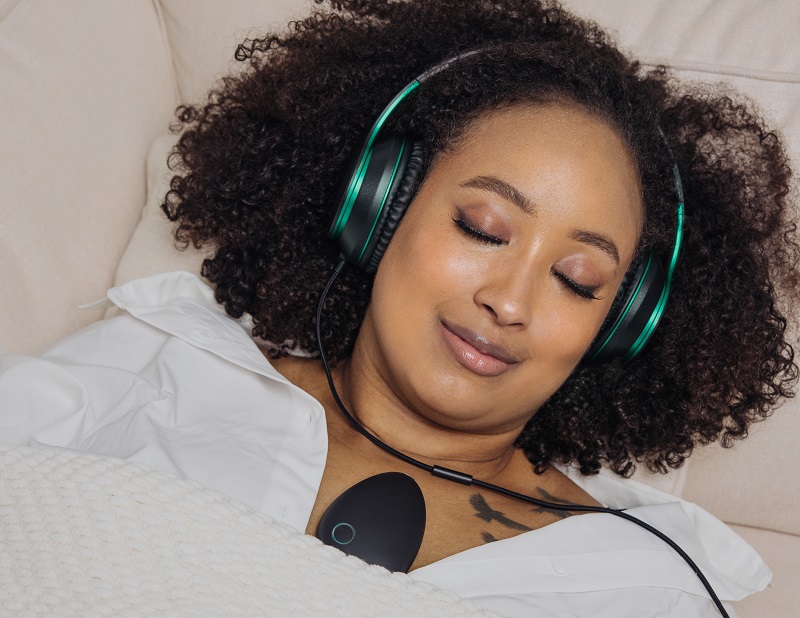
Woman enjoying the Sensate experience
Image courtesy of Sensate
Sensate’s approach is based on the idea of acoustic vagus nerve stimulation. Rather than delivering electrical impulses—as is the case with implanted vagus nerve stimulators or some transcutaneous electrical stimulation devices—Sensate uses carefully calibrated sound vibrations that resonate through the chest. The company proposes that these vibrations stimulate mechanoreceptors and tissues associated with the vagal pathway, while the accompanying soundscape encourages slow breathing and mental relaxation. Together, these elements are intended to help shift the nervous system toward a parasympathetic, “rest and digest” state.
Gudmundson brings a personal stake to the product beyond the business side: after experiencing significant stress and burnout over the course of her career, she describes herself only half-jokingly as the company’s “guinea pig”—an enthusiastic daily user of the product she helps build and direct. She describes the sensation of using Sensate as a “purring sound bath.” Unlike much of the technology competing for attention in daily life—which tends to stimulate rather than calm—Sensate is designed to be passive: users don’t need to do anything but let the vibration and soundscape work. As Gudmundson described it, much of modern digital life, from endless mobile scrolling to constant notifications, pulls people out of their bodies; Sensate is built to do the opposite.
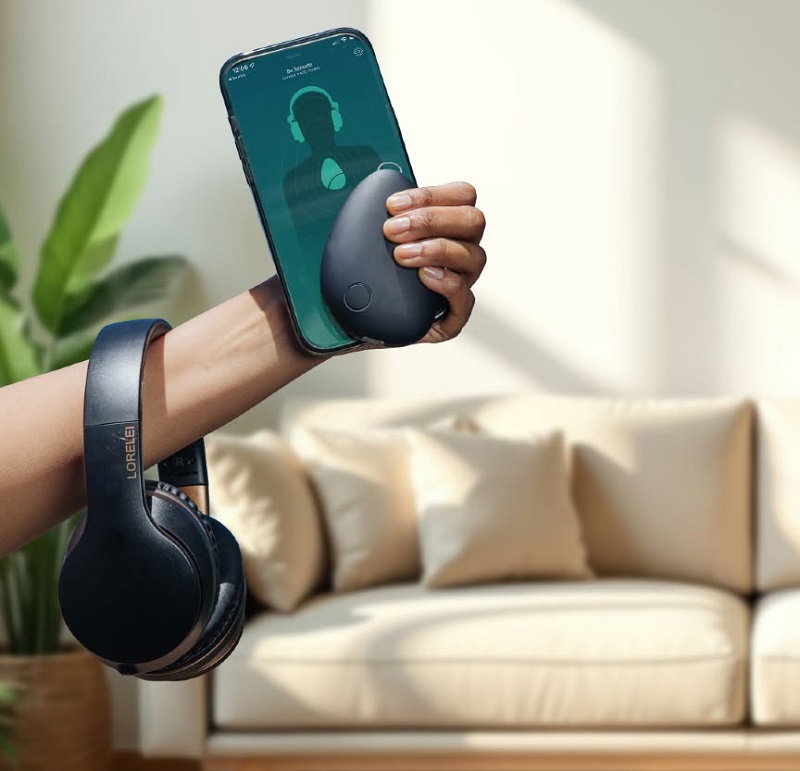
Sensate 2 with Plus app and headphones
Image courtesy of Sensate
One of the product’s biggest advantages is its simplicity. There are no electrodes to attach, no wearable patches, and no specialist knowledge required. Users simply place the device on their chest, start a session in the app, and allow the combination of vibration and audio to guide them into a more relaxed state. Gudmundson notes that many devices in this category struggle with adoption—people buy them with good intentions and stop using them within weeks. Sensate, by contrast, reports strong adoption and retention, with users returning to the practice rather than abandoning it, accruing more than 130 million cumulative minutes of use across its customer base, according to the company.

Contents of a Sensate product package
Image courtesy of Sensate
The Sensate app also includes guided programs, ambient soundscapes, and progress tracking, encouraging users to build a consistent relaxation habit over time. This reflects a broader shift in consumer wellness:
rather than relying on occasional interventions when stress becomes overwhelming, many people are looking for small, repeatable practices that help regulate their nervous system every day.
While the concept is compelling, it is important to distinguish between the device’s proposed mechanism and what has been conclusively demonstrated in clinical research. Sensate is marketed as a wellness device rather than a medical treatment, and it is not intended to diagnose, treat, cure, or prevent disease—a distinction Gudmundson was careful to draw as well, noting that Sensate is not marketed or sold to address medical conditions. Although many users report feeling calmer after a session, and the theoretical basis for promoting parasympathetic activity is biologically plausible, the specific claims made for any consumer vagus nerve stimulation device should be considered in light of the available scientific evidence. That evidence—both its strengths and its limitations—is the focus of the next section.
What the Research Says About Vagus Nerve Stimulation
Vagus Nerve Stimulation (VNS) is not a new concept. For more than three decades, implanted VNS devices have been used in clinical medicine to treat people with drug-resistant epilepsy, and later, treatment-resistant depression. These surgically implanted devices deliver carefully controlled electrical pulses directly to the vagus nerve in the neck and have been evaluated in numerous clinical trials. Their effectiveness for these specific conditions is supported by a substantial body of research and regulatory approval in several countries.
Building on this success, researchers have increasingly turned their attention to Non-Invasive Vagus Nerve Stimulation (nVNS)—techniques that seek to influence the vagus nerve without surgery.
Non-invasive techniques include:
- Electrical stimulation through the skin (known as transcutaneous VNS)
- Stimulation via the outer ear
- Newer approaches that combine sound, vibration, or breathing exercises.
The appeal is obvious:
if the calming effects of vagus nerve stimulation can be achieved safely and conveniently at home, it could provide millions of people with an accessible tool for managing everyday stress.
The evidence for non-invasive VNS is encouraging but still evolving. Systematic reviews have found that some forms of transcutaneous vagus nerve stimulation may reduce perceived stress, improve mood, and influence physiological markers such as heart rate variability—a measure often associated with parasympathetic nervous system activity. Researchers are also investigating its potential role in conditions including anxiety, insomnia, chronic pain, migraine, and post-traumatic stress disorder. However, results have not always been consistent, and studies often differ in the stimulation methods used, treatment duration, and outcome measures. As a result, scientists generally agree that while the early findings are promising, larger and more rigorously designed clinical trials are needed before broad clinical conclusions can be drawn.
Sensate occupies a distinct place within this emerging field.
Rather than using electrical stimulation, the device relies on low-frequency sound vibrations delivered through the chest, combined with immersive audio designed to encourage relaxation. The company cites internal testing and independent research suggesting that users may experience improvements in perceived stress, relaxation, sleep quality, and measures associated with nervous system regulation. Some pilot studies have reported positive changes in self-reported wellbeing and physiological indicators following regular use.
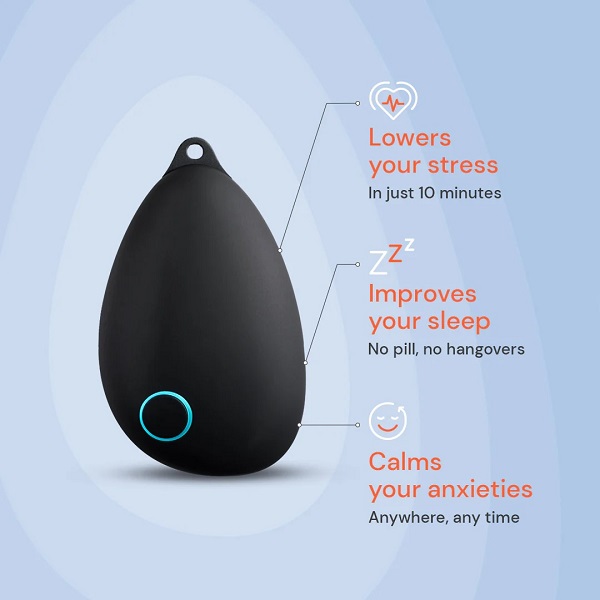
Three key benefits of Sensate according to the company
Image courtesy of Sensate
One such pilot study, conducted by Sensate and published as a company report, tracked 25 adults with moderate to high baseline stress over two weeks of daily use. Participants showed statistically significant improvements across every measure tracked: average scores on the Perceived Stress Scale fell from a high-moderate range into a low-moderate range, state and trait anxiety scores dropped out of the “high” category, self-reported sleep quality improved substantially, and measures of positive mood rose sharply. By the end of the study, 21 of 25 participants reported feeling less stressed, and time to fall asleep reportedly dropped by more than half.
The study’s authors were candid about its limitations: the sample size was small, there was no control or sham condition, and all outcomes were based on self-report rather than physiological measurement—meaning the results, while encouraging, cannot rule out placebo effects or the possibility that any quiet daily relaxation routine might have produced similar improvements. Sensate’s team has echoed this candor beyond the study itself, citing budget constraints as the primary reason larger trials haven’t yet been conducted, while noting plans for a future double-blind study.
This pattern—encouraging pilot data paired with real methodological limits—is consistent with most of the research specific to Sensate and other consumer devices in this space. Compared with implanted VNS and electrical transcutaneous VNS, the published evidence specific to Sensate remains relatively limited. Many of the available studies involve small participant groups, short follow-up periods, or are funded or supported by the manufacturer. While these studies provide useful preliminary data and justify further investigation, they do not yet establish the same level of evidence expected for medical therapies.
That does not mean the device is ineffective. Stress and relaxation are highly individual experiences, and many wellness interventions—from mindfulness meditation to breathing exercises—produce meaningful benefits even when the precise biological mechanisms remain under investigation. Sensate may prove to be a valuable addition to these evidence-informed practices, particularly for people looking for an easy-to-use relaxation tool that fits into a daily routine. However, it should be viewed as a wellness aid rather than a replacement for evidence-based treatment of anxiety disorders or other mental health conditions.
Ultimately, the current research supports a measured conclusion. The science linking the vagus nerve to stress regulation is well established, and non-invasive approaches to stimulating this system are an active and promising area of research. Sensate represents one innovative application of this science, but like many emerging wellness technologies, its long-term effectiveness will become clearer as larger, independent clinical studies continue to be published.
Is Sensate Worth It? Benefits, Limitations, and Ideal Users
Whether Sensate is worth the investment ultimately depends on your specific needs. If you’re expecting a medical device that can treat anxiety disorders or replace professional mental health care, Sensate may not be the right fit for you. Sensate is best viewed as a wellness tool designed to help users relax, unwind, and build a regular nervous system regulation practice—not a substitute for medical care.
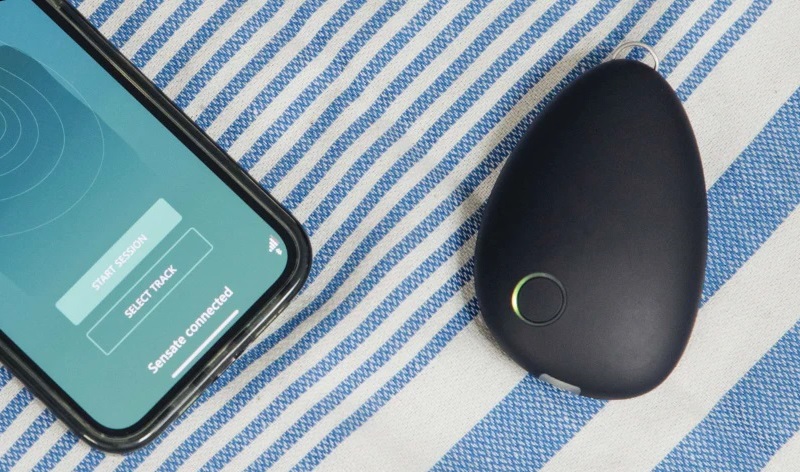
Senate 2 with Plus app
Image courtesy of Sensate
For many people, that may be exactly what they need. The device is simple to use, requires no training or meditation experience, and can be incorporated into a daily routine in as little as 10 minutes. Unlike breathing exercises or mindfulness practices, which some people find difficult to maintain, Sensate is largely passive—users simply lie down, place the device on their chest, and follow the accompanying soundscape. For busy professionals, parents, caregivers, or anyone whose days feel constantly “switched on,” this convenience may be one of its greatest strengths. The company also offers guided programs, sleep-focused sessions, and progress tracking through its companion app, encouraging long-term use rather than one-off sessions.
There are, however, some limitations to consider. Sensate is a premium-priced wellness product—retail price ranging between $299 and $349—and while many users report feeling calmer and sleeping better, individual results vary. The strongest evidence currently supports the role of vagus nerve stimulation in clinical settings using implanted devices, while the research on non-invasive consumer technologies—including Sensate—is still developing. This doesn’t mean the device lacks value, but prospective buyers should approach marketing claims with realistic expectations and recognize that the scientific evidence is not yet definitive.
Customer feedback on Amazon, where Sensate is sold, offers a real-world complement to the pilot data. Reviewers most frequently highlight the device’s ability to promote relaxation and improve sleep, describing the combination of vibration and soundscape as well-designed and easy to use. Value for money draws more mixed reactions—some reviewers consider the price justified by the results, while others find it steep for what it offers. Bluetooth connectivity is the most commonly cited frustration, with a number of reviewers reporting pairing issues.
So, for whom is Sensate best suited?
It is likely to appeal to people who experience everyday stress, struggle to switch off after work, have difficulty winding down before bed, or want a simple way to incorporate relaxation into a busy lifestyle. It may also be attractive to those who have tried meditation but found it difficult to practice consistently.
Usage patterns also offer a useful signal for who benefits most. According to Sensate, roughly 30% of customers use the device specifically to help them fall asleep more easily—a benefit the company says surprised its own team, given that Sensate wasn’t originally developed with sleep as its primary use case. Gudmundson also emphasized that Sensate is best used alongside other healthy practices, particularly meditation, rather than as a standalone fix—a framing consistent with the broader research on non-invasive VNS, where the strongest evidence still points to combined, sustained approaches over any single intervention.
Conversely, individuals with severe anxiety, depression, PTSD, or other mental health conditions should treat it as a complement to—not a substitute for—professional care.
As our understanding of the nervous system continues to evolve, products like Sensate represent an intriguing intersection of neuroscience and consumer wellness. While more independent research is needed to establish the effectiveness of acoustic vagus nerve stimulation, the underlying science of stress regulation is compelling, and many users find value in having an easy, non-invasive way to create moments of calm in an increasingly demanding world. For those seeking to build healthier daily habits rather than find a miracle cure, Sensate may prove to be a worthwhile addition to a modern home wellness routine.
More Recommended Wellness Design Articles
- From Resort to Residence: Hospitality Trends Transforming Today’s Homes
- 5 Innovative Ways 55+ Communities Are Reinventing Wellness
- 10 Practical Home Upgrades for Vibrant Aging in Place
- Passive House Principles for Homeowners
- 7 Helpful Tips to Design Your Perfect Peaceful Bedroom
- How to Choose the Right Colors For Your Home
- 6 Powerful Reasons Decluttering Can Make Your Home Healthy & Happy
- 5 Practical Ways to Maintain a Well-Organized Household
- Related Topics: Home Wellness | Work From Home | Aging in Place | Prevention | Resilience
| Purgula is reader-supported. When you click on links to other sites from our website, we may earn affiliate commissions, at no cost to you. If you find our content to be helpful, this is an easy way for you to support our mission. Thanks! Learn more. |