
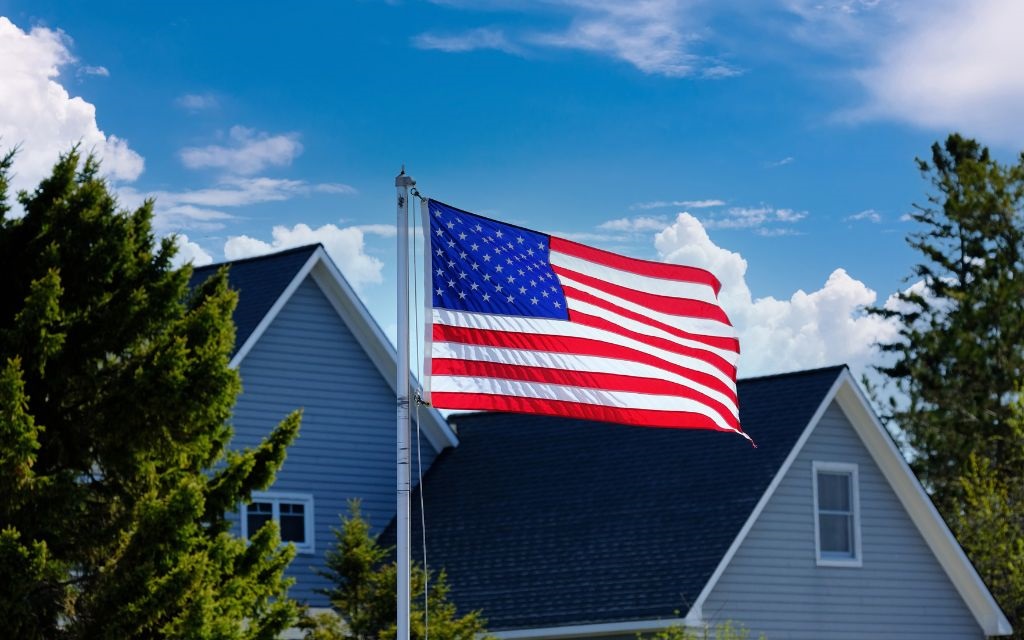
A flagpole can enhance your home’s curb appeal and create an attractive focal point in your landscape. Whether you want to display the American flag, a state flag, a family emblem, or the flag of your favorite pro or college sports team, choosing the right location makes a significant difference in how the finished installation looks.
However, the ideal spot involves more than finding an open section of your yard. You must also consider your home’s architecture, surrounding vegetation, and potential safety hazards. Careful planning helps you create a flag display that complements your property and remains practical for years to come.
Table of Contents
- 4 Ideal Areas to Place a Flagpole
- Important Considerations Before Installing a Flagpole
- Choosing the Right Location for Your Home
Also see:
4 Ideal Areas to Place a Flagpole
A flagpole can serve as a welcoming focal point, complement your home’s landscaping, or provide a more private way to display a flag. The best placement depends on your property’s layout, visibility, available space, and how you want the flagpole to fit into your outdoor surroundings. Here are four common areas to consider when choosing a location.
- In the Front Yard for Maximum Visibility
- Near the Driveway for a Welcoming Entrance
- Within a Landscaped Garden Area
- In the Backyard for a More Private Display
1. In the Front Yard for Maximum Visibility
The front yard offers one of the most prominent locations for a residential flagpole. This placement allows visitors and passersby to see the flag clearly and creates a welcoming appearance. For the best visual balance, position the flagpole slightly to one side of your home’s main entrance rather than directly in front of it. This approach lets the flag stand out without distracting from prominent architectural features.
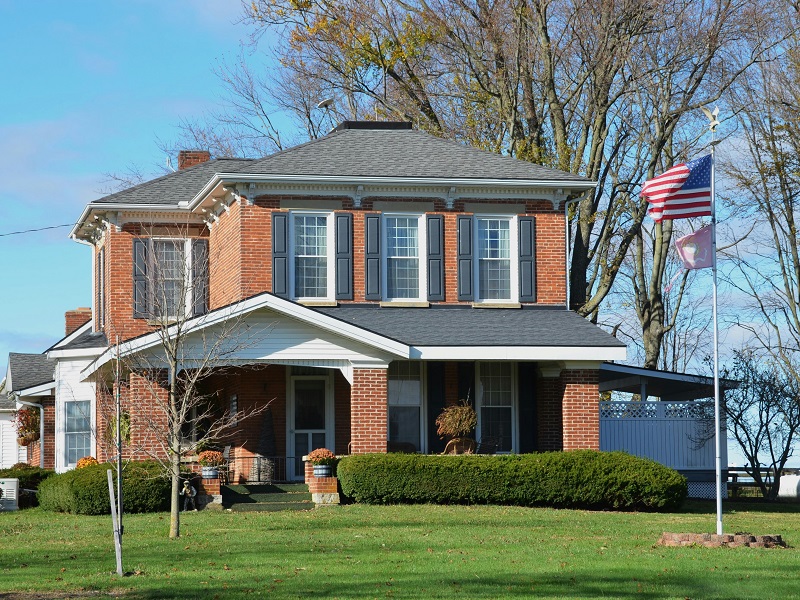
Flagpole with American flag waving in large front yard of traditional brick home.
Photo by Roger Starnes
When evaluating residential flagpole placement in your front yard, look for a location that provides enough open space for the flag to fly freely. The following conditions can help you identify a suitable spot:
- A lawn area with minimal overhead obstructions
- Sufficient distance from trees and utility lines
- Clear visibility from the street and driveway
- Convenient access for maintenance
Consider viewing the proposed location from the sidewalk before making your final decision. This perspective can help you determine if the flagpole complements your home’s proportions or overwhelms the surrounding landscape.
2. Near the Driveway for a Welcoming Entrance
A flagpole by the driveway can create an attractive entrance feature, especially on properties with expansive front lawns or long driveways. This location gives approaching visitors a clear view of the flag without placing it directly in front of the house.
For homes with circular driveways, the center island may offer an appealing installation spot. However, the island must provide enough space for a secure foundation and adequate clearance from passing vehicles.
You can also incorporate decorative stone or low-growing plants around the base to create a cohesive appearance. Thoughtful outdoor improvements like this can enhance curb appeal. Before choosing a driveway location, evaluate how vehicles enter and exit your property. Avoid spots that obstruct driver visibility or interfere with deliveries and routine property maintenance.
3. Within a Landscaped Garden Area
A garden offers an attractive setting for homeowners who want their flagpole to complement an existing landscape design. Rather than placing the pole in an open lawn, you can make it the centerpiece of a decorative planting bed.

Flagpole with American flag waving in garden setting
Choose plants that enhance the display without growing tall enough to obstruct the flag. Low-growing vegetation also helps preserve clear access to the pole’s base. Several landscaping elements work particularly well around residential flagpoles:
- Perennial flowers that provide seasonal color
- Ornamental grasses with compact growth habits
- Decorative gravel or natural stone borders
- Small evergreen shrubs that maintain year-round greenery
Consider the mature height and spread of each plant before adding it to the surrounding landscape. Plants that initially appear small could eventually interfere with the flag or make routine maintenance difficult.
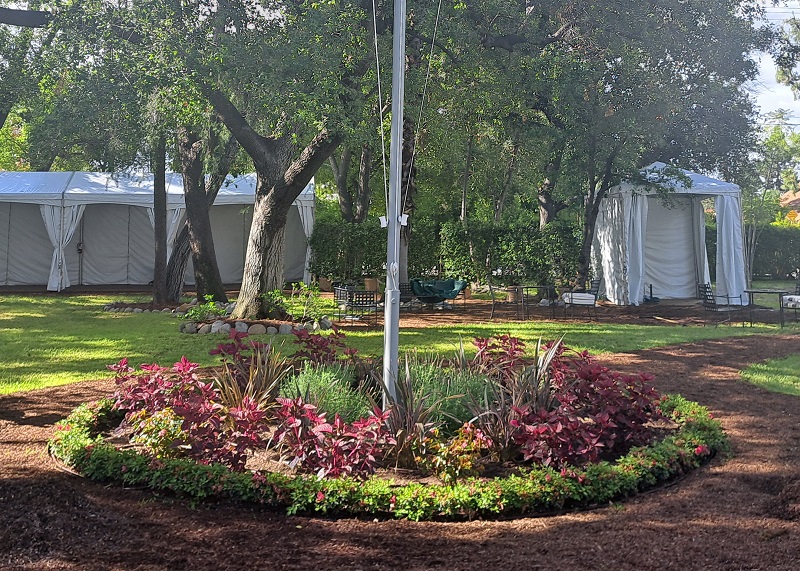
Large flagpole on display in expansive front yard garden area
A circular planting bed can also establish a clean boundary between the flagpole and surrounding lawn. This arrangement simplifies mowing and gives the installation a more intentional appearance.
4. In the Backyard for a More Private Display
A backyard flagpole offers an alternative for homeowners who prefer a less prominent display. This location can also work well for properties with limited front yard space or extensive landscaping near the street.
Consider placing the flagpole where you can enjoy the display from your patio or outdoor seating area. An open section of lawn may provide the necessary clearance without disrupting existing outdoor activities. Before selecting a backyard location, evaluate these practical considerations:
- Distance from outdoor furniture and play equipment
- Clearance from mature trees and overhead structures
- Access for raising and lowering the flag
- Adequate space around the installation foundation
Avoid areas where the flag could strike a pergola or nearby tree branches during windy conditions. The flagpole should also remain accessible without requiring you to move furniture or navigate dense landscaping. For larger properties, a backyard installation can establish a secondary focal point that complements the main outdoor living area.
Important Considerations Before Installing a Flagpole
Even the most attractive location may prove unsuitable if it presents safety concerns or conflicts with property restrictions. Before installation, evaluate the following factors to protect your investment and avoid preventable complications:
- Check Underground Utilities and Overhead Obstructions
- Choose a Flagpole That Suits Your Property
- Consider Wind Exposure and Maintenance
- Review Local Property Requirements
Check Underground Utilities and Overhead Obstructions
Installing a freestanding flagpole typically requires excavation for a foundation. Before digging, contact 811 so utility operators can identify underground infrastructure in the proposed work area. According to research cited by the U.S. Department of Transportation’s PHMSA (Pipeline and Hazardous Materials Safety Administration) contacting 811 before excavation gives individuals a 99% chance of avoiding a digging-related incident.
Homeowners should also identify private utility lines that standard utility-marking services may not cover. If the planned location sits near overhead power lines, choose another spot that maintains safe clearance throughout installation and future maintenance.
Choose a Flagpole That Suits Your Property
Flagpole height and construction influence how well an installation fits its surroundings. A shorter pole may suit a modest front yard, whereas larger properties can accommodate taller installations without disrupting visual balance. Pole height should also reflect local restrictions, wind exposure, and the flag’s proportions.
Flagpole kits vary in construction, materials, and hardware. Understanding the difference between basic and premium flagpole kits can help homeowners choose equipment that suits their property and intended use. These details matter when planning a permanent outdoor feature that requires reliable operation and regular upkeep. Select a model that matches your available space and expected wind conditions. Always follow the manufacturer’s recommendations for foundation requirements and appropriate flag dimensions.
Consider Wind Exposure and Maintenance
Wind can place considerable stress on a flagpole, especially in open areas with little protection from surrounding structures. Choose equipment with suitable wind-load specifications for your property. Think about how you will access the pole for routine inspections and flag replacement. Avoid locations that require extensive landscaping removal whenever maintenance becomes necessary.
Make sure the flagpole has adequate clearance from nearby buildings, trees, power lines, and other structures, accounting for potential movement of the flag and pole during strong winds.
Review Local Property Requirements
Before starting construction, review applicable municipal regulations and homeowners association requirements. Some communities establish rules concerning flagpole height or placement. Check property boundaries and easements before selecting a permanent foundation location. If you plan to install a particularly tall flagpole, consult your local building department about potential permit requirements.
Choosing the Right Location for Your Home
The best location for a flagpole depends on your property‘s layout and the appearance you want to achieve. Front yards offer greater street visibility, whereas garden settings provide opportunities to incorporate the display into your landscaping. Backyard installations may better suit homeowners who prefer a more private arrangement.

American flag waving from flagpole surrounded by spring blossoms
Take time to evaluate each potential location before making permanent changes to your property. Consider how the flagpole will look from different angles and whether it will interfere with everyday activities. With thoughtful planning, you can create an attractive flag display that enhances your home’s exterior and remains easy to maintain.
Related Articles from Purgula
- The Many Benefits of Sustainable Outdoor Furniture
- Want a Better Outdoor Space? Connect It with Your Indoors
- How to Create a Beautiful & Peaceful Outdoor Oasis
- The Many Uses and Benefits of Shade Sails for Your Home
- How to Add Character to Your Home with Outdoor Lighting
- The 411 on Phantom Screens: A Profile in Innovation
- Related Topics: Curb Appeal | Indoor-Outdoor Living | Materials | Landscaping
| Purgula is reader-supported. When you click on links to other sites from our website, we may earn affiliate commissions, at no cost to you. If you find our content to be helpful, this is an easy way for you to support our mission. Thanks! Learn more. |