
One out of fifteen homes in the United States have elevated radon, meaning radon levels detected over 4 picocuries per liter, every year. Though an estimated 25 percent of people are exposed to radon in the United States, not all home foundations carry the same risk of exposure.
Radon gas enters homes through soil and foundation openings, making structural design a key factor in prevention. The foundation determines where radon accumulates and how pressure differences allow it to enter indoor spaces.
As such, the type of foundation a building has influences how specialists design radon mitigation systems.
Table of Contents
- Slab-on-Grade and Depressurization
- Soil Gas Control in Basements
- Crawl Spaces and Airflow Management
- Custom Systems for Complex Foundations
Also see:
Slab-on-Grade and Depressurization
Homes built on slab-on-grade foundations often need sub-slab depressurization systems.
In this design, a pipe and fan pull radon from beneath the concrete slab before it enters the living space. Because there is no crawlspace or basement buffer, the system must carefully manage pressure below the slab.

Radon mitigation fan being installed
Installation typically requires drilling through the slab to create a suction point in the underlying soil or gravel layer. Sealants are then applied to cracks, joints, and utility penetrations to limit radon entry pathways. Radon carries substantial health risks, including raising the risk of cancer.
This mitigation method decreases that risk by venting radon gas from beneath the slab before it can build up indoors.
Soil Gas Control in Basements
Basements create larger subsurface areas where radon can accumulate before entering the home.
Therefore, basement mitigation systems often use multiple suction points to draw soil gases from beneath the basement floor. Properly sealing of wall-floor joints and sump lids reduces entry points.
Reliable monitoring and mitigation are important for health because there is no known safe level of radon exposure. Radon measuring devices are one of the top sensors that make homes safer. Monitoring data can also guide adjustments to the radon mitigation system if needed.
Crawl Spaces and Airflow Management
Crawl spaces present unique challenges because radon can accumulate in the exposed soil beneath the home.
Mitigation for crawl spaces isolates the soil surface and creates controlled airflow pathways that redirect radon away from living spaces.
Radon mitigation systems in buildings with crawl spaces may include:
- A heavy polyethylene vapor barrier covering exposed soil.
- Sealed seams and foundation walls to contain soil gases.
- Vent pipes connected to an inline fan to draw radon outdoors.
Custom Systems for Complex Foundations
Many homes have mixed foundation layouts, such as a basement under one section and a slab under another.
That makes radon mitigation more complex because radon can enter through various openings, and a single solution may not maintain uniform pressure throughout the structure.
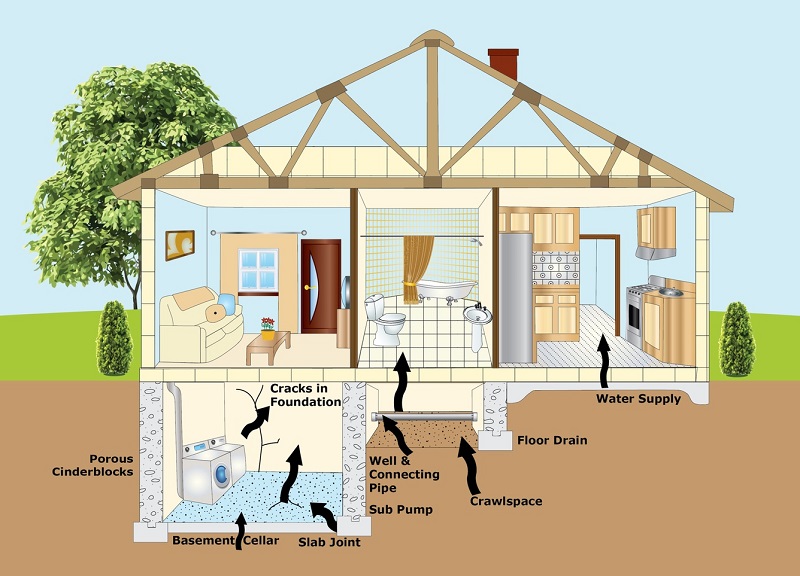
Entry ways for radon into a home
Image courtesy of the Environmental Protection Agency (EPA)
A radon mitigation professional can evaluate how air and soil gases move beneath each part of the home. Based on that assessment, they may install multiple suction points, adjust fan placement, and seal key entry routes. When choosing a radon mitigation service, be sure to ask how the system will be installed and where the vent pipe will be located. Its placement affects system efficiency, fan noise, and your home’s exterior appearance.
Foundation types affect the design of radon mitigation systems because each structure allows soil gases to enter in different ways.
Slabs, basements, and crawl spaces all require specific strategies to manage pressure and safely vent radon outdoors. By understanding how these structures influence system design, homeowners can make more informed decisions about protecting indoor air quality. Working with a qualified professional will help ensure that a mitigation system fits your home’s unique foundation and performs effectively.
Additional Home Safety & Home Wellness Articles
- How to Reduce and Control the Humidity in Your Home
- 5 Benefits of Upgrading Your HVAC System
- HVAC Filters: The Key to Healthy Air Quality & Happy Homes
- 10 Beautiful Houseplants Perfect for Small Rooms and Spaces
- Top 10 HVAC Trends Shaping the Home Market
- 6 Reasons Ductless Mini-Split ACs are a Game-Changer for Your Home
- Related Topics: Foundations | Home Wellness | IAQ | Prevention
| Purgula is reader-supported. When you click on links to other sites from our website, we may earn affiliate commissions, at no cost to you. If you find our content to be helpful, this is an easy way for you to support our mission. Thanks! Learn more. |