
Choosing the right wine glass might seem like a minor detail, but it can dramatically influence how a wine looks, smells, and tastes. From the curve of the bowl to the width of the rim, each element of a glass is designed to highlight the unique characteristics of a specific grape varietal. Whether you’re sipping a bold Cabernet Sauvignon, a delicate Pinot Noir, or a crisp Sauvignon Blanc, the glass you choose can enhance or diminish your perception of a given wine.
Purgula recently had the pleasure of investigating this topic firsthand at a Riedel Sensory Workshop led by Skye Potter, Riedel Crystal Brand Ambassador. Held at the new Universal Appliance and Kitchen Center (UAKC) showroom in Santa Clarita and sponsored by BSH (parent of Gaggenau, Thermador, and Bosch), the session revealed how a glass can dramatically transform the aroma and flavor of fine wine.

Eric Steven Stahl, CMO of UAKC, and Skye Potter, Riedel Crystal Brand Ambassador, addressing attendees at the Riedel Sensory Workshop held in Santa Clarita, California
In this article, we share what we learned during this informative session, providing tips and guidance that can elevate your wine drinking, both on a day-to-day basis, as well as when hosting social events. No matter where you are on the spectrum of oenophilia—from beginner to professional sommelier—we are confident you will discover something new.
Table of Contents
- Why the Shape of a Wine Glass Matters
- The Perfect Pour: Matching Glassware to Varietal and Style
- Details on the Riedel Sensory Workshop
- How to Replicate the Riedel Sensory Workshop at Home
- Additional Wine Tasting Tips and Terms
- Decanting Tips
- About Riedel: A History of Innovation
- Final Thoughts
- Riedel Resources
Also see:
Why the Shape of a Wine Glass Matters
Choosing the right wine glass shape for a specific grape varietal isn’t just about aesthetics—it directly influences how a wine smells, tastes, and feels. From the size of the bowl to the taper of the rim, glassware is designed to highlight a wine’s best characteristics, while minimizing its flaws. Understanding these differences can elevate even an everyday bottle into a more expressive and enjoyable experience.
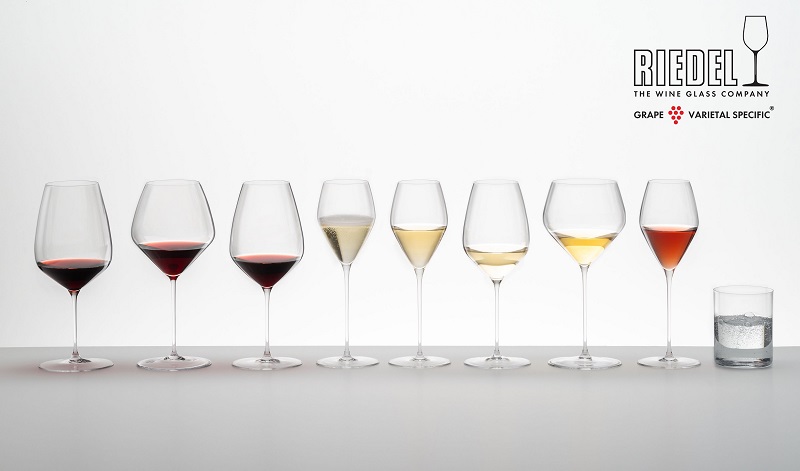
An array of Riedel wine glasses showing the many differences in shape best suited for a specific varietal.
Image courtesy of Reidel
Riedel believes that form must follow function. The shape of your glass isn’t just a matter of style—it’s a powerful tool that enhances the full spectrum of wine’s expression.
Thus, every Riedel glass is engineered to elevate the four key sensations of wine:
- Bouquet: The shape of the bowl directs aromas to the nose, amplifying the wine’s aromatic profile and revealing its complexity.
- Texture: The design influences how the wine flows across the palate, shaping how you perceive body, balance, and tannins.
- Flavor: Rim diameter and bowl depth determine where the wine lands on the tongue—guiding acidity, sweetness, and bitterness to the right taste receptors.
- Finish: A well-matched glass accentuates the wine’s finish, allowing its character to linger with clarity and finesse.
Using the correct wine glass enhances aroma and flavor by controlling oxygen exposure and temperature. Red wines need large bowls to breathe (e.g., Bordeaux for bold, Burgundy for delicate), while white wines prefer smaller bowls to stay chilled.
Sparkling wine typically requires narrow flutes to maximize the visual and physical experience of carbonation, while helping the wine stay chilled longer. The narrow opening funnel also assists delicate floral and fruity scents by concentrating the lighter aroma directly to the nose.
A universal glass, on the other hand, works generally well for most types, serving as a functional compromise that prioritizes hospitality and practicality (e.g. storage and budget limitations), without significantly sacrificing the sensory profile of the wine.
Wine appreciation is largely about aroma. Studies and expert guidance consistently emphasize that glass shape controls how aromas are concentrated and delivered to the nose, which in turn affects flavor perception.
Key Wine Glass Design Elements:
- Bowl Size: Larger bowls allow more oxygen exposure (ideal for bold reds)
- Rim Diameter: Narrow rims concentrate aromas (great for delicate whites)
- Shape: Directs wine to specific parts of the palate, influencing perceived sweetness, acidity, and tannin
The rise of varietal-specific glassware—popularized by brands like Riedel—was based on the idea that different grapes express themselves best in different shapes.
The Perfect Pour: Matching Glassware to Varietal and Style
Much like a well-curated room, the right glassware balances form and function, acting as a precision tool that translates a wine’s architecture into a memorable sensory experience. Here is guidance on the logic behind the ideal glass shapes for each of the most popular grape varietals and wine styles.
- Sparkling Wines
- Crisp Whites
- Rich Whites
- Medium-Bodied Reds
- Aromatic Reds
- Full-Bodied Reds
- Universal Glasses (All-Purpose)
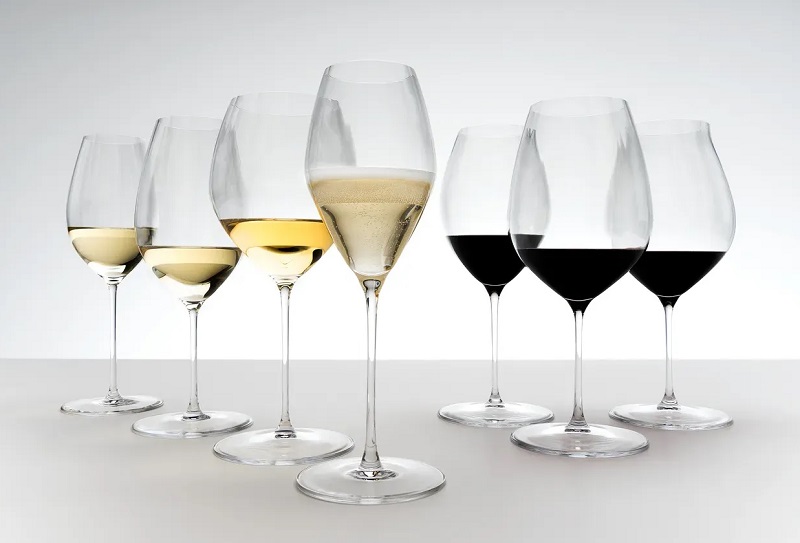
Riedel’s popular Performance Wine Glass Collection
Image courtesy of Riedel
Sparkling Wines
- Primary Shapes: Flute or Tulip
- The Logic: Narrow opening preserves carbonation while still concentrating aromas and keeping the wine chilled longer; the Tulip shape is often preferred for more mature sparkling wine to enhance the bouquet
- Example Styles: Champagne, Prosecco, Cava
- Riedel Models: Riedel Veloce Champagne Wine Glass; Riedel Performance Champagne Glass

Two Riedel Veloce Champagne Wine Glasses
Image courtesy of Riedel
Crisp Whites
- Primary Shape: Smaller bowl with narrow opening
- The Logic: The slim profile enhances acidity, aromatic intensity and freshness in crisp whites, while preserving a cooler temperature
- Example Varietals: Sauvignon Blanc, Pinot Grigio
- Riedel Models: Riedel Veloce Sauvignon Blanc Glass; Riedel Performance Sauvignon Blanc
Rich Whites
- Primary Shape: Slightly larger bowl and opening than crisp whites
- The Logic: Allows more oxygen contact to develop creamy textures and complex aromas
- Example Varietals: Chardonnay, Viognier
- Riedel Models: Riedel Veloce Chardonnay Glass; Riedel Performance Chardonnay
Medium-Bodied Reds
- Primary Shape: Medium bowl with a slightly tapered rim
- The Logic: Slightly wider bowl design increases surface area to highlight spice and fruit, balancing fruit, spice, and acidity without overexposing the wine
- Example Styles: Syrah/Shiraz, Zinfandel
- Riedel Models: Riedel Winewings Syrah Glass

Riedel Winewings Syrah Wine Glass
Image courtesy of Riedel
Aromatic Reds
- Primary Shape: Wide, balloon-shaped bowl with a tapered rim (Burgundy style)
- The Logic: Lightweight glass ideal for enhancing delicate red wine by capturing nuanced aromatics and directing wine to the tip of the tongue for perceived sweetness
- Example Varietals: Pinot Noir, Nebbiolo
- Riedel Models: Riedel Veloce Pinot Noir/Nebbiolo Glass; Riedel Performance Pinot Noir
Full-Bodied Reds
- Primary Shape: Large, tall bowl with a tapered opening that is more narrow than the Burgundy/Pinot Noir style
- The Logic: Tall bowl provides breathing room for high-tannin wines, softening their structure while allowing intense alcohol aromas to dissipate and complex aromas to develop
- Example Varietals and Styles: Cabernet Sauvignon, Bordeaux blends
- Riedel Models: Riedel Veloce Cabernet/Merlot Glass; Riedel Performance Cabernet/Merlot
Universal Glasses (All-Purpose)
- Primary Shape: Medium bowl, balanced proportions
- The Logic: A versatile, oversized glass suitable for both red and white wines that serves as a practical compromise for those who prefer not to use or store multiple glass types. Universal designs have become increasingly popular because they offer convenience without sacrificing too much performance, especially in smaller spaces or casual settings.
- Example Styles: Wide range of red and white wines
- Riedel Models: Riedel Wine Friendly Magnum Glass; Riedel Ouverture Red Wine

Photo that shows the versatility of the Riedel Wine-Friendly Magnum Wine Glass
Image courtesy of Riedel
By curating a collection of wine glasses that mirrors your favorite varietals and styles, you can transform your glassware from simple kitchenware into an essential component of your daily lifestyle—where every sip is purposefully designed for your enjoyment.
Details on the Riedel Sensory Workshop

Sponsors of the Santa Clarita Riedel Sensory Workshop
The following persons and their organizations made this evening possible:
- Igor Royz, President and CEO, Universal Appliance and Kitchen Center
- Eric Steven Stahl, CMO, Universal Appliance and Kitchen Center
- Ryan McElroy, Showroom Manager, Santa Clarita, Universal Appliance and Kitchen Center
- Julie Riggs, District Sales Manager, BSH
- Skye Potter, Crystal Brand Ambassador, Riedel
- Megan Reilly, Co-Founder and Principal, WestEdge Design Fair
Wines Tasted
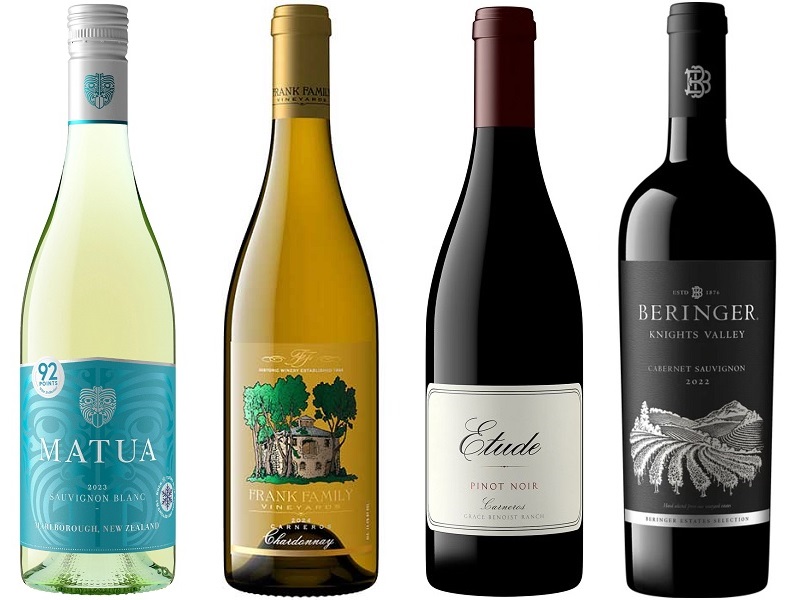
Wines tasted at the March 2026 Santa Clarita Riedel Sensory Workshop
- Vintage: 2023
- Region: Marlborough, New Zealand (South Island)
- ABV: 13.0%
- Varietal: Sauvignon Blanc
Franklin Family 2024 Carneros Chardonnay
- Vintage: 2024
- Region: Napa Valley
- Appellation: Carneros
- ABV: 14.4%
- Varietal: Chardonnay
Etude 2022 Carneros Pinot Noir
- Vintage: 2022
- Region: Sonoma County
- Appellation: Carneros
- ABV: 14.0%
- Varietal: Pinot Noir
Beringer 2022 Knights Valley Cabernet Sauvignon
- Vintage: 2022
- Region: Sonoma County
- Appellation: Knights Valley
- ABV: 14.5%
- Varietal: Cabernet Sauvignon
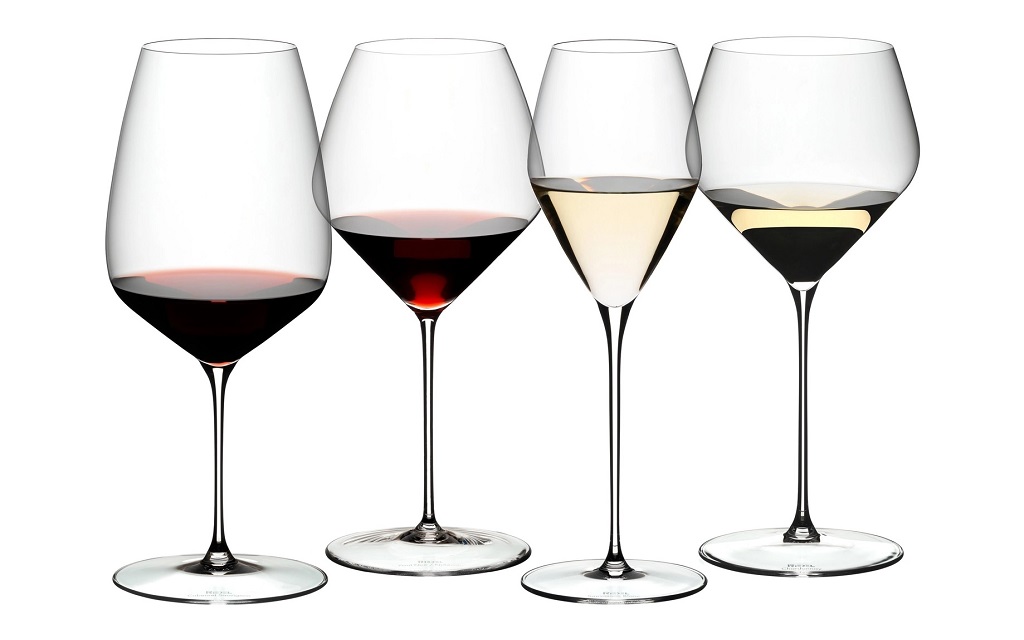
Wine Tasting Glassware
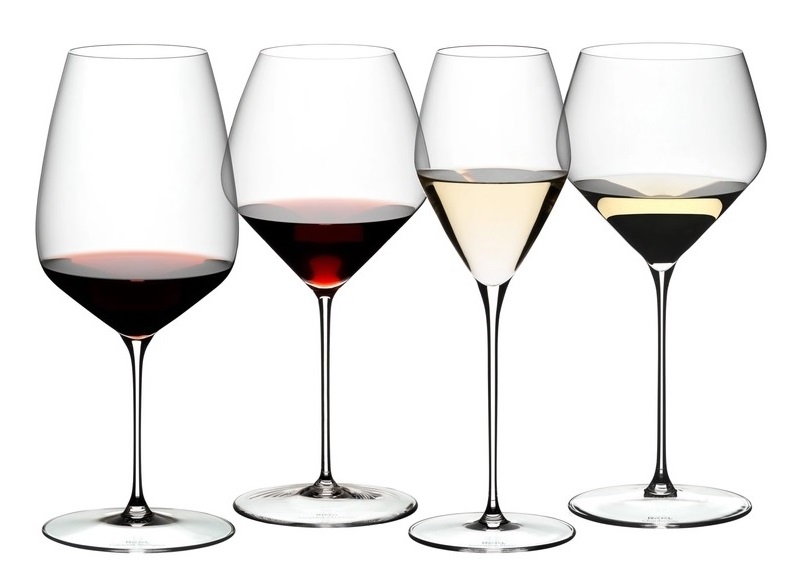
Riedel Veloce Wine Glass Tasting Set
Image courtesy of Riedel
Location:
Universal Appliance and Kitchen Center
21058 Golden Triangle Rd, Santa Clarita, CA 91350
How to Replicate the Riedel Sensory Workshop at Home
If ever afforded the opportunity to participate in a Riedel wine tasting event in person, we strongly recommend taking advantage of this uniquely rewarding and enjoyable experience.
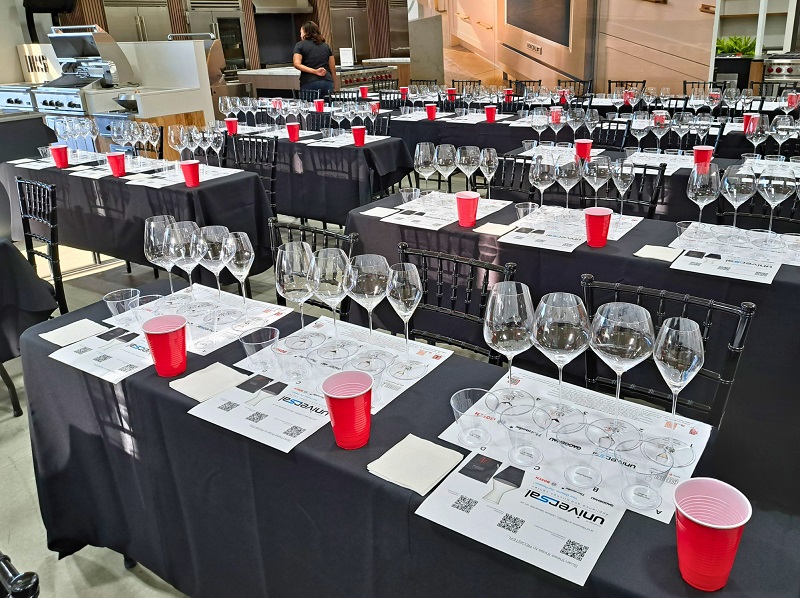
Place settings for the Riedel Sensory Workshopheld at UAKC in Santa Clarita, California
Until then, here is guidance on how you can start testing your existing glassware collection at home.
Regardless of how many glass types you may own, or how many wine varietals you may wish to taste, you should always respect the concept of “Going through the Portal”:
Start with light-bodied white wine (e.g. Sauvignon Blanc), then full-bodied white (e.g. Chardonnay), then thin-skinned red (e.g. Pinot Noir), then thick-skinned red (e.g. Cabernet Sauvignon), always remembering that you “can’t go back”, as you progress through the tasting portal.
The reason that this order (light white → bold red) is so important is that it prevents the heavy tannins and higher alcohol content of red wines from overwhelming your palate, ensuring you can still taste the delicate nuances of the whites.
Our session started simply with tasting water (Fiji) in two glass types:
- Glass #1 Sauvignon Blanc
- Glass #2 Chardonnay
Note: All glasses used during our Riedel tasting presentation were from the RIEDEL Veloce Tasting Set that included the following glass types: Sauvignon Blanc; Chardonnay; Pinot Noir; and Cabernet Sauvignon
Sampling water in the more narrow Sauvignon Blanc glass made our mouths feel dry, causing us to want to take another sip. The wider Chardonnay glass, however, gave us a smoother, more satisfying experience.
Next, we compared Matua Sauvignon Blanc in the Sauvignon Blanc glass versus a simple plastic cup, the type often served at industry networking events and performing arts venues.
Note: In the Riedel Sauvignon Blanc glass, the ideal pour should reach the widest point of the bowl. This provides the maximum surface area for the wine to breathe and release its aromatics.
The tasting process throughout the evening involved the following steps with minor variations:
- Slightly tilt the glass forward to inspect the wine visually
- Experience the aroma of the wine by placing the rim of the glass at the top of your upper lip and then tipping it so that your nose enters the glass
- Taste the wine (non-swirl experience)
- Prepare for a second taste (swirl experience)
- Swirl the wine by holding the stem in the air, or by placing your hand over the base on a countertop
- Visually inspect the wine a second time
- Smell the wine a second time
- Taste the wine a second time
- Proceed to taste the wine in another glass type to discover how the “perception” of the wine is different from the ideal glass type
While sampling the Matua in the plastic cup, the Sauvignon Blanc became virtually scentless, as the delicate aromatics escaped the wide rim of the cup. The flavor was more bitter, astringent and not nearly as flavorful as when in the ideal glass shape. Conversely, the same wine experienced in the slender Sauvignon Blanc glass was like going through a “loud speaker”—the aroma and taste became “amplified” for a noticeably enhanced experience.
When comparing these specifically, you will likely, immediately think of all the many “glasses” of wine experienced in plastic (AKA “Tailgate Crystal”). It’s really a shame when you think about it.
Another key aspect of the tasting session was how high quality, best-suited glassware can allow a wine lover to experience the full breadth of “what they paid for”. Specifically, when paying a premium for a better class of wine, you should strive to enjoy its complete sensory offerings:
- Bouquet
- Color
- Texture
- Flavor
- Finish
Additional Wine Tasting Tips and Terms

Skye Potter sharing his passion for wine and quality glassware during the Riedel Sensory Workshop at Universal Appliance and Kitchen Center, Santa Clarita, California
Here is a collection of notes we took during the Riedel Sensory Workshop that may provide new insight or helpful refresher information for you.
- Holding a Wine Glass: always hold by the stem or base, never the bowl, to prevent warming the wine with your hands and to avoid leaving smudges
- Minerality: Think of this as the “savory” dimension of wine. While fruit and spice are familiar, minerality refers to non-organic notes—like the scent of rain on a hot sidewalk or the “chalky” texture of a river rock.
- Temperature has a huge impact on wine’s taste
- The 3 T’s of Wine—Temperature, Taste, and Texture: the three pillars that determine your sensory perception of every pour.
- “Wine Crime”: a faux pas that diminishes a wine’s profile, such as the common practice of using a single glass shape to taste multiple, distinct varietals.
- Burgundy White: Chardonnay
- Burgundy Red: Pinot Noir
- Decanting Wine: makes a young wine more mature, helping you to taste secondary and tertiary flavors
- Why you swirl your glass: all you paid for will be at the bottom of the glass, if you do not swirl. In other words, swirling integrates the wine’s components and releases the aromatics that often settle at the bottom of the bowl.
- How to smell a glass of wine: touch front rim of the glass at the top of your upper lip, tilt forward to encircle your nose
- Experience and enjoy what you paid for: scent, taste, finish, color, paring
- Sauvignon Blanc has no other flavor contributors, just fruit and yeast
- Chardonnay has 3 to 4% more alcohol than Sauvignon Blanc
- Washing Wine Glasses: a golden rule—never clean fine crystal after 10 PM or after a few glasses of wine; the risk of breakage is at its highest.
- Red wine gets lighter when aged
- White wine gets darker when aged
- Drinking Red Wine at Home: keep red wine refrigerated, set out at room temperature for 30 minutes prior to drinking—adjust timing as preferred
- “Wine glassware doesn’t change the wine, it changes the perception of the beverage”—Skye Potter, Riedel Crystal Brand Ambassador
- Wines that are best for food pairing have long finishes, as you want the flavor of the wine to linger on your tongue when savoring other elements of your meal. Pinot Noir is widely considered the best for food pairing because of its high acidity, supple tannins, and exceptionally long, smooth finish. Pinot Noir’s bright, acidic finish allows it to act as a ‘bridge’ between different flavors without masking them.
- Pinot Noir is considered to be a “crossover wine”, as it is one of the few reds that pairs perfectly with fatty fish like grilled salmon or tuna.
- Pinot Noir is known as the “heartbreak grape” because it is notoriously difficult to grow and even harder to turn into great wine. For winemakers, the “heartbreak” comes from the high risk of a crop failing or a batch turning out bland, despite a massive investment of time and money. However, when it works, it produces some of the most elegant and expensive wines in the world. Unlike the hardy Cabernet, Pinot Noir is a “diva” in the vineyard grape family for a few specific reasons:
- Thin Skins: Its skins are very thin, making the berries extremely sensitive to sunburn, wind, and temperature swings.
- Disease Prone: The clusters grow in tight, pinecone-shaped bunches (hence the name “Pinot”), which traps moisture and makes them a magnet for rot and fungus.
- Climate Picky: It needs a “Goldilocks” climate—too hot and it loses its delicate aromas; too cold and it won’t ripen.
- Mutation: It is genetically unstable and mutates easily, meaning a vine might not produce the same quality of fruit from one year to the next.
Decanting Tips

Skye Potter, Crystal Brand Ambassador, Riedel, explaining the benefits of decanting wine at the Riedel Sensory Workshop at Universal Appliance and Kitchen Center, Santa Clarita, California
Decanting is often treated as a formal ritual, but for less-advanced wine enthusiasts, a decanter can be viewed as simply a tool to make wine taste better, faster.
- Reasons to Use a Wine Decanter
- A Non-Intimidating Entry Point
- The “Splash Decant” Approach
- The Fine Restaurant Approach
- Recommended “Entry-Level” Decanters from Riedel
Reasons to Use a Wine Decanter
- “Opening Up” Aromatics: Decanting introduces oxygen, which acts like a volume knob for the wine’s scent. This process lifts the ‘veil’ off a closed wine, allowing the fruit and floral notes to take center stage with much greater clarity.
- Softening Tannins: Oxygen helps soften the grip of young tannins, allowing the fruit to shine and creating a more polished, velvety mouthfeel.
- Temperature Control: A decanter provides more surface area than a bottle, making it the most efficient way to bring a wine to the correct temperature—whether that means warming up a cellar-cold red or flash-chilling a decanter in an ice bucket.
Here are a few ways to get familiar with decanting and how it can enhance your appreciation of wine.
A Non-Intimidating Entry Point
The easiest way to get familiar with a decanter is to use it for young, affordable reds (like a $20 Cabernet or Malbec). These wines are often “tight” or “closed” when first opened.
The “Splash Decant” Approach
- The Method: Simply pour the wine into the decanter with a bit of vigor. You don’t need a steady hand or a candle.
- The Goal: To introduce oxygen quickly to “tight” or young wines.
- The Experiment: Pour a small glass straight from the bottle, then pour the rest into the decanter. Taste them side-by-side 20 minutes later. The immediate difference in smoothness is the best way to understand the decanter’s value without the pressure of experimenting with a vintage bottle.
The Fine Restaurant Approach
Requesting a decanter at a top-tier restaurant is a great “pro move” for a beginner, as the sommelier will handle the mechanics for you.
- When to Ask: Ideally, request it immediately after you order the wine, which is typically before the appetizers arrive. This gives the wine 20–30 minutes to breathe while your party reviews the menu.
- The “Riedel Chilling Your Red Rule”: Most restaurants store reds at room temperature, which is often 72°F+—too warm for red wine, which should be closer to 60–65°F.
- The Request: You can request the following from your server:
- “Could we have our bottle of red decanted and placed in an ice bucket for about 5–10 minutes to bring the temperature down slightly?”
- The Results: This will ensure that the wine is vibrant and crisp rather than “soupy” or alcohol-heavy from the heat of the room.
Recommended “Entry-Level” Decanters from Riedel
- Riedel Performance Decanter: A machine-made crystal piece that is both durable and elegant.
- Riedel Cabernet Decanter: A classic, functional “standard” that is easy to handle and store.
Whether you’re performing a quick splash-decant at home or requesting a chilled service at your favorite restaurant, using a decanter is ultimately about moving past the ceremony to unlock the true potential of the bottle in front of you.
About Riedel: A History of Innovation

Here is a collection of interesting facts and achievements pertaining to Riedel that we discovered while attending the tasting experience and conducting follow-up research on this impressive family-owned company that has been in existence longer than the United States.
- The correct way to pronounce “Riedel” is like “needle”
- Established in 1756, Riedel is 270 years old, older than the United States
- Riedel is headquartered in Kufstein, Austria.
- The headquarters includes a flagship store, an outlet, and a museum that offers guided factory tours to the public.
- Riedel’s headquarters campus houses the company’s only factory that still produces glassware and decanters entirely by hand using traditional mouth-blowing techniques.
- The company, officially known as Tiroler Glashütte GmbH, has been based in this Tyrolean town since 1956.
- Claus Riedel, member of the 9th generation, was the person who first connected wine with specific glass shapes, presenting at the 1958 World’s Fair in Brussels
- Under Claus’ leadership, Riedel converted to producing 100% glassware, shifting away from their industrial glass roots
- Riedel was the first to introduce “wine-friendly” unadorned stemware in the 1950s and varietal-specific machine-made glasses in 1986.
- In 1973, the company launched the Sommeliers series, the world’s first full collection of grape-varietal-specific glassware
- Riedel’s current family leadership team is the 11th generation
- Riedel’s current CEO is Maximilian Riedel, 11th generation, who is also a popular wine influencer
- The U.S. headquarters, Riedel Crystal of America, is located at 110 Fieldcrest Ave, Edison, New Jersey.
- Renowned wine critic Robert Parker has praised Riedel as the “finest glasses for both technical and hedonistic purposes.”
- Collections like Riedel Performance feature a “light optic impact” that increases surface area, helping wine open up and release more aroma.
- Riedel sells a travel wine glass that is allowed on airplanes
- Riedel offers a dedicated carry box, ensuring you never have to compromise on the sensory experience, whether on an airplane or at a restaurant
- “It takes a great deal of effort for a talented winemaker to produce a good wine. These efforts can be ruined in no time if the wine is not served properly.” Michel Bettane, Guide Bettane et Desseauve (Source: Riedel)
- Riedel’s Raison d’être: glassware designed for the varietal; “Each glass unlocks the varietal”
- Since 2015, Riedel exclusively produces Crystal Glass, which is a high quality, brilliant material that does not use lead oxide as a principle ingredient
Final Thoughts
Using the correct wine glass isn’t about being overly fussy—it’s about maximizing what’s already in the bottle. A bold Cabernet can feel smoother, a Pinot Noir more aromatic, and a Sauvignon Blanc more vibrant simply by choosing the right shape of glass.
If you’re just starting out, a high-quality universal glass is perfectly acceptable. But as your interest grows, investing in a few varietal-specific glasses—especially for your favorite wines—can make a noticeable difference in every pour.
Riedel Resources
- Riedel Online Shop
- Riedel Wine Glass Guide
- Riedel Complete Product Line & Collections
- Riedel Events
- Riedel Factory and Museum
- About Riedel
- Riedel Frequently Asked Questions
- A Complete Guide to Riedel Wine Glasses (Inside Hook)
- Maximilian Riedel Instagram Account
- Riedel Veloce Tasting Set
Related Entertaining at Home Articles & Resources
- 9 Creative Themes for Hosting a Memorable Social Event at Home
- On-Demand Bartender Machines for Perfect Cocktails & Easy Hosting
- What to Know About Using a Transformer Table for Entertaining
- Find a Nearby Swimming Pool to Rent by the Hour
- How to Host a Culinary Event
- Related Topics: Wine | Inspiration | Entertaining | Indoor-Outdoor Living
| Purgula is reader-supported. When you click on links to other sites from our website, we may earn affiliate commissions, at no cost to you. If you find our content to be helpful, this is an easy way for you to support our mission. Thanks! Learn more. |