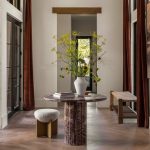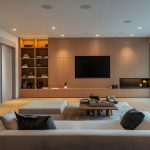

Imagine walking into a home where everything — from the lighting to the textures to the spacing — just feels right. The colors seem to calm your mind, the furniture invites you to relax, and every room seems to sense exactly what you need. This isn’t magic. It’s neuroaesthetics in action — a cutting-edge field that blends neuroscience with design to help create spaces that are not only visually pleasing but also emotionally and physiologically supportive.
For homeowners, interior designers, and homebuilders alike, this growing discipline offers powerful, science-backed tools to create environments that support mental clarity, emotional balance, and overall well-being. Neuroaesthetics is part of a larger movement toward “Home Wellness” design, a branch of evidence-based design that prioritizes the health of the body, mind, and spirit within the home, and how spaces make you feel.
This primer will help you understand the science behind prominent home wellness principles, with tips on how to incorporate them into your living spaces at home.
Table of Contents
- What Is Neuroaesthetics?
- Why Neuroaesthetics Matter Now
- The Connection Between Home Design and Wellness
- Science-Backed Home Wellness Design Trends & Tips
- Cultural Inspirations: Where the World Gets It Right
- The Future of Neuroaesthetics in Home Building & Design
- Conclusion and Final Thoughts
- Neuroaesthetics FAQs
Also see:
What Is Neuroaesthetics?
Neuroaesthetics is an interdisciplinary field that studies how aesthetic experiences — such as interacting with art, design, or environments — affect the brain, emotions, and behavior.

Colorful gears forming an abstract portrait of the human brain
The field of neuroaesthetics primarily investigates how our brains respond to visual and spatial stimuli. Researchers use tools like fMRI (functional magnetic resonance imaging), and EEG (electroencephalogram) to track how elements like color, symmetry, pattern, and light influence emotions, cognition, and stress levels.
In the context of residential living, neuroaesthetics explores how the design, layout, and sensory elements of a home influence occupants’ well-being, mood, cognitive function, and overall quality of life.
These insights can help homeowners, designers and builders create homes that can:
- Reduce anxiety and stress
- Improve sleep quality
- Boost mood and productivity
- Encourage mindfulness and relaxation
Think of it as designing a home that is not just beautiful, but also a sanctuary for your nervous system.
The Science Behind Neuroaesthetics
Neuroaesthetics is more than just a buzzword — it’s an innovative approach to understanding how humans respond to beauty and design on a neurological level. At its core, it combines neuroscience, psychology, and aesthetics to explain how certain colors, forms, textures, and layouts can evoke emotional and physiological reactions. When applied to residential design, the results can be life changing.

An abstract representation of a human connecting with external visual aesthetics and stimuli
Using technologies like fMRI, scientists have identified specific brain areas that light up when we experience pleasing environments. The prefrontal cortex, amygdala, and insula — parts of the brain responsible for emotion, decision-making, and sensory experience — are especially active when we are situated within visually harmonious, balanced spaces.
The implications are profound: a thoughtfully designed room can actually reduce your heart rate, lower blood pressure, and help regulate mood. Conversely, chaotic, noisy, poorly lit environments can spike cortisol levels and create chronic stress — something that can undermine even the most luxuriously designed homes.
By leveraging insights from neuroscience, psychology, and design, neuroaesthetics provides a science-backed approach to creating living spaces that are not only visually appealing, but also emotionally and mentally supportive.
Why Neuroaesthetics Matters Now
The average American spends over 90% of their life indoors, with a significant portion of that time inside their own home. That makes your living space more than just a backdrop — it’s the dominant setting for your health, habits, memories, and peace of mind.

A home with a modern veranda with ample natural light and biophilic features
During recent years of tumultuous change, where our homes have doubled as offices, gyms, and sanctuaries, the emotional and neurological impact of our living spaces has never been more relevant. Neuroaesthetics isn’t just about creating luxury — it’s about promoting resilience, healing, and happiness through design.
As U.S. homeowners and professionals increasingly prioritize mental health and sustainability, neuroaesthetics offers an exciting new lens through which to see and shape the home of the future — not just as a structure, but as an active participant in our well-being.
Whether you’re cooking, working, sleeping, or simply relaxing, your environment is constantly influencing and shaping your mood and behavior. Neuroaesthetics helps us design and build homes that don’t just function — they support the nervous system, enhance cognitive clarity, and cultivate emotional resilience.
So when we talk about using this science in design — also referred to as Evidence-Based Design — we’re not just talking about making things look nice. Rather, we are talking about creating homes that nurture and heal.
The Connection Between Home Design and Wellness
Mental Health and Spatial Design
The relationship between mental well-being and physical space is not just theoretical — it’s measurable. Studies have shown that thoughtfully designed environments can help reduce symptoms of anxiety, depression, and chronic stress.
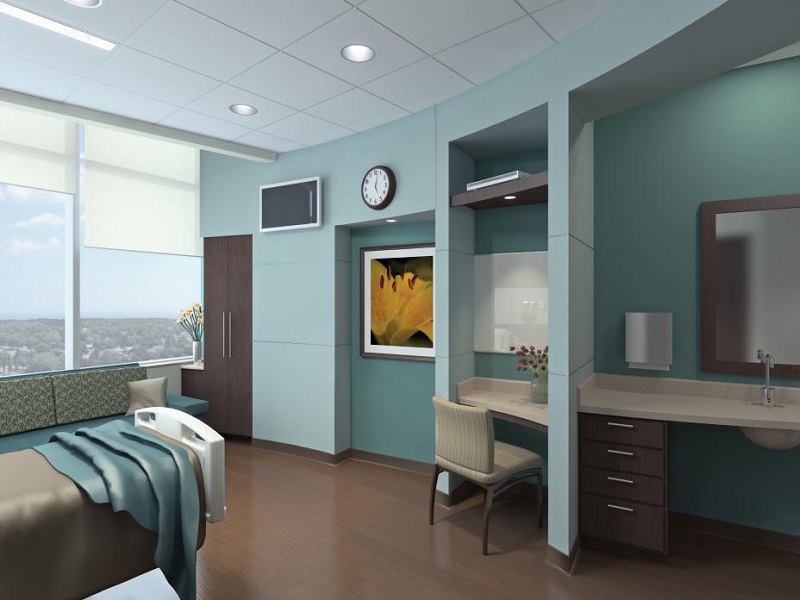
3D Rendering of a luxury patient room at the Baylor Medical Center at McKinney
Image courtesy of Baylor Scott & White Health
Take, for example, hospital environments redesigned with neuroaesthetics in mind: patients in rooms with more natural light and calming artwork recover faster, report less pain, and require fewer medications. Now translate that principle into your home. If a layout or aesthetic choice can ease physical suffering in a hospital, imagine what it can do in your bedroom or living room.
Key features like open sight lines, access to daylight, and a balance between private and social areas can actively support your emotional health. By allowing your environment to breathe, you give yourself more room to do the same.
Emotional Responses to Environmental Cues
Colors, textures, lighting, and layout all send messages to the brain. A space that feels crowded or chaotic might subconsciously signal danger, making it hard to feel at ease. On the flip side, a room that communicates openness, softness, and warmth can evoke a sense of belonging, safety, and comfort.

Soft folded towels in a peaceful luxury spa setting
For instance, think of how you feel walking into a spa: soft lights, neutral colors, gentle scents, and comforting textures, combined with sounds of soothing music and water features, all cue your body to relax. These aren’t just aesthetic choices — they’re environmental cues that guide your emotional and physical state.

A luxurious, yet warm, family kitchen with large island designed by Amber Interior Design, serving as inspiration for interior designer Marina Accardo’s own kitchen remodel. Image courtesy of Amber Interior Design.
On the topic of neuroaesthetics and emotion, LA-based interior designer, Marina Accardo of M StudioHouse, shared this insightful perspective on kitchen design with Purgula:
“A kitchen is not just seen, but felt.” – Marina Accardo, Interior Designer
In this context, Accardo expounded that the term “felt” has a double meaning:
- Materials and hardware literally need to be touched and held to get a sense of their quality, durability, texture, weight, and most importantly, intuitive fit – i.e. do they literally feel right?
- Secondly, but most importantly, memories are made in the kitchen. Any kitchen with the mission of being the true heart of the home needs to be built to last, and designed to be “an environment that shapes the feeling of happiness”.

Kitchen hardware with character that is built to last
Also see:
Science-Backed Home Wellness Design Trends & Tips
Here are several prominent wellness-centric design principles based on neuroaesthetic research that also often overlapped in practice:
- Biophilic Design
- Color Psychology
- Circadian Rhythm Lighting
- Tactile Comfort
- Zoning for Mental States
- Spatial Harmony and Proportion
- Sensory Balance
- Acoustic Wellness and Sound Design
- Personalization and Emotional Resonance
1. Biophilic Design
Studies have discovered that nature-inspired elements reduce stress by engaging the parasympathetic nervous system. For instance, a 2019 study published in Frontiers in Psychology showed that 20 minutes of exposure to nature lowers cortisol levels. Cortisol is known as the stress hormone.

Living room with strong biophilic elements
Incorporating nature into the home — natural wood, indoor plants, water features, and nature-inspired artwork — not only reduces cortisol, but also improves cognitive function. Don’t believe it? Place a leafy plant in your home office or use reclaimed wood for your kitchen shelves. Instead of viewing applied biophilia as just another design trend, which it is not, utilize biophilic design as a form of brain therapy.

Views and access to green, peaceful outdoor areas, with ample daylight, demonstrate a powerful example of biophilic design
Keep in mind biophilic design isn’t simplistically about going rustic or bohemian — it’s about nourishing your nervous system through nature.
Example Biophilic Design Applications
Incorporate large windows, indoor plants, and natural materials like wood and stone, as well as living walls or skylights to mimic natural environments:
- Indoor Plants: Snake plants, pothos, and peace lilies are low-maintenance and improve air quality.
- Natural Textures: Swap synthetic materials for wood, stone, bamboo, or cork.
- Nature-Inspired Artwork: Hang calming prints of landscapes, forests, or oceans.
- View Optimization: Arrange furniture to maximize views of gardens, trees, or even sky, if you live in an urban setting. Treat any window having a pleasant view as a dynamic work of art.
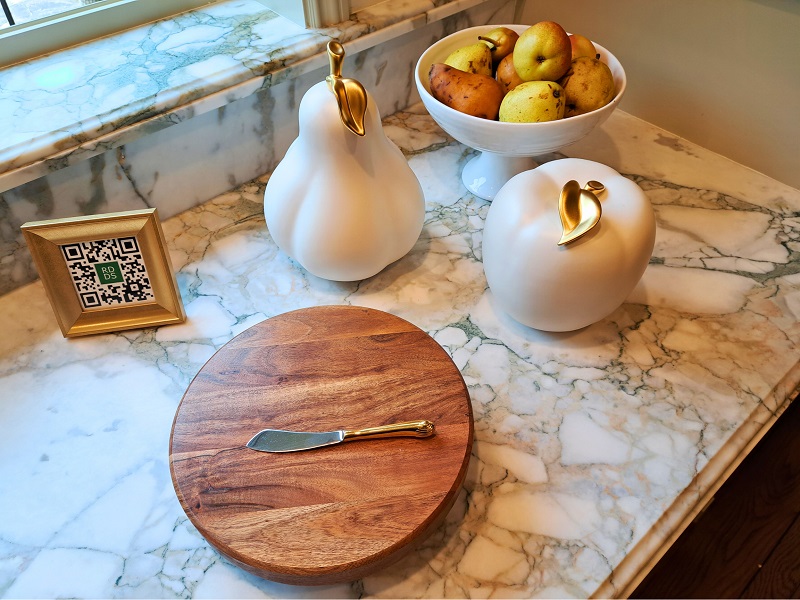
Simple biophilic touches in the corner of a luxury gourmet kitchen
Also see:
2. Color Psychology
Cool tones like soft blues and sage greens are proven to promote calm and focus, making them ideal for bedrooms, studies, or home offices. Warmer hues like earthy terracotta and sunset orange can stimulate creativity and social connection in living rooms or kitchens.
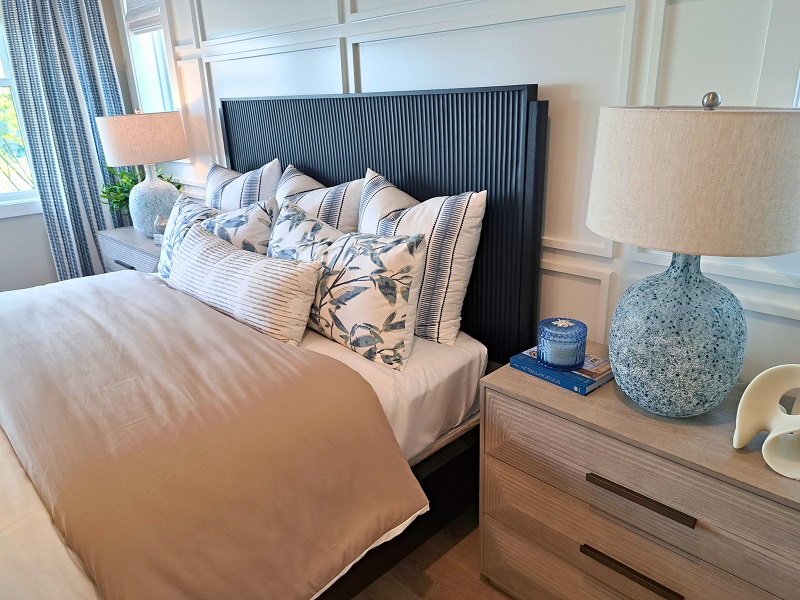
A calming bedroom with soft blues and tans
Example Color Psychology Applications
Use soft blues or greens in bedrooms for relaxation, or vibrant oranges and reds in social spaces like kitchens and formal dining rooms. Pair warm lighting with warm colors to enhance coziness, or cool lighting with cool colors to maintain a refreshing ambiance. Lighter shade colors, such as whites, pastels, or cool blues, when combined with mirrors and reflective surfaces, can create an illusion of openness and airiness in smaller rooms. Maximalist designs with bold, mood-enhancing colors like terracotta or emerald, also align with neuroaesthetic principles.
Also see:
3. Circadian Rhythm Lighting
Natural light exposure during the day improves mood and regulates your sleep-wake cycle. Consider installing skylights, smart lighting systems, or window treatments that allow daylight to flow in freely during the morning and adjust to warmer tones in the evening.

Bright morning sunlight shining through a large bedroom window
Example Circadian Lighting Applications
Incorporate daylight harvesting principles. Install smart, tunable lighting systems (e.g. Philips Hue or LIFX), that adjust color temperature throughout the day: cool, blue-enriched light in the morning to boost alertness; and warm, amber-toned light in the evening to promote relaxation and better sleep. Put away computer screens the last hour or so prior to wanting to fall asleep.
4. Tactile Comfort
The textures we touch every day affect our perception of comfort. Soft fabrics like linen and velvet can trigger a relaxation response, while hard, cold surfaces can do the opposite. Layering with rugs, throws, and upholstered furniture isn’t just stylish — it’s good for your brain.
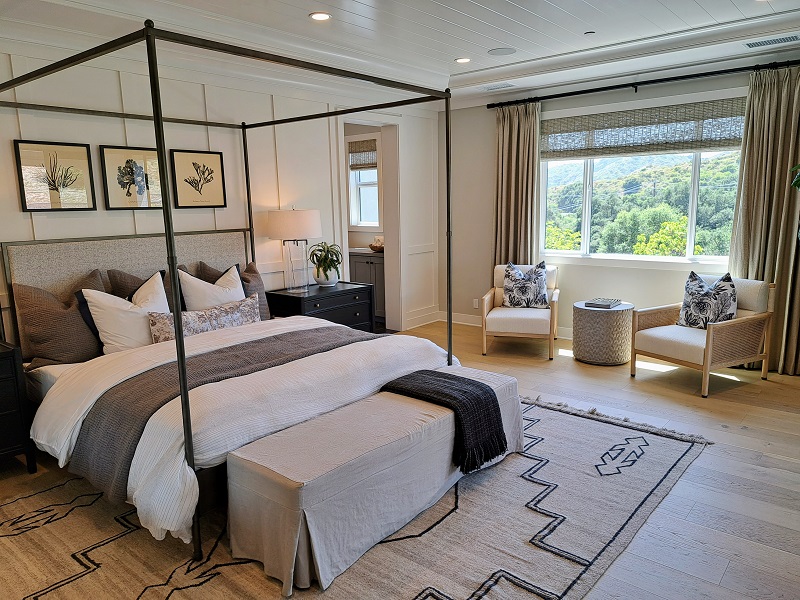
An expansive bedroom appointed with comforting, natural fabrics and materials throughout
Examples of Tactile Comfort Applications
Add plush rugs and linen curtains to engage the tactile sense, which will signal safety and comfort to the brain. Have soft throw blankets readily available in areas of the home where you like to relax, such as a reading nook. The use of velvet or wool upholstery in communal spaces invites touch, enhancing feelings of connection, as well.
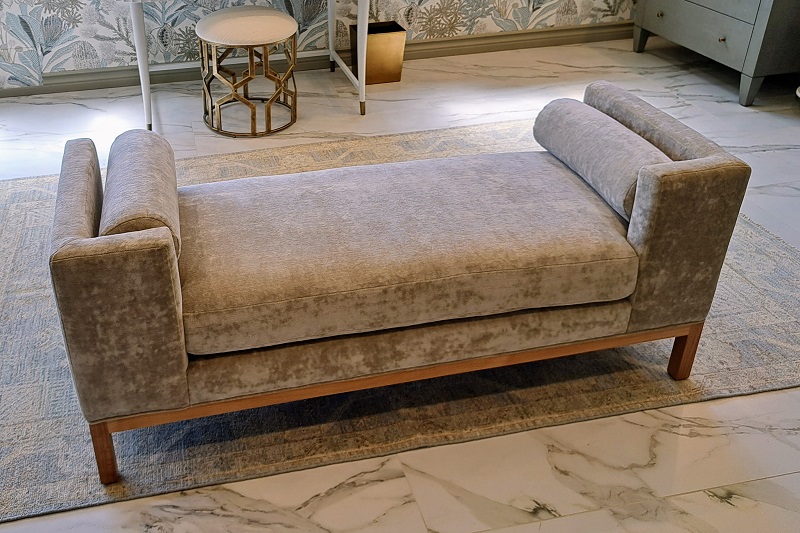
Plush velvet resting bench in the master suite bathroom, designed by Maria Videla-Juniel, featured in the 2024 Pasadena Showcase House
Also see:
5. Zoning for Mental States
Use spatial design to cue behavior. Create a cozy reading nook with soft lighting and a blanket to encourage rest, while defining work areas with energizing colors and ergonomic furniture helps keep your brain alert and focused.

Secluded and comfortable reading nook and chair
Examples of Mental State Zones
Design your home office for focus and productivity: large desk, ergonomic chair, efficient storage systems for convenience and consistent decluttering, and ample natural daylight. Design a creative “brainstorming” retreat with the some of the following features to create a stimulating yet comforting environment;
- Tactile elements like a soft rug, woven wall hangings, or wooden accents to engage the senses
- Biophilic accents to reduce stress
- Meaningful personal items to enhance motivation and optimism
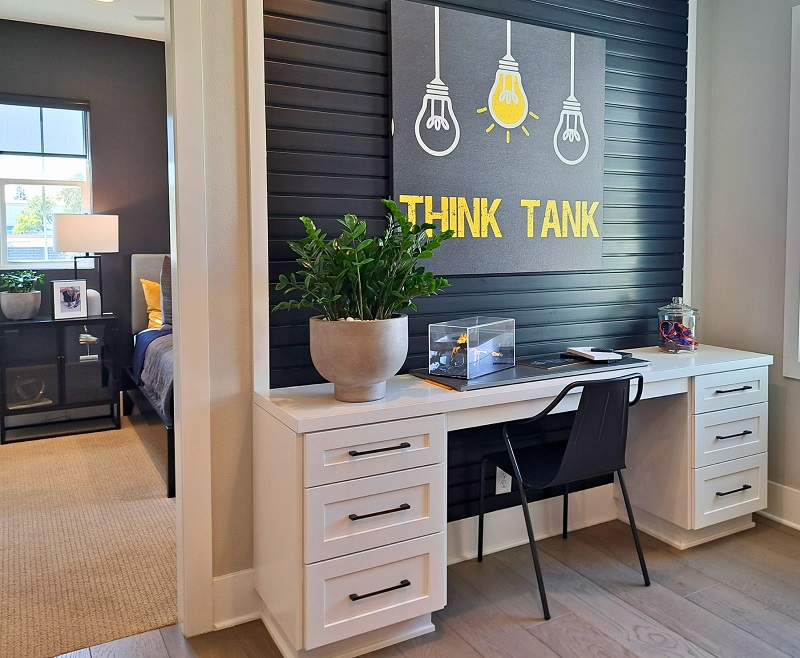
Minimalist decluttered workspace with white desk and yellow highlighted motivational print
6. Spatial Harmony and Proportion
The brain prefers environments with balanced proportions, gentle curves, and uncluttered layouts, which reduce cognitive overload. This ties to the “golden ratio” or fractal patterns, which are inherently pleasing to the human eye.
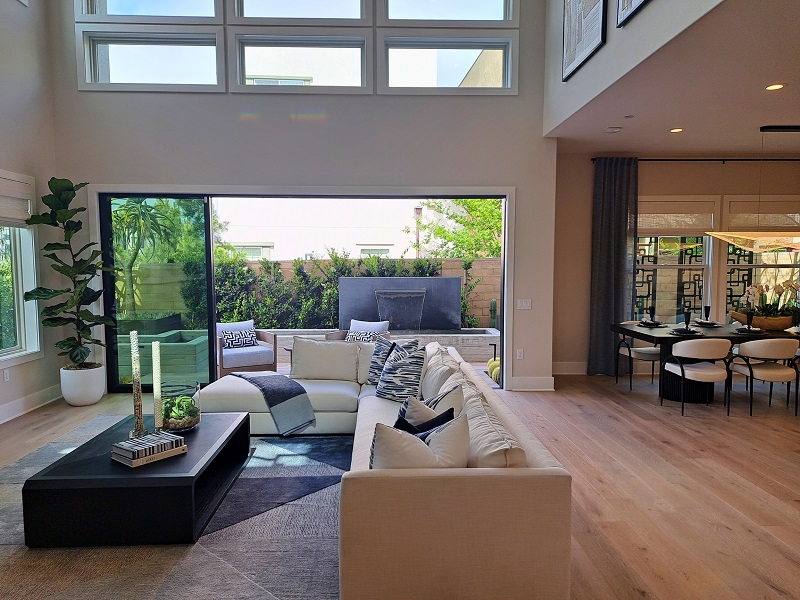
Home with large open space living area connected to outdoor patio exemplifies spatial harmony
When a room feels “off”, chances are it is lacking balance in either form, color, or spatial flow. Use symmetry to restore calm — your brain will thank you for it.
Example Spatial Harmony Applications
Design open, flowing layouts with rounded furniture edges or symmetrical décor. Declutter as a way to create “mental space”, reflecting neuroaesthetic goals.
Also see:
7. Sensory Balance
Overstimulation (e.g. harsh lighting, loud noises) can trigger stress responses, while understimulation can lead to boredom. Neuroaesthetics seeks a balance, engaging multiple senses thoughtfully.

Peaceful outdoor water fountain surrounded by greenery
Examples of Sensory Balance Applications
Use dimmable LED lighting, soft textiles, or ambient soundscapes (e.g. water features). Leveraging smart home systems to integrate lighting and sound to create calming environments. Using best practices to incorporate acoustic privacy.
8. Acoustic Wellness and Sound Design
Reducing Noise Pollution Indoors
Sound can either soothe or stress your nervous system. Constant background noise — traffic, humming appliances, even loud HVAC systems — creates a form of sensory overload that the brain struggles to ignore. Over time, this contributes to chronic stress and poor concentration.

A calming bedroom with several acoustic applications: double-paned windows; plants; acoustic prints; ornate molding; area rug; sculpture pieces; and soft textiles.
That’s where acoustic wellness comes into play. Designing with sound in mind means:
- Using soft surfaces like rugs, curtains, and upholstered furniture to absorb noise.
- Installing acoustic panels in echo-prone areas like stairwells or hallways.
- Opting for quieter appliances, especially in bedrooms or open-concept areas.
- Creating dedicated quiet zones
Even layout matters: open spaces amplify sound, while defined rooms can isolate and dampen it. If total quiet is not possible, the goal becomes controlling what you hear, when you hear it, and how loud it is.
Acoustic Privacy not only involves blocking or muting what you wish not to hear, but also blocking what you don’t want others to hear – be they other family members, guests or neighbors. A lack of privacy is a known emotional stressor, since privacy is considered to be a fundamental psychological need, and its absence can significantly impact mental well-being.
Using Soundscapes to Set the Mood
On the flip side, intentional sound can enhance mood and productivity. This is why spas use ambient music, and cafés pipe in lo-fi beats to keep energy flowing. In your home, you can use:
- Nature sounds (rainfall, ocean waves, birdsong) for relaxation or inducing sleep.
- White or pink noise to mask distracting sounds while working or studying.
- Uplifting music in kitchens or fitness zones to boost motivation.
Smart speakers make it easy to program soundscapes throughout your home. Consider making a “morning playlist” that energizes you and a “bedtime blend” that slows your mind. When your home speaks to your brain through sound, everything will feel more aligned.
9. Personalization and Emotional Resonance
The brain responds strongly to spaces that reflect personal identity or memories, activating reward centers like the ventral striatum.
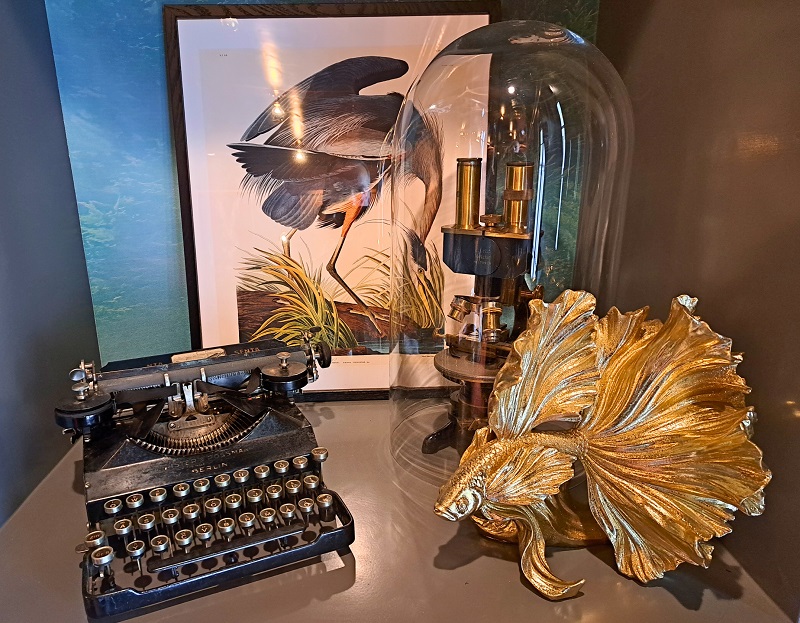
Example of personalized décor in the Gentlemen’s Study, designed by Carmine Sabatella, of the 2025 Pasadena Showcase House, which paid homage to the estate’s long-time owner, Stephen J. Cannell.
Examples of Personalization and Emotional Resonance
Incorporate meaningful art, family heirlooms, or custom decor. Mix vintage and modern pieces to create emotionally resonant spaces, part of the emerging maximalist trend.
Also see:
Cultural Inspirations: Where the World Gets It Right
Some cultures have long embraced design practices that align naturally with neuroaesthetic principles:
- Scandinavian Simplicity and Coziness
- Mediterranean Nature-Inspired Sensory Harmony
- Japanese Minimalism and Wabi-Sabi
- Indian Vastu and Energetic Harmony
- Chinese Feng Shui
Scandinavian Simplicity and Coziness
The Scandinavian approach to home design, rooted in Hygge (coziness) and Lagom (balance), offers some of the most neuroaesthetically aligned principles on the planet. At the heart of it lies the idea that less is more — not in a cold, minimalist way, but in a warm, inviting, and functional sense.

Portion of a modern Scandinavian household
Scandinavian homes are intentionally uncluttered, filled with natural light, and layered with soft textures and neutral tones. The use of light woods, clean lines, and earthy colors creates a sense of calm and consistency, which the brain interprets as safe and reassuring.
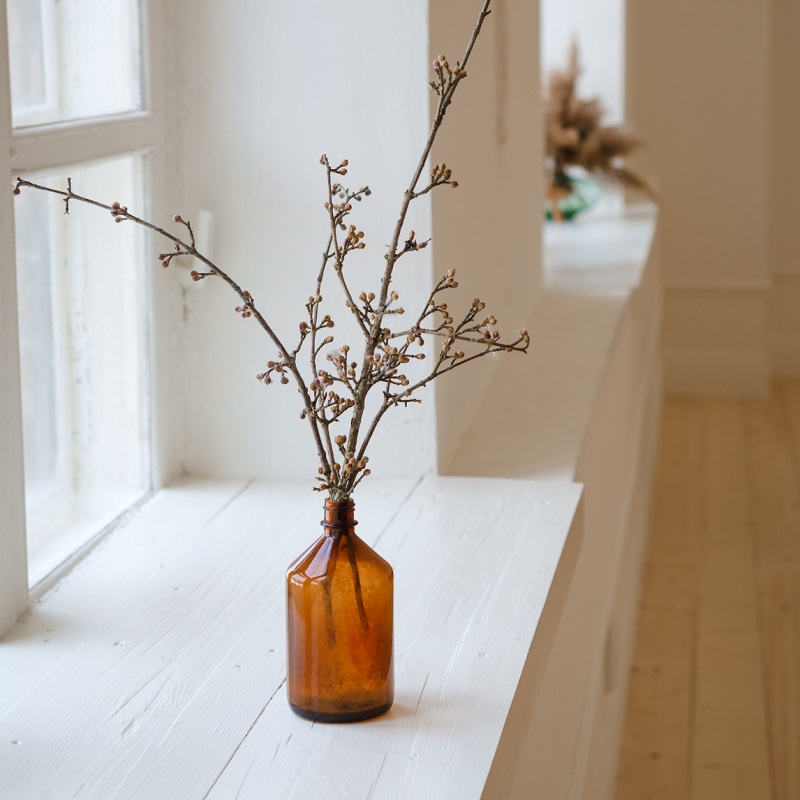
Simple, uncluttered biophilic touches in the Scandinavian style
Neuroaesthetically, these features reduce mental friction. There’s no overstimulation or chaos — just serene simplicity that lets you exhale. Throw blankets, warm lamps, soft rugs, and candles are not just decorative touches. They’re tactile and visual triggers of comfort and emotional ease.
If you want to bring a touch of Nordic wellness into your space, think about:
- Opting for muted tones like soft greys, oatmeal, or off-white.
- Incorporating natural textures like wool, felt, and oak.
- Using ambient lighting instead of harsh overhead fixtures.
- Keeping decor minimal yet meaningful — a single art piece instead of a gallery wall.
Scandinavian design isn’t just an aesthetic — it’s a lifestyle that harmonizes with the psychological needs of the human brain.
Mediterranean Nature-Inspired Sensory Harmony
Mediterranean cultures, spanning regions like Greece, Italy, Spain, and parts of North Africa, have intuitively incorporated principles of neuroaesthetics into residential designs for centuries. Prevalent features such as open-air courtyards, earthy tones, and the blending of indoor-outdoor spaces have contributed to a more relaxed and healthy lifestyle.

Expansive, peaceful Mediterranean garden and courtyard
Mediterranean designs emphasize natural light, vibrant yet balanced color palettes (e.g. terracotta, azure blues, and earthy neutrals), and organic materials like stone, wood, and ceramics, which stimulate positive emotional responses and reduce stress.
Open, airy spaces with courtyards and large windows foster a connection to nature, enhancing cognitive restoration. Textures and patterns, such as mosaics or handwoven textiles, engage the senses while maintaining simplicity to avoid overstimulation. This holistic approach aligns with neuroaesthetic findings that environments promoting calm, beauty, and sensory harmony improve mental health, creativity, and social interaction, reflecting a lifestyle that values communal living, leisure, and aesthetic pleasure.
Japanese Minimalism and Wabi-Sabi
Japan’s design culture, especially the philosophy of Wabi-Sabi, celebrates the beauty of imperfection, transience, and nature. This worldview sees chipped pottery, aged wood, and asymmetry not as flaws but as expressions of authenticity and serenity.
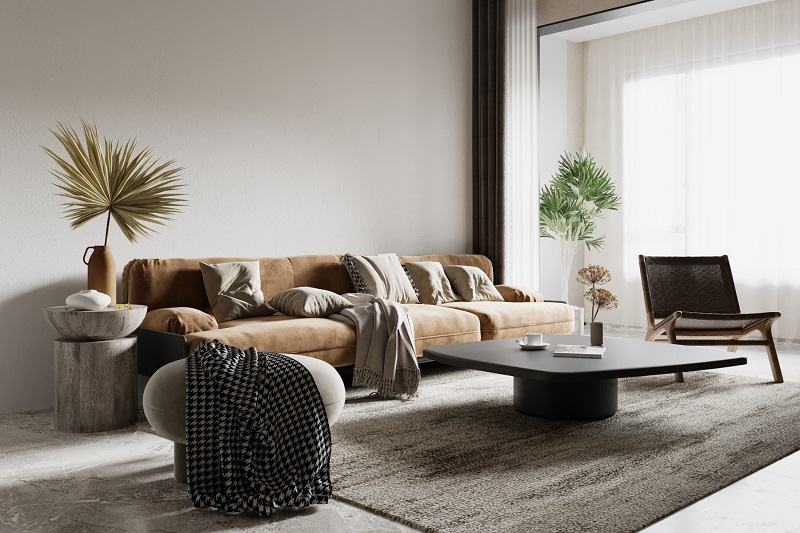
3D Rendering of a living room in the Wabi-Sabi style
From a neuroaesthetic standpoint, Wabi-Sabi design fosters mindfulness and emotional depth. The brain finds comfort in natural irregularities and objects with visible history. Unlike mass-produced perfection, these elements feel personal, grounding, and real.
Japanese homes tend to:
- Use natural materials like bamboo, paper, and raw timber.
- Embrace empty space (Ma) to highlight what is important.
- Design for seasonal transitions, with flexible rooms and sliding walls.
- Integrate the outdoors, such as through Zen gardens or courtyards.
Living in such an environment encourages a slow, intentional lifestyle, where the home becomes a place of mental clarity and soulful connection.
Indian Vastu Shastra and Energetic Harmony
Vastu Shastra, the ancient Indian system of architectural alignment, offers insights into spatial orientation and flow, promoting harmony between architecture and the elements — ideas that align closely with Western evidence-based wellness design.
Vastu Shastra is gaining renewed attention as a form of energy-sensitive spatial design. While it may not be neuroscience-based in a Western sense, many of its core principles overlap with modern neuroaesthetics.
Vastu emphasizes spatial orientation, air flow, natural light, and elemental balance — factors that science now confirms affect emotional well-being and cognitive clarity. For instance, Vastu Shastra advises:
- Positioning the bedroom in the southwest for better sleep.
- Allowing sunlight to enter from the east to energize the home.
- Using earth tones and natural elements to ground energy.
Whether or not you follow Vastu religiously, its guiding ideas point to the same truth: when your environment is in balance, so is your mind.
Chinese Feng Shui
Feng Shui, an ancient Chinese practice meaning “wind and water” aims to harmonize individuals with their environment by optimizing the flow of qi (life energy) through spatial arrangement, orientation, and elements. Both Feng Shui and neuroaesthetics share the goal of creating environments that enhance mental and physical health, making them highly relevant to residential living. Their relationship lies in overlapping principles that promote comfort, balance, and emotional resonance, though they stem from different foundations — Feng Shui from philosophical tradition and neuroaesthetics from empirical science. Many of Feng Shui’s practical recommendations align with neuroaesthetic and psychological research.

Feng Shui generally recommends round or oval dining tables, stemming from the belief that round shapes promote smooth energy flow (chi) and enhance social interaction among diners, fostering a sense of unity and harmony.
Here are several Feng Shui practices that overlap with neuroaesthetics:
- Biophilia and Nature: Feng Shui encourages natural elements like plants, water features, or natural light to enhance qi flow. For example, orienting homes to maximize sunlight aligns with environmental harmony.
- Spatial Flow and Balance: Feng Shui promotes open layouts, smooth pathways, and avoiding sharp corners to ensure qi flow, such as placing beds in a “commanding position” (diagonal from doors) for security.
- Color and Sensory Harmony: Feng Shui uses colors tied to the five elements — blue for water; red for fire; green for wood; yellow and brown for earth; and white, gray and silver for metal — to evoke specific moods, such as blue for calm in bedrooms, and red for energy in social spaces.
- Personalization and Emotional Resonance: Feng Shui encourages featuring meaningful objects to align spaces with personal goals, fostering emotional connection.
The Future of Neuroaesthetics in Home Building & Design
Personalized Responsive Environments
As smart technology becomes more embedded in everyday life, the future of neuroaesthetic design is headed toward hyper-personalization that is intelligently adaptive to biometrics and environmental readings. Imagine a home that adjusts to your mood, lighting preferences, and energy levels automatically — because it’s designed to sense you in real time with historical context and preferences.
Related emerging trends include:
- Circadian Lighting Systems that shift color and intensity throughout the day.
- Smart Scent Diffusers that release calming or energizing aromas based on your schedule.
- AI-Powered Room Settings that adapt based on biometrics, stress levels, and voice commands.
- Temperature Zones optimized for rest, focus, or movement.
- Smart Soundscapes that play audio programming — music or natural sounds — based on mood and historical preferences.
Keep in mind that this isn’t science fiction — it’s already happening. Devices like Nest, Philips Hue, and Airthings offer pieces of the puzzle, but what’s coming next are entire homes engineered around emotional and physiological intelligence.
As neuroaesthetics evolves, homes may soon feature neural-responsive environments — walls that change color based on your stress levels or beds that adjust based on your REM cycles. It’s wellness by design, taken to the next level.
Wellness-Centered Urban Design Trends
Zooming out from the individual home, neuroaesthetics is starting to influence neighborhood and city design, too. Communities are being reimagined with sensory health and cognitive wellness in mind.
Expect to see:
- More green spaces and nature corridors in urban planning.
- Shared wellness amenities like yoga gardens, sensory parks, and meditation zones.
- Noise zoning laws that reduce overstimulation in residential areas.
- Color psychology in public architecture, promoting calm and belonging.
Cities such as Singapore and Copenhagen are already leading this movement, integrating neuroscience into urban blueprints. For homebuyers, designers, and builders in the U.S., this shift means greater demand for homes that offer tranquility, beauty, and bio-alignment — not just sufficient square footage and the latest appliances.
Conclusion and Final Thoughts
Neuroaesthetics is the future of home design — not just because it’s beautiful, but because it’s biologically and emotionally beneficial. By aligning our spaces with how our brains naturally respond to color, light, sound, texture, and flow, we create homes that do more than house us — they keep us healthy and help heal us when necessary.
Whether you’re a homeowner looking to breathe new life into your living room, a builder creating the next generation of smart homes, or a designer striving to make a deeper impact, the principles of neuroaesthetics offer a roadmap to spaces that feel like soothing sanctuaries and comforting wellness centers.
You can start on this path with small changes: repaint a room; add a plant; let in daylight; design for how you want to feel, not just how you want your home to look. In the end, a home isn’t just walls and furniture — it’s your most powerful and personal wellness tool!
Neuroaesthetics: Frequently Asked Questions (FAQs)
1. What is the difference between neuroaesthetic design and regular interior design?
Regular design focuses on style and function. Neuroaesthetic design uses neuroscience to create environments that actively support emotional well-being, mental clarity, and physiological balance. It’s the difference between a pretty room and one that makes you feel good on a biological level.
2. Can I use neuroaesthetic design in a small apartment or rental?
Absolutely. You don’t need to own a home or have massive square footage. Start with lighting, color palettes, natural materials, and decluttering — changes that don’t require permanent alterations but still support brain-friendly design.
3. How do I know if a room is neuroaesthetically aligned?
Pay attention to how your body feels. Do you feel calm, focused, energized, or overwhelmed in the space? Look for balance in symmetry, soothing textures, soft lighting, and natural elements. If the space makes you relax without trying, you’re on the right track.
4. Are there any apps or tools to help with neuroaesthetic home planning?
Yes! Apps like Moodfit, Sleep Cycle, Welltory, and even smart home systems like Philips Hue and Google Nest can help align your environment with your emotional needs. Pinterest and Houzz are also great sources for visual inspiration.
5. Is neuroaesthetic design expensive to implement?
Not at all. While high-end wellness homes exist, many principles are accessible on any budget. Think decluttering, natural lighting, repurposed materials, and DIY upgrades. Neuroaesthetics is more about how you feel than how much you spend!
6. What are some resources to learn more about the intersection of Design, Emotion, and Wellness?
See:
- ASPECTSS*: Architecture for Autism
- The Influence of Color on Emotion
- Vastu Shastra: A beginners guide for Interior Designers
- 6 Basic Vastu Tips | Vastu Shastra for Interior Design
- #maximalistinteriors post on Instagram
- The Aesthetics of Joy
- The Inextricable Link Between Decoration and Mental Wellbeing
- Biotech Meets Biophilia in Mass Timber Lab
More Recommended Interior Design Articles
- 10 Great Features That Will Make Any Guest House Spectacular
- 5 Stylish Ideas to Make Your House Look New & Feel Like Home
- 7 Tips on How to Make Your Home Up-to-Date & On-Trend
- Why Coffee Tables are Key to the Design of Living Room Spaces
- 8 Spa Décor Ideas to Make Your Home More Comfortable & Relaxing
- 8 Wellness Design Tips for Your Kitchen & Bath
- Related Topics: Home Wellness | Interior Design | Home Décor | Entertaining at Home
| Purgula is reader-supported. When you click on links to other sites from our website, we may earn affiliate commissions, at no cost to you. If you find our content to be helpful, this is an easy way for you to support our mission. Thanks! Learn more. |